
Founder Interview
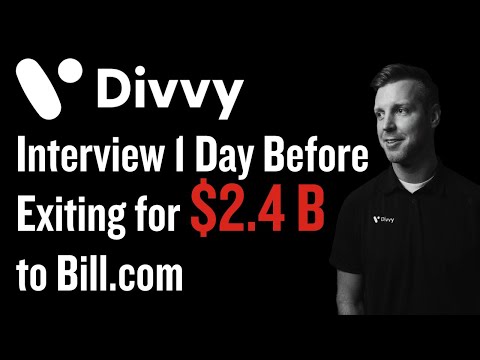
How Divvy Reached 10,000 Customers and a $1.6B Valuation with Free Expense Management Software (Interview with Co-Founder Alex Bean)
- Interview Date
- May 4, 2021
- Interviewee
- Alex BeanCo-Founder
Company Metrics at Interview Time
Valuation (2021)
$1.6B
Series D Raise (2021)
$165M
Customers (2021)
10,000+
Historical Snapshot
These numbers were reported by Alex Bean during the interview recorded in May 2021 and are a historical snapshot, not current figures. See Divvy’s current numbers.
Key Takeaways
- 01Divvy surpassed 10,000 SMB customers as of May 2021
- 02The company raised $165 million in its Series D at a $1.6 billion valuation
- 03Investors in the Series D included Hanaco, Whale Rock, and Acrew
- 04At the time of the interview, Divvy gave its expense management, spend management, and AP management software away for free and made most of its money on credit card interchange
- 05Alex Bean would not disclose 2021 spend through the platform, saying only that it would be billions of dollars
- 06Alex Bean confirmed Divvy was growing customer count over 100% year over year at the time of the interview
- 07Alex Bean kept revenue private, but when Nathan Latka asked about a plan to break a $100 million run rate within two years, he said he was very confident Divvy would achieve it
- 08Alex Bean co-founded Divvy with Blake Murray, who was CEO; the original idea and the name Divvy came from Blake
- 09The first formal funding round was about $10 million from Pelion Partners
- 10At the time of the interview, Divvy had four product lines: business credit, spend management, expense management, and AP management
Company Metrics at Time of Interview
| Metric | Value | Source |
|---|---|---|
| Valuation (2021) | $1.6B | Founder interview, May 2021 |
| Series D Raise (2021) | $165M | Founder interview, May 2021 |
| Customers (2021) | 10,000+ | Founder interview, May 2021 |
| First Formal Round (Pelion Partners) (2018) | $10M | Founder interview, May 2021 |
| GMV Through Platform (2021) | Billions of dollars | Founder interview, May 2021 |
| Product Lines (2021) | 4 | Founder interview, May 2021 |
Growth Breakdown
Customers
Divvy crossed 10,000 SMB customers by May 2021, growing over 100% year over year. Alex Bean stated the company expected to top 20,000 customers by the end of 2021 and was adding a significant number of new customers each month.
Revenue Model
At the time of the interview, Divvy generated the majority of its revenue through credit card interchange, giving its core software away for free to attract SMBs. Alex Bean noted that with billions of dollars in spend flowing through the platform, interchange revenue adds up meaningfully even at 200 to 300 basis points.
Funding
Divvy raised $165 million in its Series D in January 2021 at a $1.6 billion valuation, with investors including Hanaco, Whale Rock, and Acrew. The company's first formal round was about $10 million from Pelion Partners in 2018.
Product Expansion
At the time of the interview, Divvy had launched AP management, one of its four product buckets, though Alex Bean said it was not yet where the team wanted it in scope and capability. He also described premium options on top of the free product, such as faster ACH payments to vendors for a premium fee. A small business lending product had been built and launched pre-COVID, pulled during the pandemic, and was about to be relaunched.
Growth Strategy
Free Software to Drive Adoption
At the time of the interview, Divvy gave away its expense management, spend management, and AP management software at no cost to SMBs, removing the barrier to adoption and competing directly with paid tools like Expensify. The strategy let Divvy acquire customers quickly and make its money on the card rather than on a software subscription.
Interchange-Based Revenue Model
By issuing its own corporate card, Divvy earned interchange on every dollar its customers spent, similar to how Amex or Chase make money. Alex Bean noted that with billions in platform spend, even 200 to 300 basis points generates substantial revenue.
Budget and Virtual Card Lock-In
Divvy built retention by embedding itself into customers' financial workflows through budgets and virtual cards. Once a business sets up budgets and processes inside Divvy, switching back to a traditional card plus separate expense software is operationally painful, which Alex Bean credited for the company's low churn.
Flywheel Through AP Management
Every invoice pulled into the Divvy platform introduced a new vendor that Divvy could approach about accepting virtual card payments, creating a flywheel of new revenue opportunities and customer acquisition. Premium features like expedited ACH payments added incremental monetization on top of the free core product.
Targeting Main Street SMBs
Divvy focused on businesses with one to 500 employees, split into two bands, one to 50 and 50 to 500, with slightly different use cases. Alex Bean said the target was the mom and pops of America, Main Street America, not just the VC-backed companies.
Best Quotes
“Yeah. So real quick on the scooter business. I mean, I actually feel like those are some of my most informative years or formative years. I mean, I was in my mid twenties, knew the owner of the business, he got sick and he said, hey, I'm sick. Can you come in and run it?”
“So I would send seven guys to Vegas on a trade show conference. And we're a small company, we didn't have like a ton of cash. So spending the budget of 15,000 for the conference was like, imperative. Like you can't go over. But everyone was using their own card, we were getting expense reports, you know, a month and a half late. So we were going over without knowing we were going over. And Divvy would have solved that entirely.”
“Nothing. It's free.”
“Yeah. So we basically take Amex, right? Like you're not paying for your Chase card or your Wells Fargo card or whatever. We take your credit card. That's how we make money. So we make money just like the banks would. And then we give you the software that Expensify and others are giving you. So we really combine it into one platform.”
“Yeah, over 10,000 and adding quite a few every month. So we're super excited about our growth rate and it just means that, I mean our motto is spend smarter. So for us, it's about having more and more SMBs, mom and pops, you know, build lucky scooter sized companies.”
“I'm very confident that we will we will achieve that.”
“Brex drove innovation on the credit side. And they deserve a lot of credit for it. We drove innovation on the software side and we deserve a lot of credit for it.”
“With with Divvy, because it's like, hey, someone will get it in and they'll start using us for the card software. But then they start using us for the AP management or then they start, you know, at some point they're gonna start using us for the loan management. So we actually feel like there's another five things we can add in that stack and five just being a, you know, kind of a figure.”
“But please, when you're 20, find the right people in the right companies, work with them, and you will learn so much that the rest will be taken care of. Money will come.”
What Happened Next
This interview captures Divvy in May 2021. At the time, Alex Bean described a company with over 10,000 small-business customers that gave its spend and expense software away for free and made most of its money on card interchange, and that had raised a $165 million Series D at a $1.6 billion valuation earlier that year. These figures are what he shared in this conversation and should be read as a point-in-time snapshot. For current information about the company, visit the Divvy company profile on GetLatka.
View Divvy’s current profile and metricsFull Transcript
Chapters
- 0:00Introduction and Scooter Business Background
- 0:28From Lucky Scooters to Fintech
- 1:16How Divvy Would Have Helped the Scooter Business
- 2:34Target Customer and Pricing Model
- 3:09Free Software and Interchange Revenue Model
- 4:09Funding the Free Model and Early Fundraising
- 7:03Series D Raise and Valuation
- 8:24GMV and Revenue Breakdown
- 10:44Customer Count and Growth Rate
- 11:41Revenue Kept Private and the $100M Run-Rate Plan
- 13:56Product Roadmap and AP Management
- 14:28Churn and Customer Retention
- 15:57Competition with Brex and Market Innovation
- 20:16Secondaries and Founder Liquidity
- 21:19Famous Five Rapid Fire
Introduction and Scooter Business Background
Nathan Latka
00:00Hello everyone. My guest today is Alex Bean. He's sitting on a rocket ship with Divvy, but ten, eleven years ago he's selling scooter parts. What happened? We're gonna dive in today. Divvy modernizes finance for businesses by combining expense management software and smart corporate cards into a single platform. Finance leaders can now get real time visibility into their company spend and flexible controls that prevent teams from ever going over budget. You can check it out at getdivvy.com.
00:21Alex, ready to take us to the top?
Alex Bean
00:23Yeah.
Nathan Latka
00:24Just like scooter business.
Alex Bean
00:25Ready for the scooter part the scooter business reference, but I well, we
From Lucky Scooters to Fintech
Nathan Latka
00:28can dig into it. Well, it's crazy. I mean, you go I mean, my research team was looking at going, wait. This guy went from basically being a GM at a scooter place to running like one of the fastest growing fintech businesses today. How the hell does this happen?
Alex Bean
00:39Yeah. So real quick on the scooter business. I mean, I actually feel like those are some of my most informative years or formative years. I mean, I was in my mid twenties, knew the owner of the business, he got sick and he said, hey, I'm sick. Can you come in and run it? Like, you come in and and and build this thing? And, you know, at the time we were, we thought we were gonna like take
01:00over the X Games and take over skateboarding. So you kinda thought big, but we we did some fun stuff, learned a lot about manufacturing and and and branding, and he got healthy. So that's when we I gave it back to him and then and got into tech. So learned a lot, a lot of fun, but definitely different than fintech for sure.
How Divvy Would Have Helped the Scooter Business
Nathan Latka
01:16So so tell the Divvy, if you had Divvy when you were running that business, like what sort of credit lines would you have been pulling? What sort of expense management would you have been doing? Like sort of explain the current product as as like how you would use it back then.
Alex Bean
01:27Yeah, but it's funny because you might say like, well how'd you go from selling scooter parts to doing Divvy? To me I'm actually it's super natural. Because you know, when I'm running Lucky, which was the scooter company, we had 10 riders all over the world traveling for various tournaments, know, building content. We would do trade shows. And so I would send seven guys to Vegas on a trade show conference. And we're a small company, we didn't
01:51have like a ton of cash. So spending the budget of 15,000 for the conference was like, imperative. Like you can't go over. But everyone was using their own card, we were getting expense reports, you know, a month and a half late. So we were going over without knowing we were going over. And Divvy would have solved that entirely. We, you know, we could have said, hey, here's your budget, had cash, check, credit, everything inside of that
02:15expense reports from all the riders and all the employees would have come directly. So honestly, when we started Divvy, my partner Blake and I, it was just like, well, we've ran multiple businesses and we understand the needs. And so we built it not as tech engineers, but as business owners and saying, we're building something that we would have wanted to use in our prior companies.
Target Customer and Pricing Model
Nathan Latka
02:34Yep. And what's, who's the customer target today?
02:37Is it the luckies of the world, SMBs?
Alex Bean
02:38Yep. Luckies of the world, but just SMBs, you know, we kind of have two audiences I say, like one to fifty and fifty to 500. Slightly different use cases for the most part. But SMBs in general, that's what we're going after. The mom and pops of America, Main Street America, not just the VC backed companies.
Nathan Latka
02:55Yep. And and talk to me about that segment, right? So if an SMB is listening right now and they're going, man, I'm currently using like six tools to do all these things Alex is talking about and they wanna start with you. Like what's the average price point an SMB is gonna pay you guys?
Alex Bean
03:08Nothing. It's free.
Free Software and Interchange Revenue Model
Nathan Latka
03:09Okay. So how do you make money?
Alex Bean
03:11Yeah. So we basically take Amex, right? Like you're not paying for your Chase card or your Wells Fargo card or whatever. We take your credit card. That's how we make money. So we make money just like the banks would. And then we give you the software that Expensify and others are giving you. So we really combine it into one platform. And what we've found is by combining it, it's not only just that it's free, it's the
03:34like the source of information is so much quicker and so much better. The things we can do are much different. But yeah, it's free and that's why we're super excited to offer it to the mom and pops of the world. Because we can tell them, stop paying for those three softwares and come just use Divvy. And it's, you know, it's a win win for both.
Nathan Latka
03:52Yeah, mean you have four sort of thing, buckets that's on your website. Business credit, spend management, expense management, and AP management. There are multi billion dollar companies competing in just one of those verticals. To be clear, want to make sure I'm getting this right. You're giving away spend management, expense management, and AP management free. You're making money on the credit card stuff and the credit fund.
Alex Bean
04:08Yep. Exactly right.
Funding the Free Model and Early Fundraising
Nathan Latka
04:09Yep. Wow. Okay. Interesting. So I guess the question I would have for you is, this is not easy software to build. How did you fund it in the early days so that you could give it away for free?
Alex Bean
04:18So that's actually a really good question. Had I've had that conversation with a lot of people. A few things. One, we raised money early because we knew that we were taking a big swing. I don't think that's for everyone. So I'm not like out there recommending to all entrepreneurs like go raise VC funds, go raise as much as you can. But for us, as you've just said, we're taking on trillion dollar markets in every, in all
04:40four of those buckets. So we're like, alright, like we've got, we've gotta bring money to the table and go build the team. So for us, that's what we did. And at the beginning, nowadays in the FinTech space, if that's where you're at, there's so many more tools that enable FinTechs to go build companies that didn't exist five years ago. Which that sounds nuts, but you know, there's a lot of I can get into the nuances. A
05:03lot of things that the banks couldn't offer us five years ago. That now they're they're fully built to offer to these Fintechs. So I think you're gonna see a wave of innovation because of that.
Nathan Latka
05:11So year one it sounds like was what? Like 2016, 2017, is that right?
Alex Bean
05:15Yeah.
Nathan Latka
05:16And I wanna touch on Founding Story real quick because founder equity is always a hot topic with anyone launching a company. Do you guys just say, you know what? Equal partners fiftyfifty, or was there some nuance there?
Alex Bean
05:25Nuance, yeah. And I'm actually so here's let me give the every partnership's different, right? So like anything I give here is not gonna be definitive for all. So Blake, my partner, my friend and partner came to me with the concept of Divvy, right? And we formulated it together, but his original idea was his and the name Divvy came from him. And frankly, he had the money to to kinda help kick start some of this.
Nathan Latka
05:53How much did he kick start it with?
Alex Bean
05:57I think that's private. Sorry, I don't I don't know if we've disclosed that. I thought you know, it a decent amount of his own money to say, hey, we're gonna go design and engineer and do some stuff before we went and raised formally. So
06:09he he had he has more than me, right? Clearly it was, you know, he had it. And the advice I would give a non CEO co founder is you have to understand where you where you sit. For me, I always knew Blake was the quarterback and I was the running back to use a football reference. Meaning, we are partners and he I don't think he could have done it without me, but I know I couldn't have
06:28done it without him. And you can still be partners and not be fiftyfifty. I think I've seen a lot of partnerships where you go in and they are equal partners. One might be the CEO, but the other one they have the idea together and that's fiftyfifty. Great. That would be awesome. But for us it was not fifty fifty, but that doesn't take away from the partnership. Nuance First
Nathan Latka
06:50formal round was when and how much?
Alex Bean
06:5310,000,000 from Pelion Partners here in Utah, and I think that was in,
07:00was it 18?
Nathan Latka
07:01Yeah. Okay.
Series D Raise and Valuation
Nathan Latka
07:03Yeah. You just raised more this year, I think. What was that, Yep.
Alex Bean
07:07Brought on Hanaco, Whale Rock, Crew, right? So some great investors. It was our series D.
Nathan Latka
07:13And how much did you guys raise there?
Alex Bean
07:15165, I think.
Nathan Latka
07:17And do you remember the valuation?
Alex Bean
07:191.6. 1.6.
Nathan Latka
07:20So full story there. Don't wanna bury it.
Alex Bean
07:22You just as an entrepreneur, you're like, do you remember the valuation? I'm like, well, let me see here. Yeah. I remember the valuation. Yeah.
Nathan Latka
07:29Maybe I strategically ask it that way to make sure more people answer. If you phrase it that way, you definitely get a higher response rate. But I wanted to put that out there because again, what you're doing here is very interesting. Right? We've had David on from Expensify. We've had Brex on. We've had Ramp on the show. Right? And they're doing they're basically building massive business on something that you're doing for free. So I
07:45wanna dive more into the credit card business. I mean, much money can you make on the credit card business? There's only what? 200, 300 bits of spread there?
Alex Bean
07:52Yeah. Yep. That's correct. But there's a few different ways. Right? You see Brex is starting to launch paid software. We have some paid we have paid software. You know, you make money on the card, I'm sorry, on credit side, right? Fees and things of that nature. I mean, just like a bank. It's basically asking the question like, well, is Amex making money? It's like, well, I mean, I think they're making a fair amount of money. So,
08:17you know, two even 200 to 300 bips, you start to do the math and you're doing billions of dollars in spend and the revenue starts to add up.
GMV and Revenue Breakdown
Nathan Latka
08:24Is what will GMV be be this year through the platform?
Alex Bean
08:29Don't think that's disclosed, but, you know, we're we did we did oh, man. I don't think that's disclosed. I'm keep Can you do
Nathan Latka
08:37can you do a range, Alex?
Alex Bean
08:38Billions of dollars in spend.
Nathan Latka
08:40Okay. Got it. So more than a billion less than a 100,000,000,000. Is that a big enough range?
Alex Bean
08:44Sure. Yeah. That'll work. Yeah.
Nathan Latka
08:46That's a damn big range. Okay. More than 1,000,000,000 less than 10,000,000,000. And then, I guess, can you maybe just so can quickly understand this. So last twelve months, if you guys look at your total revenue, just give me percentages. What percent would you say is credit card versus paid software versus your credit fund returns?
Alex Bean
08:59Almost almost all. I would say majority of that is on interchange.
Nathan Latka
09:04Oh, wow. So really it's mostly credit card. Interesting. I was thinking you might have said that there's actually a massive balance sheet business here because you have unique insights to data you can underwrite better than anybody else.
Alex Bean
09:14Yeah, there's definitely elements of that, but even if you talk to Brex and Ramp, like you're not making most of your money on that, right? Because again, underwriting just minimizes your losses. It doesn't actually add you. If you're really good at underwriting, it doesn't add revenue, it minimizes your loss rate.
Nathan Latka
09:30Well, mean, so look, mean, are Kabbage, you know, Kabbage's of the world, that play in this space, right? Which it's a purely balance sheet business. You drive your cost to capital plus one or two, you have underwriting, you do deals, SMBs at a 35% effective APR, you make a big spread.
Alex Bean
09:43Yeah. So the difference on that, I think you'd see the same with Brex and Ramp too. Right now when we're underwriting, we're not doing a lot of loans. We will be, you know, adding to that. Kinda have that in beta. It's more underwriting like your credit card, like an Amex. So if you don't pay Oh. If you don't pay, then there are fees. And obviously there is revenue that comes from like, hey, if you don't pay
10:01your credit card bill, pay it late, you know, it's carried interest, etcetera. But Kabbage is doing like loans. Right? They're they're just straight out saying, hey, we're gonna give you a $100,000 loan and at this return.
Nathan Latka
10:12Got it. So just to be clear, you're just doing the credit cards. You don't actually you guys haven't went out and raised a billion dollars as a balance sheet credit fund to do small business loans into your partners.
Alex Bean
10:21Well, we we do have that set up. We are not fully launched on it simply from a product standpoint. We actually launched it pre COVID. We pulled it obviously with COVID. And now we're, you know, gonna start launching it again. So I mean, it's definitely in our wheelhouse, right? It's the same conversation Amex and all these guys have. So it's not maybe in the way we do it we feel like we'll have some innovation on it,
10:42the concept of those loans is not innovative.
Customer Count and Growth Rate
Nathan Latka
10:44Yep, yep. Talk to you about how many of these customers are serving now today. What's the number?
Alex Bean
10:48Yeah, over 10,000 and adding quite a few every month. So we're super excited about our growth rate and it just means that, I mean our motto is spend smarter. So for us, it's about having more and more SMBs, mom and pops, you know, build lucky scooter sized companies. Spend smarter, stay in budget, know, like hit payroll, save money. I mean, that that's kind of what we're all about. So for us seeing that number rise is exciting.
Nathan Latka
11:12Yeah. Your press release is 2019, a thousand customers, twenty twenty, 4,500. It's more than doubling year over year now that now breaking 10,000. What do you think you'll finish this year at? How many you adding new, like per month?
Alex Bean
11:23Yeah. I mean, think we'll easily top 20 and even with some growth pay on that. So we'll see, but we're growing over a 100%. So we we we expect that to continue.
Nathan Latka
11:34And that's customer count. Are you also growing revenues a 100% year over year?
Alex Bean
11:37Yeah.
Nathan Latka
11:37How long can you keep doing that? I mean, it's hard to do that at big numbers.
Alex Bean
11:40Not forever.
Revenue Kept Private and the $100M Run-Rate Plan
Nathan Latka
11:41Yeah. Good. That's a good answer. That's a good answer. Can you give us a sense of revenue today?
Alex Bean
11:49No. Again, sorry. I don't want to be coy. I just think that right now it's private, so I'm gonna hold on to that. But no, mean, like we're super excited about it. We hit some some big milestones recently. You can look at our valuation and probably drive some element of what it is. So,
Nathan Latka
12:04no, but I haven't, I haven't done a series D round recently. Help us understand. Don't talk about your own deal, but in most series D rounds, how much of a company is a SaaS founder gonna be selling?
Alex Bean
12:16Yeah, I think, you know, if you're like, actually I'll give you this. So if you're gonna go public, now SPACs do make it a little bit different, but I think you see a lot of companies that go public and we would look at it and say, hey, you gotta be doing like 200,000,000 of revenue, you know, 300,000,000 of revenue to be like, to go public. Right? That's when you start to be a known name and and
12:39and really have traction. So for us, you know, in between that 100 to 300 range, like that's where we, you know, we look at that and say, okay, what are your growth rates? When do you hit what milestone? What do we need to do to accelerate out of this? And, and, you know, look at Qualtrics, which was a, they just went public here in Utah. They're they're friends of ours. And, you know, it's like, yeah, they
12:59hit the 200,000,000, then they hit the 300,000,000, then they hit the 600,000,000, and now they're approaching the billion. And it's like, you just have to keep that trajectory of growth. So I can't forecast, I'm not gonna announce our forecast of two years from now this podcast, but it's keeping a really healthy growth rate. It might not double forever clearly, because at some point that will stop.
Nathan Latka
13:20Yeah. I mean, do you think, do you guys feel good about your plan to break a $100,000,000 run rate in the next two years?
Alex Bean
13:26Yes.
13:29I feel very good about that. I'm very confident. Helps me yeah.
Nathan Latka
13:34Ahead. Make the statement.
Alex Bean
13:35No. I'm very confident that we will we will achieve that.
Nathan Latka
13:38Yeah. There you go. That helps me with a bunch of things. So you're it tells me you're not at a 100,000,000 yet. You're right. But the growth plan obviously clearly takes you over that mark. So that's great. Talk to me about any other Is there anything you talk about in terms of product? It sounds like you have a credit fund that's maybe in the works, you'll be more aggressive there. Any other products you can Yeah. Take
13:54it away
Product Roadmap and AP Management
Alex Bean
13:56So I mean, AP management, you see that as one of the four buckets. Reason we view that as so powerful is just, we want it to be one place that you're making all your spending and you're reconciling and you're thinking through like how much are we, you know, what's going out of the company. So we're, we've launched that, but it's not where we want it to be in terms of full scope and capability and the innovation
14:21we can bring to that side of the fence. So that's, that to me is what we're probably most excited about and coming around the corner.
Churn and Customer Retention
Nathan Latka
14:28Got it. That makes good sense. And then talk to me a little bit about churn, right, in this space. How do you even define churn? Because if you're not like a traditional SaaS company with a start and end date, do find churn is like they have a credit card and they stop using
Alex Bean
14:38the credit Yeah, basically. Okay. We so we're very like churn for us is very strong. We have launched Hold
Nathan Latka
14:47on strong or we so what's the what what are you churning like annually right now?
Alex Bean
14:51We we are not churning very much.
Nathan Latka
14:54We're Okay. Got
Alex Bean
14:55in a very good position when it comes to churn. And the reason is because By
Nathan Latka
14:58the way, I consider very good position like under 5% annually.
Alex Bean
15:00Is that fair to say?
15:01Yeah.
Nathan Latka
15:02It's very Okay. So
Alex Bean
15:05which is crazy on a free product that people can walk away, right? Like, you know, you would assume a lot of people just sign up for free and they walk away.
Nathan Latka
15:11Well, an SMB. I mean, that's crazy looking Yep. For
Alex Bean
15:14But, but we're, why we're in a really good position is, is budgets, right? So if someone gets into Divvy and they set up virtual cards and they set up budgets set and up this new process, to go back to another way of doing it or an old way of doing it, they've gotta like go get their Amex card again. They then have to like set up Expensify, then they have to like bring everything, you know, together.
15:36And with Divvy, it's like once you have budgets and you're operating out of a budget mindset, which can be a little hard up front, but on the back end, like they're not leaving because it just has changed the way that they're they're running their finances. So, you know, and no one else is doing that yet. I know people are gonna copy us. I won't name one competitor, but we tend to see a lot of copy from
15:55from someone out there.
Competition with Brex and Market Innovation
Nathan Latka
15:57But I know who's who's the competitor?
Alex Bean
15:59No. I'm not gonna do it.
Nathan Latka
16:01What's the first letter?
16:03What's it rhyme with?
Alex Bean
16:05Let me put it this way. I'll I'll be honest. This is my honest opinion. People probably kill me. I don't know how many people are even listening to this. I have a lot of respect for what I see Brex do in the market. They bring a lot of their own innovation to the market and it's super super impressive. And so, you know, they challenge us and we challenge them and and and whatnot.
Nathan Latka
16:26Who's bigger?
Alex Bean
16:27Well, they just announced a large valuation. So I think it's fair to say that they are.
Nathan Latka
16:32Do you think they're doing more revenue than you or they're just good at driving a valuation?
Alex Bean
16:37I don't know their revenue for sure, but I'm fairly confident. I do know that I don't I think the gaps are smaller than people think. I think they are very good at driving a valuation, they're bigger. I think that, you know, it
Nathan Latka
16:50is very fair to say.
Alex Bean
16:51I I can't speak to their numbers and stuff. Yeah.
Nathan Latka
16:53Yeah, fair.
Alex Bean
16:53Look, Brex, like my thing is like Brex drove innovation on the credit side. And they deserve a lot of credit for it. We drove innovation on the software side and we deserve a lot of credit for it. Yeah. And that what my point is, you're gonna see the market, whether it's, whether it's the big companies like Chase, Wells Fargo, Amex, etcetera, or other startups copying suit. Budgets is one of those things that we've held to and,
17:18and we're super proud of, and it's super powerful for our customers. And I think you will see that be emulated in some form over over the next couple of years.
Nathan Latka
17:27Yep. Yep. Your friends at Qualtrics had this in the public markets in the SaaS world. Anything above like a 130, 140% net dollar retention is world class. It's hard to drive expansion revenue in the SMB cohort. What does your expansion look like over the last twelve months on the historical cohort?
Alex Bean
17:42Yeah. So again, not gonna disclose specific numbers. Here's the thing though. With with Divvy, because it's like, hey, someone will get it in and they'll start using us for the card software. But then they start using us for the AP management or then they start, you know, at some point they're gonna start using us for the loan management. So we actually feel like there's another five things we can add in that stack and five just being
18:02a, you know, kind of a figure.
Nathan Latka
18:03That's all mainly free though, right?
Alex Bean
18:06Yeah, but everything we launch has some, something that adds to the wheel, right? Whether it's direct revenue, whether it's future software revenue, whether, and let me give you an example. And I'm not gonna give you a price point, but AP management, right? So let's say it takes five days for your ACH check to get into your vendor's hands. Well, for a fee, for a premium fee, you can get it, we can give it to them in
18:28two days. Okay, cool. Right. And every single thing that we do has a flywheel effect. Okay, you wanna suck in your invoices into the system? Well, every invoice is a new vendor that we can talk to and say, do you
Nathan Latka
18:40wanna accept a virtual card?
Alex Bean
18:42Yep. Or do you still wanna accept the ACH? And there are ways for us to make money in that flywheel and get new customers. So even though something's free, I mean like the obvious one is look at Facebook, it's free. Well yeah, but clearly there's flywheels that are making a ton of money. We have a very similar one just on the business side.
Nathan Latka
18:58Fair. Can we say your net revenue retention is above 120% or 110%?
Alex Bean
19:05To be perfectly honest, I can't actually recall the number off the top of my head, so I'd have to go check.
Nathan Latka
19:10No problem. Last question that I want to dive into. So you're giving the software away free, but you find unique sort of almost like utility based ways to pull some margin out. You just gave a good example on the AP management side of things. I mean, how much right now can you guys make on average per SMB using the platform? Is it like $10,000 sort of a year or 1,000 a year or what?
Alex Bean
19:28Yeah. And again, I'm just I'd have to look at the number. It's it's thousands, right? It's really healthy. Meaning we feel really really good. The averages can change depending on, you know, is it the one to fifty, fifty to 500? Clearly if someone's a 100-person company spending a $100,000, you know there's 200 to 300 bips. So you can do the math, right? Like, now there's a lot that we have to account for though, right? What people
19:50don't forget is we are giving rewards back to our customers.
Nathan Latka
19:53Yeah, don't make the full 300 bips, do you? I mean imagine you're probably making like 70 bips or a 100 bips
Alex Bean
19:57Yeah. I mean, comes to us, but there's there's costs, right? There's risk, you know, you have to, you have to put money away for risk, you have to put money away for COGS, you have to put money away for paying it back to to the customer and rebate. So there's a lot of factors in there, but yes, there's still a very healthy business in which you can make a fair amount of money on a free product
20:14to an SMB. Yeah. Super attractive.
Secondaries and Founder Liquidity
Nathan Latka
20:16Alex, last thing I wanna touch on before we wrap up. A lot of founders, they don't understand the concept of secondaries, but I like it. It removes risk from the business, allows you to double down and go for a $10,000,000,000 sort of thing and build something bigger. How have you and your Blake thought about secondaries and even for your early employees? Have you guys done any was any above the 165,000,000 recent raise of the secondary?
Alex Bean
20:36Yeah. And again, don't wanna speak to specifics because there's always a lot of people involved and and whatnot. But I I will say as a whole, I think the secondaries, I agree with you. Secondaries done right can give motivation, which which allows, you know, early founders and early employees to to keep going as opposed to, you know, stop. Right? Because it's, it's easy to say, oh, I've been grinding away for however many years and I just
21:01need something out of it. Like, fine, press, press the button. But, you know, secondaries I think are really, really healthy if, if done correctly. Which is by the way, I don't know if everyone would agree with that statement in Silicon Valley. So, you know, I'd love to hear other people's opinions, but I do think it's healthy.
Famous Five Rapid Fire
Nathan Latka
21:19All right. Let's wrap up here with the famous five rapid fire. Number one favorite business book.
Alex Bean
21:24Actually, you know what? It's not my favorite of all time, but the John Iger book, found at least very entertaining, the one he wrote last year.
Nathan Latka
21:32Number two, is there a CEO you're following or studying?
Alex Bean
21:38I've been I'm like late to the party because I'm not on Twitter, but I've been following Naval more. And I know like, I I found a lot of what he says to be pretty interesting, so sure we'll go with him.
Nathan Latka
21:49Number three, besides your own, what's your favorite online tool for building Divvy?
Alex Bean
21:53Sorry. Say that again?
Nathan Latka
21:54Favorite online tool that you use to build the company.
Alex Bean
21:57So like favorite tool that we're using internally? Mhmm.
Nathan Latka
22:01Yep. Or personally, yeah. Okay.
Alex Bean
22:03I'm gonna give both. So I I I don't know how I would live without Slack. So Slack is clearly up there. Everyone's heard of it. But you know what I got to give a shout out to is OneNote.
Nathan Latka
22:14OneNote.
Alex Bean
22:15Very Like Evernote's super sexy. It's the Silicon Valley, but I'll Look, OneNote is a vastly superior product to Evernote and and what you can do with it. So I'll go with OneNote.
Nathan Latka
22:25Number four, Alex. How many you have a I think you said you have a three month or three year old. How many hours of sleep do get in these days?
Alex Bean
22:29I have four kids. Woah. Under under the age of 10. If it was just one three year old, I wouldn't be stressed. That would be quite easy, actually. But I have two girls and two boys, but I also have an amazing wife who helps obviously do a ton. So I'm getting adequate sleep, but yes, it's, you know, my my 10 year old was up till midnight midnight last night and I'm having to lie in bed with
22:51her and talk her through the whole thing. So there are some, you know, some nights where it's longer than others.
Nathan Latka
22:56Alex, how old are you? 36. Last question. Take us back sixteen years. What do you wish you knew when you were 20?
Alex Bean
23:06You've heard it, but I will I I just like I believe so strongly. Your twenties are meant to learn. Don't focus on the salary. Obviously salary is a matter of respect. Salary is what you're gonna what you valued at. I totally get that. But don't take jobs before the salary. Like take jobs that you're gonna learn what you need to learn to take the leaps and jumps that you want to ultimately do and make your money.
23:31And that might happen in your late twenties or in your thirties or forties. But please, when you're 20, find the right people in the right companies, work with them, and you will learn so much that the rest will be taken care of. Money will come.
Nathan Latka
23:43Guys, there we have it. Alex from getdivvy. They launched back in 2017, financed with their own personal capital, did a first formal round of about $10,000,000, crossed a thousand customers, SMBs mainly in 2019. Now over 10,000 customers with a clear path to break a $100,000,000 in ARR over the next two years. Most of their business, it's giveaway free software where they have multi billion dollar competitors in the AP management space, expense space, really to make all
24:03their money on those 300 bps on the credit combined they process currently between a billion and a 100,000,000,000. Nice big range there. Alex, thanks for taking us to the top.
Alex Bean
24:11Anytime. Thank you.
Nathan Latka
24:14One more thing before you go. We have a brand new show every Thursday at 1PM central. It's called Shark Tank for SaaS. We call it deal or bust. One founder comes on, three hungry buyers, they try and do a deal live and the founder shares back end dashboards, their expenses, their revenue, ARPU, CAC, LTV, you name it, they share it. And the buyers try and make a deal live. It is fun to watch every Thursday, 1PM
24:38central. Additionally, remember these recorded founder interviews go live. We release them here on YouTube every day at two p. M. Central. To make sure you don't miss any of that, make sure you click the subscribe button below here on YouTube, the big red button, and then click the little bell notification to make sure you get notifications when we do go live. I wouldn't want you to miss breaking news in the SaaS world, whether it's an acquisition,
24:59a big fundraise, a big sale, a big profitability statement or something else. I don't want you to miss it. Additionally, if you wanna take this conversation deeper and further, we have by far the largest private Slack community for B2B SaaS founders. You wanna get in there. We've probably talked about your tool if you're running a company or your firm if you're investing. You can go in there and quickly search and see what people are saying. Sign
25:20up for that at nathanlatka.com/slack. In the meantime, I'm hanging out with you here on YouTube. I'll be in the comments for the next thirty minutes. Feel free to let me know what you thought about this episode. And if you enjoyed it, click the thumbs up. We get a lot of haters that are mad at how aggressive I am on these shows, but I do it so that we can all learn. We have to counter those people.
25:39We gotta push them away. Click the thumbs up below to counter them and know that I appreciate your guys' support. Alright. I'll be in the comments. See you.