
Founder Interview
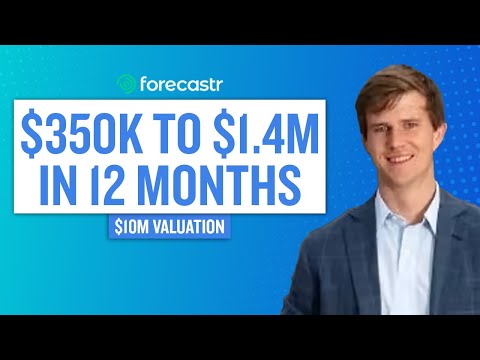
How Forecastr Reached $1.4M Revenue and 550 Paying Customers in 2023 (Interview with Co-Founder and COO Logan Burchett)
- Interview Date
- January 24, 2023
- Interviewee
- Logan BurchettCo-Founder and COO
Company Metrics at Interview Time
Annual Revenue (2023)
$1.4M
Paying Customers (2023)
550
Monthly Recurring Revenue (2023)
$120,000
Avg Contract Value (2023)
$1,400 per year
Team Size (2023)
33
Historical Snapshot
These numbers were reported by Logan Burchett during his interview with Nathan Latka in January 2023 and reflect a historical snapshot, not current figures. See Forecastr’s current numbers.
Key Takeaways
- 01Forecastr reached $1.4M in annual revenue as of January 2023, up from roughly $360K the prior year
- 02Monthly recurring revenue grew from about $30,000 per month a year prior to $120,000 per month
- 03The company serves 550 paying customers on annual subscriptions only
- 04Average contract value is approximately $1,400 per year after discounting for partners
- 05The largest single customer pays $15,000 per year and has over $500,000 in monthly expenses
- 06Forecastr has 33 employees split roughly evenly across growth, financial analysts, and engineering
- 07Total funding raised to date is approximately $5M, with an $8M Series A in progress as of January 2023
- 08The seed round of $2.5M was led by Resolute Ventures and closed in February 2021 at a $10M post-money valuation
- 09Monthly burn rate is approximately $200,000 to $230,000, with about 13 months of runway at interview time
- 10Variable pricing introduced in November 2022 ties annual contract price to the customer's monthly expense level
Company Metrics at Time of Interview
| Metric | Value | Source |
|---|---|---|
| Annual Revenue (2023) | $1.4M | Founder interview, Jan 2023 |
| Annual Revenue (prior year) (2022) | $360K | Founder interview, Jan 2023 |
| Monthly Recurring Revenue (2023) | $120,000 | Founder interview, Jan 2023 |
| Monthly Recurring Revenue (prior year) (2022) | $30,000 | Founder interview, Jan 2023 |
| Paying Customers (2023) | 550 | Founder interview, Jan 2023 |
| Avg Contract Value (2023) | $1,400 per year | Founder interview, Jan 2023 |
| Largest Customer Contract (2023) | $15,000 per year | Founder interview, Jan 2023 |
| Team Size (2023) | 33 | Founder interview, Jan 2023 |
| Seed Round (2021) | $2.5M | Founder interview, Jan 2023 |
| Pre-Seed Round | $600,000 | Founder interview, Jan 2023 |
| Bridge Round | $200,000 | Founder interview, Jan 2023 |
| Total Funding Raised (2023) | $5M | Founder interview, Jan 2023 |
| Seed Round Post-Money Valuation (2021) | $10M | Founder interview, Jan 2023 |
| Monthly Burn Rate (2023) | $220,000 to $230,000 | Founder interview, Jan 2023 |
| Runway (2023) | 13 months | Founder interview, Jan 2023 |
Growth Breakdown
Revenue
Forecastr grew annual revenue from roughly $360,000 to $1.4M between 2022 and 2023, representing nearly 4x growth year over year. Monthly recurring revenue climbed from about $30,000 per month to $120,000 per month over the same period.
Customers
The company reached 550 paying customers as of January 2023, all on annual subscriptions. The average contract value is approximately $1,400 per year after partner discounting, with the highest-paying customer at $15,000 per year.
Team
Forecastr had 33 employees at interview time, split roughly evenly across growth, financial analysts, and engineering. Analysts are primarily US-based, with one based in the UK, and many come from founder or accounting backgrounds.
Funding
The company had raised approximately $5M in total funding, including a $2.5M seed round led by Resolute Ventures in February 2021 at a $10M post-money valuation and a $600,000 pre-seed round. An $8M Series A was in progress at the time of the interview, with existing investors already committing a portion, giving Forecastr about 13 months of runway at a burn rate of roughly $220,000 per month.
Growth Strategy
White-Glove Onboarding with Financial Analysts
Forecastr pairs every new customer with a dedicated financial analyst who helps build out the financial model, connects data sources like QuickBooks, and trains the customer on the platform. This high-touch approach is funded by the upfront annual contract payment and is a key differentiator in a space dominated by self-serve tools.
Annual Subscriptions Only
By requiring annual contracts rather than monthly billing, Forecastr collects cash upfront, which funds the analyst onboarding hours and reduces churn risk. Logan credited this structure as central to the company's unit economics.
Expense-Based Variable Pricing
Starting in November 2022, Forecastr rolled out pricing tied to a customer's monthly expense level, inspired by a model used by competitor Pry. Larger customers with higher expenses pay more, allowing Forecastr to invest more analyst time in those accounts while keeping the fee a small fraction of total expenses.
Warm Investor Network for Fundraising
Rather than cold email outreach, Forecastr relied on warm introductions through its Techstars network and existing investor Resolute Ventures to generate 45 investor meetings within days of launching its Series A process.
Targeting Seed-Stage Founders as Primary Buyers
The typical Forecastr customer is a seed-stage founder who is the CEO, not a CFO. This focus on early-stage companies creates a large addressable market and a natural upgrade path as customers grow and hand the tool off to a CFO at Series A or B.
Best Quotes
“We've got about five fifty customers right now doing about 1,400,000 in revenue And we're seeing”
“So 1.4 today, we were doing about just shy of 30,000 a monthly reoccurring revenue about a year ago.”
“You're probably like high twenties now we're at about 120 of monthly reoccurring revenue.”
“of the five fifty, if you just do a straight up blended average today, then it's about $1,400 if you like discount it per year, because we do some discounting for partners and things like that.”
“So it's about so it's it's pretty even, right? So we have 33 employees right now. So you could pretty much split it evenly between growth, financial analysts and development. Like that's really kind of like, it's almost like a third, a third, a third.”
“It's it's it's just over about $200,000 that we're burning per month. 220, 230 depending on the month.”
“right now we're actually at about thirteen months worth of runway assuming that we don't raise any more money and that's mainly because our current investors have already committed to the series a and they've already funded a portion of that.”
“the reason that it's really hard to get CFOs to quit using Google sheets and Excel isn't inherently because they just love writing Excel formula so much. It's just because that's what they're used to and Excel has just been the default for so long.”
What Happened Next
This interview captures Forecastr at a specific moment in January 2023, when the company had just crossed $1.4M in annual revenue and was actively raising an $8M Series A. The numbers here reflect what Logan Burchett reported on that recording date and will not update as the company grows. Visit the Forecastr company profile on GetLatka for current metrics and any subsequent funding or revenue milestones.
View Forecastr’s current profile and metricsFull Transcript
Chapters
- 0:00Introduction and Company Overview
- 0:55The Forecasting Software Space and Competitors
- 2:38Revenue and Customer Count
- 3:12Monthly Recurring Revenue Growth
- 3:34Pricing Model and Annual Subscriptions
- 4:21Average Contract Value and Variable Pricing
- 10:24Team Structure and Financial Analysts
- 10:57White-Glove Onboarding Process
- 14:51Fundraising History and Rounds
- 18:10Burn Rate and Runway
- 18:56Existing Investor Commitments to Series A
- 19:42Why CFOs Switch from Excel to Forecastr
- 20:34Who Pays: CEO vs CFO
- 21:00Famous Five Rapid Fire
Introduction and Company Overview
Nathan Latka
00:00Forecastr.co helping CEOs and CFOs do their financial planning. They're doing a $120,000 a month today in revenue, up from 30,000 a month just a year ago. They've raised 5,000,000 today, targeting another $8,000,000 round right now. Their last round valuation was a 10,000,000 valuation at about 27 x multiple. We'll see what happens now. They've gotten some good interest inbound already serving 550 customers that pay on average $218 per month. Again, forecastr.co. Hey, folks. My guest today is
00:26Logan Burchett. He's from Nicholasville, Kentucky and currently the founder and COO COO of a company called forecastr.co. It's an online software that helps founders forecast revenue, predict runway, and understand their numbers and get funded. His cofounder and he came up with the idea back in 2018, and they've since grown to a wide user base, taking the company through prestigious tech stores accelerator, raised 5,000,000 venture capital, and then grew the team to over 25 folks. Alright, Logan.
00:52Ready to take us to top?
Logan Burchett
00:53I am ready, Nathan. Happy to be here. Alright.
The Forecasting Software Space and Competitors
Nathan Latka
00:55Yeah. This is a hot space. I mean, you saw companies like Pry and Finmark raise VC and, you know, that they exited, but it was pretty quick and you sort of wonder, well, wait a second. Can you actually build a big software company in this sort of forecasting space?
Logan Burchett
01:11Yeah, it's a really great question. And it is pretty wild to see how hot this space is. I mean, if you go back to the pre Carta days, Carta got really, really big back around like 2018 and of course now it's a $7,000,000,000 company. So I think what happened was you saw a lot of these people that kind of mentally connected the dots that, hey, if this can be done in a cap table, if you can
01:33basically software a cap table, a financial model kind of sits adjacent to that. So you're seeing a lot of people kind of coming out of the woodwork tackling this space. But to your point, is quite a bit more complex than a cap table management software whenever you really get into it. And I think that what you're seeing is there are a lot of people that are tackling the space, you know, Pry and Finmark both had really,
01:57really solid exits for where they were, you know, in terms of revenue and customer, they were both relatively early, but they exited for a decent amount. We of course know that Pry exited for 90,000,000. We haven't yet found out publicly what Finmark exited for, but you know.
Nathan Latka
02:12And the Pry 90,000,000 though, how was that split up between cash
Logan Burchett
02:15and That's a great question. And like honestly, like we don't a 100% know the answer to that. If I had to guess, I would say it was pretty heavy stock, but either way, I mean, I know that they weren't really generating a ton of revenue. But either way, I mean, I think that the space is really, really interesting just because it's been dominated by Excel, 98% of financial models are built in Excel. To your point, the
Revenue and Customer Count
Logan Burchett
02:38challenge is maintaining the flexibility that Excel has but also creating a standardized product that then you can integrate with and things like that. We've got about five fifty customers right now doing about 1,400,000 in revenue And we're seeing
Nathan Latka
02:52You must listen to the show. Give me the numbers I don't even have to ask. That's great.
Logan Burchett
02:55Oh no, well, I'll tell you everything. We're so transparent. Like, I mean, we share our financial model with people. That's just kind of the company that we are. So we don't mind sharing stats, we don't mind any of that.
Nathan Latka
03:06And so if you're doing like 1.1 today or about $90,000 a month, where were you exactly one year ago? Do you remember?
Monthly Recurring Revenue Growth
Logan Burchett
03:12So 1.4 today, we were doing about just shy of 30,000 a monthly reoccurring revenue about a year ago.
Nathan Latka
03:17Okay, very cool.
Logan Burchett
03:18You're probably like high twenties now we're at about 120 of monthly reoccurring revenue.
Nathan Latka
03:23Yeah. That's great.
03:25There's lot
Logan Burchett
03:26of product to build in the space for sure. And moving upstream is definitely kind of like the direction that we're going and building out those broader feature sets for folks.
Pricing Model and Annual Subscriptions
Nathan Latka
03:34So those five fifty customers say, what are they paying you per month on average?
Logan Burchett
03:38Yeah, so we only do annual subscriptions, and it's an interesting question because historically it was a one size fits all. We're still technically in beta. If you go on our website, you'll see a beta tag. Gonna be moving that off. It's more of a marketing ploy at this point, but for the longest time, people just paid us a standard $2,000 a year. And then we would give them a white glove onboarding because they got us paid
03:58back. Like we got paid on the front end, could afford to put some analyst hours behind the account, get them set up, get them trained, all of that. Here in November, we really started rolling out our variable pricing model, which similar to Pry, this is inspired by Pry, we're gonna be pricing our annual contracts based off of the monthly expenses of the customer. So the idea there being that larger customers we can afford to spend more
Average Contract Value and Variable Pricing
Logan Burchett
04:21time with, we can get them set up, we can train them, make sure that they get more success out of the platform as much as we can get, and then we'll charge them more for that. So to directly answer your question, of the five fifty, if you just do a straight up blended average today, then it's about $1,400 if you like discount it per year, because we do some discounting for partners and things like that. That's
04:43slowly creeping up since November, since we started releasing this Wait.
Nathan Latka
04:47What do mean by that? If I take a $120,000 a month or 1,400,000 AR divided by $5.50, it's about $2,500 per customer per year on average.
Logan Burchett
04:54Yeah, okay. So it's, I guess prior to November, it was kind of like roughly about that like 1,400, 1,500.
Nathan Latka
05:04Oh, I see.
Logan Burchett
05:04So like our highest paid customer right now pays us about $15,000 per year. But prior to that, they were paying the highest paid customer paid us $2,000 per year. It was just because we hadn't really focused on our pricing model up until that point.
Nathan Latka
05:17Oh, what's going on there, YouTube? Good to see you guys. Now imagine this, you love watching these interviews with SaaS founders, but imagine if we took all of the valuation data out from over 2,807 interviews I've done manually. Saves you a lot of time. Well, we've done this. We've built it into the beautiful interface inside of Founderpath. Check this out. I'll show you how you can access this in a second, but you log in, you connect
05:41your Stripe account, you see your valuation real time. You can see what it changed over the past eighty eight days and even set goals for valuation this year. Now the secret evaluation is there's many different ways to value a SaaS business. So the reason you're gonna see three or four different valuations inside of your Founderpath dashboard, this is all free by the way, is because depending on who's doing the buying of your SaaS company, you're gonna
06:05get a different valuation. A VC is gonna pay a different valuation, Private equity firm is different. If you're gonna do a minority sale, that's different. And if you sell the whole business, that's a different valuation. You can see all those when I hover over here. Right? So the teal is what a VC would pay. Yellow is what private equity And red is if you sold the whole thing outright. Now what's cool about this is this is
06:27not built off random data. Again, you guys hear these interviews on YouTube. All these datas are built from real time valuation data points founder share with us on the show. So traction 1,200,000 seed round 3.7 raise. They sold 22% of their business. Go in here and filter by the event. Maybe you only wanna see companies that have sold the whole business. Well, here are a bunch that have been acquired the valuation and the multiple. Maybe you're
06:53going out right now and you're raising your seed round. We'll go in here and look at all this recent seed deals that went down, what they raised, what valuation they raised at, and what percent that they sold. There's never been a larger dataset of SaaS valuations than what you can get now inside of Founderpath. And we're thrilled to bring it to you. All right, we're gonna go back to the YouTube video here in a second, but
07:14if you wanna check this tool out, if you wanna jump in and sign up, you can check it out for free to get your valuation at this link, this link, founderpath.com/products/valuations. Or if you go to founderpath.com and hoveroverproducts, click on get your valuation here, and go ahead and sign up to give it a whirl. Again, all that valuation data live right inside the platform. I hope to see you there. Alright. Let's jump back into the interview.
07:42So what is what something obviously, don't name the customer, but someone paying you $15,000 per year, how much total expenses do they probably have?
Logan Burchett
07:49Yeah. So it's usually so if you're at that $15,000 tier, then you've got over $500,000 a monthly expenses.
Nathan Latka
07:56Okay. Interesting. Interesting. So it's sort of like what is that? Like, 10 it's like fifth 2020% or something like that. 20% or no. What is that? Two percent two percent of monthly expenses.
Logan Burchett
08:07Yeah. Something like that. We we know we the reason one of the main reasons that we wanted to kind of like price along the expense curve is that we never wanted to be like an overly significant portion of your overall expenses. It was kind of our idea. So
Nathan Latka
08:20Yeah, you're paying Sorry, no, it's actually low, it's 3%. So like if you're paying $15,000 a year and you're doing 500 ks a month in expenses, a that's almost 3%. That's super cheap. Right?
Logan Burchett
08:30Yep. Very, very cheap. Yep.
Nathan Latka
08:32Well and so what always like it when someone takes something from that. They saw a competitor doing that they liked and they're implementing it themselves. A lot of people, their egos are too big to copy, which but, like, I think that's ridiculous. So what what did how did you know that it was working for Pry? How did you know it was a good idea to copy?
Logan Burchett
08:45Yeah, so what's funny is we didn't, right? We saw that they were doing that. Obviously we saw that they had some success in their exit depending on kind of like what it ended up looking like. But what we did was we really liked the idea of an expense based pricing for obvious reasons, it's kind of a good way to price along the demand curve. So once we decided that this was something that we wanted to look
09:06into, we just went back and just started doing like plain customer discovery. We went back to our old customers, our beta customers and we said, hey, listen, if we were to price in this way and if we were to kind of reassess your price every single year and we did it with this fashion, how would that make you feel? What would you think? Would that turn you off? Would you be okay with that? Assuming that we're
09:26adding more value and you're getting bigger as well, we're not just charging you the same for charging you more for the literally same thing. And they all were like, yeah, mean, I think that that's totally reasonable. It seems like a fair way to price, never gonna be too big of an expense if you do it this way. And that's whenever we went forward with it was after that. How do
Nathan Latka
09:42you do that though? Like, let's say my I'm with forecaster and you and I are negotiating my new plan for the next twelve months. Are you looking at my monthly expenses from last month being 500 ks or are you saying, Nathan, what do you think your expenses are gonna be twelve months from now?
Logan Burchett
09:54Yeah, we it retroactively. So we look at your, like really like the average of the last three months worth of expenses in order to try to like, know, deal with seasonality if you have like a big expense month or something like that. I'd be lying to you if I said that we had that completely nailed down because we just rolled this out in November. So that hasn't happened yet. So like in theory, that's how it would
10:15work. And we hope that it works, you know, without a doubt, but that's the idea anyway. We have to wrap everybody for that conversation on the on the front end though.
Team Structure and Financial Analysts
Nathan Latka
10:24Yeah. Walk me through, you've mentioned put analysts on the account a couple of times. Does your team look like today? Let's just start off with engine how many are only writing code on engineers?
Logan Burchett
10:33Yeah. So it's about so it's it's pretty even, right? So we have 33 employees right now. So you could pretty much split it evenly between growth, financial analysts and development. Like that's really kind of like, it's almost like a third, a third, a third. And so what you just zoned in on is the, what we call our white glove onboarding. So it's, I think one of the key differentiators for us in this space. Like we, I
White-Glove Onboarding Process
Logan Burchett
10:57was a fractional CFO for a number of years as was my co founder Steven. And we just knew that if you plop somebody in kind of like a deeper, like financial analysis software, they're gonna fall flat on their face. It's kind of like a specialized business function. So having a seed stage founder jump in and just say, here's the keys, go ahead, have fun. That wasn't gonna work out too well. So what we do instead was
11:19we only do annual contracts, we pair them up with a financial analyst, the finance experts specifically for venture finance. Their job is to help them build the model, use the data that they have, help inform the forecast, train them on how to use the forecast and then we check-in with them sporadically. And that's kind of like, it's almost like a, I don't like to use this word, it's kind of like a blend of like SaaS and
11:42services in a way. Now the idea is most of the services component is done on the front end with an onboarding and then you kinda fade off kind of once the customer's been trained up.
Nathan Latka
11:51Who are like, where do you find these these analysts? You know, for example, I mean, Stripe and some other even SPV sometimes like their their folks and they're doing new deals with SaaS companies. They actually have like a massive team in India that does a bunch of like the literally cleaning the P and L, the balance sheet, etcetera. Who are some of these folks that you put in your financial analyst category?
Logan Burchett
12:09Yeah, no, it's a great question. Everybody here that's an analyst is based in The US except for one of our analysts whose name is Phoebe, is based over in The UK. Mean, a lot of them are previous founders, right? We just hired, we have I think three analysts that were founders before they joined forecastr as financial analysts. And they were like kind of finance y founders. We have some folks that were like accountants beforehand, but like
12:35all of these people are kind of more financial inclined mathy people that are really, really interested in startups. And you know, they wanted to kind of jump on board on us while we're kind of like near the ground.
Nathan Latka
12:46So what is he like, Sandeep, he's based in Austin, you just hired him. This was like a month ago. It says he's starting. It looks like you've found him through LinkedIn and he's got a lot of experience at the new chip accelerator before this, but like what is his day to day at forecaster look like?
Logan Burchett
12:59Yeah, so this is his second day. So right now his day to day is just getting onboarded, but his day to day, the way that we kind of think about it is it's gonna be basically split almost fiftyfifty going into forecaster and helping our clients like actually build out their financial models and forecaster and getting on calls with them just to kind of
Nathan Latka
13:17What does that mean though? Is it is he saying like, hey, here's how to connect to your QuickBooks so we can start manipulating your data or is it like upload this CSV folder to populate your charts?
Logan Burchett
13:26Yeah, it's more just like straight up bottoms up financial modeling. So it'd be like, hey, let's go in, let's connect your QuickBooks account and we'll show you how to do that. But then, oh, I see you have these revenue categories in QuickBooks, let's go to the revenue stream section of forecastr, build this out, make sure it has all of your important metrics in there, make sure that we can craft a story that makes sense to investors,
13:45lenders, what have you. That's a
Nathan Latka
13:47So is he the one where in QuickBooks, the company has labeled a bunch of these weird things and you're like, no, in forecastr, this is actually COGS and this should be keen. He's helping like sync the two.
Logan Burchett
13:57100%, yeah. So it's basically just like, I mean, at the end of the day, we wanna build a forecast that our customers can understand and use and is actually valuable. So that's why we go through and a lot of times we'll get people that say, Hey, my QuickBooks is a mess, like my accounting, like I don't really know, that's okay. Sandeep would be the type of person that would go in, say, Well, let's set up your
14:15forecast where it makes sense. We'll map it back to your QuickBooks but this can be your source of truth now. And then inform them on how to use it, plan for cash fundraising, all of that stuff.
Nathan Latka
14:24Really interesting. Speaking of fundraising, so have you guys bootstrapped or we know you raised because you said in the bio, but walk us through the rounds, when was the seed before pre
Logan Burchett
14:31Oh my gosh. So we're deep in the throes of it right now, Nathan. So we're in the middle of a series A at the moment. So we've raised in total about $5,000,000 kind of as you alluded to in the bio, we're in the process of raising 8,000,000 more. So we actually just kicked this off on the seventeenth. My co founder Steven is actually out in San Francisco right now and he's just kind of back to back
Fundraising History and Rounds
Logan Burchett
14:51meetings. But we raised a pre seed round on a convertible note, then we raised a seed round which is led by Resolute Ventures out of San Francisco and now we're in the middle of our series A round, an $8,000,000 series A round.
Nathan Latka
15:02When was the seed round, what year?
Logan Burchett
15:04That was February 2021 was whenever we actually got the cash closed and we kicked it off basically January 1 of that year.
Nathan Latka
15:11Okay. So pre pre seed there and how much did you raise there?
Logan Burchett
15:14In the pre seed we raised, we oversubscribed to $600,000 round up to $7.50. At the seed round, we raised 200 2,500,000. And then in between there, we had some like little like bridge rounds. When you add it all up, it's around $5,000,000.
Nathan Latka
15:28And that sorry. That pre seed round of 600 k, that was you said out of 7,500,000 cap?
Logan Burchett
15:33No. That was on a convertible note, and there were two caps because one of them was a Techstars cap and then the other one was just a Louisville, Kentucky teeny tiny, you know, small town investor cap of, I think I think it was, like, and half, it might have been $3,000,000 or something like that.
Nathan Latka
15:48Okay. Fair enough. Fair enough. And then the seed, most people are selling 10 to 15% of the company in the seed round. Are you sort of in that same range?
Logan Burchett
15:54Yeah. We did. It was at a $10,000,000 post. So it was around Yep.
Nathan Latka
15:59Yeah. That's not bad at all. And then what are targeting with 8,000,000? What would you like to see in terms of post money valuation?
Logan Burchett
16:03I hesitate to honestly say this just because we're big proponents of just like letting the market determine evaluation. But what I will say, which I think is a pretty safe answer is like, we're raising $8,000,000 so if you're trying to sell roughly, if you're trying to keep it in that 20%, that'd be a $40,000,000 post. So 32, 33, that's kind of what we're hoping for. But we'll see what the market says.
Nathan Latka
16:23What is the market telling me? Everyone's saying right now you can't raise money, right? What are you hearing? I mean, you do you have the term sheet yet?
Logan Burchett
16:29No, we don't have a term sheet, but we're we're on our first round of like second meetings. There's definitely interest. You can definitely raise money right now. And this is kind of like what we've seen. Obviously, we talked to a lot of VCs gearing up for the series a. Basically what we've heard is that, yes, capital is still being deployed. Yes, you can still get a round done. What you're probably gonna see is valuations kind of
16:50squeezing like you're not It's not gonna be 2019, you know, where you have companies with like no revenue that are raising, you know,
Nathan Latka
16:56I mean, 40 posts though would still put you out like a 28, 29 x multiple at the current 1.4, that's still pretty healthy.
Logan Burchett
17:01Oh, big time, big time. Oh yeah, don't get me wrong. I mean, I'd be very happy with that valuation if we can get it. I think in like 2019, might've seen an even higher valuation just because the markets were going a little bananas. But yeah, I mean, you can still get around that is what we've been told.
Nathan Latka
17:17And so when you email all these VCs in a recessionary period, what's the subject line you use to get them to open and return it? Do you say like net dollar retention, one fifty, raising now, must open?
Logan Burchett
17:27Yeah. It's a great question. And I would say that luckily we don't really do a whole lot of like cold email outreach to investors. Like we have a really great network through Techstars, we have a really great network through Resolute, I mean, they're absolutely incredible. And we're big proponents of the idea that like cold emails while fundraising, it's just really, really hard. It's really, really tough to get an investor to open up a cold email and
17:52then take a meeting with you. If you can get warm intros, it's so much easier but it's all in the prep work, right? If you need to get like a giant list of investors, this is your target list and you gotta do the work to be like, okay, I know this person that knows this person, that knows this person, give me affordable email intro. And then that's how you get a lot of meetings. We've got, I
Burn Rate and Runway
Logan Burchett
18:10think 45 meetings set over like whenever we started a few days ago until the next couple of weeks. And like I said, we're running a tight process here. So we're already getting some, you know, follow-up meetings, but
Nathan Latka
18:22That's awesome, man. What does your burn profile look like today? Obviously, you always wanna, you know, the best alternative to raising. The stronger you are, the better round you can probably actually raise. So like when you look at what you're burning today per month, what do you guys, you know, on the order of magnitude of what?
Logan Burchett
18:33Yeah. It's it's it's just over about $200,000 that we're burning per month. 220, 230 depending on the month. And then obviously once we get the 8,000,000 in, we'll probably ramp that up for a little bit more sales and marketing and
Nathan Latka
18:45Just to be clear, your your your net burn monthly right now is about $200,000.
Logan Burchett
18:49Correct, yep, yep.
Nathan Latka
18:50Okay. And so what does that leave you in terms of runway right now, cash in the bank? It has ten months of runway, eighteen months of runway more?
Existing Investor Commitments to Series A
Logan Burchett
18:56Well, right now we're actually at about thirteen months worth of runway assuming that we don't raise any more money and that's mainly because our current investors have already committed to the series a and they've already funded a portion of that.
Nathan Latka
19:07Oh, nice.
19:08Nice. So you sort of have a you sort of you sort of had initial close already because the the 2,500,000 folks they put in more.
Logan Burchett
19:14Correct. Yeah. Yeah. And, yeah, pretty much everybody that's invested in the company, we sent them an email and said we wanna give you guys first crack at it and then we got about 500
Nathan Latka
19:21Wait. Where where was that extra? Sorry. I have 2.5 seeds, 600 pre seed, but you said you raised 5,000,000 today. Where's the other, like, 2,000,000?
Logan Burchett
19:28We've had we've had a few kind of, like, bridge rounds in between then. So we had an extra 200,000 between this series, the pre seed and the seed, and then we did another, like, I think 1.1.
Nathan Latka
19:38Oh, I see. So so we had some, like, bridge rounds in between.
Logan Burchett
19:41Yep. I see.
Why CFOs Switch from Excel to Forecastr
Nathan Latka
19:42I see. Very cool. I guess last question before we wrap up. It's very hard to get CFOs to stop using Google Sheets and Excel. Why do they log into forecastr every month?
Logan Burchett
19:53Yep. So it's integrations analytics and reporting are really the big three. So I think that the reason that it's really hard to get CFOs to quit using Google sheets and Excel isn't inherently because they just love writing Excel formula so much. It's just because that's what they're used to and Excel has just been the default for so long. But I think that the opportunity really that we have and this is why we're seeing so much success
20:15in this space is that we can match Excel's flexibility but we can do so in a way that we can still integrate with all of your data. So you're not having to go in and literally update it every month. That's how you get them interested is you say, look, I can give you the same amount of value with less amount of time, and then I can make it a lot more collaborative with a better user experience
Who Pays: CEO vs CFO
Logan Burchett
20:34and all of that.
Nathan Latka
20:34And are you usually those 550 customers, is it usually the CFO paying on their card or is it the CEO paying on their company card?
Logan Burchett
20:41Usually the CEO paying on their company card.
Nathan Latka
20:44Almost interesting. So are you selling to you would say then you're selling to CEOs and then relying on the CEO to get the CFO to use it?
Logan Burchett
20:50Our average user is like a seed stage founder. Yep. That's exactly right. So then but then we obviously have companies larger than that series a, series B. So then those, then it kind of like the keys are kind of handed over to the CFO at that point.
Famous Five Rapid Fire
Nathan Latka
21:00I see. Well, Logan, we're certainly rooting for you. It's a heck of a story. Let's wrap up here with the famous five. Number one, what's your favorite book?
Logan Burchett
21:09All right, so I'm not, know, sucking up here, but I think it might be your book. How to be a capitalist without any capital.
Nathan Latka
21:14Oh, no. You read it.
Logan Burchett
21:15I read it. So I actually bought a a Chrome extension because of it. It's called flowtime.biz.
Nathan Latka
21:20Yeah. Yeah. I bought it.
Logan Burchett
21:21Oh, nice. Read your book.
Nathan Latka
21:22Yeah. Yeah.
21:23That's that was one of my favorite first business deals I ever did. I had had no idea what I was doing, but it worked out nicely. Flowtime website blocker. Very cool.
Logan Burchett
21:31Yep. Yep.
Nathan Latka
21:31Alright. Thanks for the compliment. And number two, is there a CEO you're following or studying?
Logan Burchett
21:36CEO, Brian Halligan. I really like Brian Halligan. Yeah. Think he's a yeah. Think he's really, really interesting. I like it because he had a very high churn rate at HubSpot and he was able to, like, chop that down to basically nothing, which is really interesting.
Nathan Latka
21:47Yep. Yep. Number three, what's your favorite online tool for building forecastr besides your own?
Logan Burchett
21:52Favorite online tool is Notion. I think it's really very flexible and I, you know, use it for a lot of stuff.
Nathan Latka
21:58Number four, how many hours of sleep do get every night?
Logan Burchett
22:00Oh, I'm a I'm asleep. I'm crazy about sleep. I get eight hours a night. I make sure I get eight hours a night, I have to.
Nathan Latka
22:06I'm the same way. What's your situation? Married, single, kids?
Logan Burchett
22:08I am married. Got married in pandemic twenty twenty.
Nathan Latka
22:12Congrats. Any kids yet or no?
Logan Burchett
22:14Nope. Nope. Not yet.
Nathan Latka
22:15Not yet. Alright. And how old are you Logan?
Logan Burchett
22:17I am 31 years old.
Nathan Latka
22:19Last question, something you wish you knew when you were 20.
Logan Burchett
22:22Something that you don't have to take a standard career path. You don't have to go work for the man, you can build your own thing. I didn't whenever I kind of like came to that conclusion, I immediately left and started forecaster and I'm never I don't think I'm ever going back to a standard nine to five.
Nathan Latka
22:39Guys, forecastr.co helping CEOs and CFOs do their financial planning. They're doing a $120,000 a month today in revenue, up from 30,000 a month just a year ago. They've raised 5,000,000 today, targeting another $8,000,000 round right now. Their last round valuation was a 10,000,000 valuation at about 27 x multiple. We'll see what happens now. They've gotten some good interest inbound already serving 550 customers that pay on average $218 per month. Again, forecastr.co. Go check it out. Logan,
23:05thanks for taking us to the top.
Logan Burchett
23:06Thanks so much, Nathan.
Nathan Latka
23:08One more thing before you go. We have a brand new show every Thursday at 1PM central. It's called Shark Tank for SaaS. We call it deal or bust. One founder comes on three hungry buyers. They try and do a deal live and the founder shares back end dashboards, their expenses, their revenue, ARPU, CAC, LTV, you name it, they share it. And the buyers try and make a deal live. It is fun to watch every Thursday 1PM
23:33Central. Additionally, remember these recorded founder interviews go live. We release them here on YouTube every day at 2PM Central to make sure you don't miss any of that. Make sure you click the subscribe button below here on YouTube, the big red button and then click the little bell notification to make sure you get notifications when we do go live. I wouldn't want you to miss breaking news in the SaaS world, whether it's an acquisition, a big
23:55fundraise, big sale, a big profitability statement or something else. I don't want you to miss it. Additionally, if you want to take this conversation deeper and further, we have by far the largest private Slack community for B2B SaaS founders. You want to get in there. We've probably talked about your tool if you're running a company or your firm if you're investing. You can go in there and quickly search and see what people are saying. Sign up
24:17for that at nathanlatka.com/slack. In the meantime, I'm hanging out with you here on YouTube. I'll be in the comments for the next thirty minutes. Feel free to let me know what you thought about this episode. And if you enjoyed it, click the thumbs up. We get a lot of haters that are mad at how aggressive I am on these shows, I do it so that we can all learn. We have to counter those people. We got
24:37to push them away. Click the thumbs up below to counter them and know that I appreciate your guys'support. Alright, I'll be in the comments. See you.