
Founder Interview
How Goldcast Reached 200 Customers and North of $500K MRR with a B2B Events Platform (Interview with Co-Founder and CEO Palash Soni)
- Interview Date
- March 20, 2023
- Interviewee
- Palash SoniCo-Founder and CEO
Company Metrics at Interview Time
MRR (March 2023)
North of $500K
Customers (2023)
200
Avg Contract Value (2023)
$30,000 per year
Team Size (2023)
110
Series A Raised (2022)
$28M
Historical Snapshot
These numbers were reported by Palash Soni during the interview recorded in March 2023 and are a historical snapshot, not current figures. See Goldcast’s current numbers.
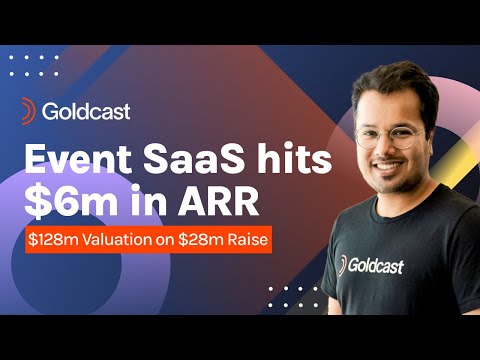
Key Takeaways
- 01Goldcast had 200 customers as of March 2023
- 02MRR was north of $500K at the time of the interview
- 03Average contract value was $30,000 per year
- 04The company raised a $28M Series A in September 2022 at a $120M post-money valuation
- 05Team size was 110, including 50 engineers and 6 AEs plus 10 BDRs
- 06Net burn per month was between $600K and $1M
- 07Palash stated the company would easily cross $10M ARR by end of 2023
- 08GitHub started with Goldcast in May 2020 and grew to around 30 teams using the platform
- 09Goldcast went after B2B marketing teams only, whose events typically ran from 30 to 5,000 attendees
Company Metrics at Time of Interview
| Metric | Value | Source |
|---|---|---|
| MRR (March 2023) | North of $500K | Founder interview, Mar 2023 |
| Customers (2023) | 200 | Founder interview, Mar 2023 |
| Avg Contract Value (2023) | $30,000 per year | Founder interview, Mar 2023 |
| Team Size (2023) | 110 | Founder interview, Mar 2023 |
| Engineers (2023) | 50 | Founder interview, Mar 2023 |
| AEs (2023) | 6 | Founder interview, Mar 2023 |
| BDRs (2023) | 10 | Founder interview, Mar 2023 |
| Net Burn per Month (March 2023) | $600K to $1M | Founder interview, Mar 2023 |
| Series A Raised (2022) | $28M | Founder interview, Mar 2023 |
| Post-Money Valuation at Series A (2022) | $120M | Founder interview, Mar 2023 |
| GitHub Teams Using Goldcast (2023) | Around 30 | Founder interview, Mar 2023 |
Growth Breakdown
Revenue
At the time of the interview, Goldcast was generating north of $500K in MRR. The company charged an average of $30,000 per year per customer, with pricing based on the number of teams using the platform.
Customers
Goldcast had 200 customers at the time of the interview. Key logos included GitHub, LG, 6sense, Adobe, and SalesLoft, with GitHub alone having around 30 teams using the platform across marketing use cases.
Team
The team stood at 110 people, including 50 engineers and a sales team of 6 AEs and 10 BDRs.
Funding and Burn
Goldcast closed a $28M Series A in September 2022 at a $120M post-money valuation. Net burn was between $600K and $1M per month, with Palash noting the company had at least two-plus years of runway remaining.
Growth Strategy
Outbound Sales Targeting Large Enterprises
Palash described the primary go-to-market motion as outbound, focused on large enterprise accounts in tech such as LG and Adobe, where Goldcast already had meaningful traction. The team was also expanding into non-tech B2B verticals like law firms and accounting firms.
Event-Led Growth
Palash described the go-to-market motion as "event heavy actually, which is our core strength." He also said good B2B marketers never treat virtual events as a way to make money from tickets: "It's always a way to generate demand or generate audience."
Inbound from the Core Market
In Goldcast's core market, Palash said the company already got "a lot of inbound," and he expected that market to "keep on giving us the baseline growth."
Cold Outreach
Palash said the motion for going after large tech enterprises and non-tech B2B firms was "very outbound." At the time of the interview, the sales team was six AEs and 10 BDRs.
Niche Focus on B2B Marketing Teams
Rather than competing with broad event platforms targeting large trade shows, Goldcast went after B2B marketing teams only, whose events typically ran from 30 to 5,000 attendees. This focus shaped the product's UX, integrations, and analytics to match what marketing ops teams needed.
Best Quotes
“Yeah, Nathan. So one of our largest customers is GitHub and they started with us in May 2020. And they started with us doing an event series in Europe for one of their new product launches. ... Now they have around 30 teams using us, mostly marketing teams doing a variety of marketing events, right?”
“Our focus is more in the niche of B2B marketing teams. So we only go after B2B marketing teams and we are more agile in the way that we can serve the small, you know, to 40 person webinars all the way up to, bigger multi day and multi track conferences.”
“Yeah. Since the last time we have spoken, Nathan, it has changed. Now we charge based on number of teams that companies use.”
“We raised it at a 120 post money.”
“It did, Nathan, it did. And I'm glad we raised that valuation because it puts us in a very nice spot at this point where we are not overvalued as much and we can put money in the right places. We don't have immense pressure to grow and we are growing very well.”
“Our net burn per month, Nathan, is somewhere between 600 to 1,000,000. So it's still high.”
“We will easily cross 10,000,000 by end of this year and hopefully we can double next year as well.”
“So our goal is to very much go after them. And the motion there is very outbound, right? And event heavy actually, which is our core strength. So that's our strategy.”
“I think also some of the concerns of people not coming in person and watching it virtually aren't founded. I think if given an option, will attend an in person event and I'm saying that as CEO of a digital events company, but there's still there are wide variety of people and within people who prefer in person, there are situations that force them to attend in digital events.”
What Happened Next
At the time of this interview in March 2023, Goldcast was serving 200 customers with north of $500K in MRR and had recently closed a $28M Series A. Palash said he expected Goldcast to "easily cross" $10M in ARR by the end of 2023 and hoped to double it the following year. This page reflects what was reported during the recording and is a point-in-time snapshot. Visit the Goldcast company profile on GetLatka for the most current available data.
View Goldcast’s current profile and metricsRun a software or AI company? Get interviewed by Nathan Latka and tell the story behind your numbers.
Full Transcript
Chapters
- 0:00Host Introduction and Company Overview
- 0:50GitHub Customer Story
- 1:37How Goldcast Differs from Hopin and vFairs
- 2:39Pricing Model and Upsell Structure
- 3:23Series A Raise and Valuation
- 6:54Current MRR and Winning Deals Over Hopin
- 8:19Burn Rate and Runway
- 9:06ARR Target for 2023
- 9:18Growth Strategy: Outbound and Enterprise Focus
- 10:18Best Practices for Virtual Events
- 18:49Team Size, Engineers, and Sales Reps
- 19:35Famous Five
Host Introduction and Company Overview
Nathan Latka
00:00Goldcast.io for running your virtual event. Have about 200 customers who are doing 500,000 a month in revenue. That's up from 250,000 a month just a year ago. They got their $28,000,000 series a done back in September 2022 at a 120,000,000 post valuation call it. They sold 20, 23% of the company. Now a 110 folks on the team as they look to scale. Again, 200 customers today charging on average $30,000 per year focusing on b to b
00:22brands. Hey, folks. My guest today is Palash Soni. He's a Goldcast cofounder and CEO. He got his first days of entrepreneurship, charging kids from the neighborhood hourly to play video games on a secondhand console. He's always been fascinated by legacy companies like Microsoft, Verizon, and Disney that ex... Excelled at identifying and riding long term trends while building resilience. Now he's building a digital events platform for B2B marketers called goldcast.io. Palash, you're ready to take us to
00:47top?
Palash Soni
00:49I am, Nathan. Excited.
GitHub Customer Story
Nathan Latka
00:50Alright. Tell us the story of one of your customers and why they pay you.
Palash Soni
00:55Yeah, Nathan. So one of our largest customers is GitHub and they started with us in May 2020. And they started with us doing an event series in Europe for one of their new product launches. So they did an event series throughout the year for 2,030 events. Now they have around 30 teams using us, mostly marketing teams doing a variety of marketing events, right? Like product launches or demand gen events or events with enterprise customers. And that's
01:26what typical use cases look like, right, like marketing teams of different types, using us to do events with their customers, prospects to serve a variety of marketing event use cases.
How Goldcast Differs from Hopin and vFairs
Nathan Latka
01:37That's awesome. Now just to be clear, are you... I mean, is this sort of in the Hopin, Visible, vFairs sort of world or are you... Would you say you're different?
Palash Soni
01:47Fundamentally, it looks like that. Yes. But our focus is more in the niche of B2B marketing teams. So we only go after B2B marketing teams and we are more agile in the way that we can serve the small, you know, to 40 person webinars all the way up to, bigger multi day and multi track conferences. We don't go after like the big 50,000, 100,000 person trade shows, which is what vFairs, Hopin specialized in. We
02:20don't do like very complex ticketing and stuff because that's what not B2B marketers looking for. They're typically looking for 30 to 5,000. That's where the B2B marketing use cases lie. And that makes a lot of difference in how our UX is, how our technology is, how our, you know, is and how easy the product is to use.
Pricing Model and Upsell Structure
Nathan Latka
02:39That's awesome. Now you work with some of the biggest brands in SaaS, Drift, GitHub, Autodesk, 6sense, Hootsuite, User Testing, Zoras, Sendoso. You got a bunch of them on your website here. Help me understand on average, what are companies paying per month or per year to use the technology?
Palash Soni
02:53$30,000.
Nathan Latka
02:55Okay. And how do you upsell? Is it number of attendees, number of seats or something else?
Palash Soni
03:00Yeah. Since the last time we have spoken, Nathan, it has changed. Now we charge based on number of teams that companies use.
Nathan Latka
03:07Interesting. Yeah. Because last time you upsold... What did you tell me? You said you upsell against number of attendees and features, but now it's just now it's just teams.
Palash Soni
03:07Yes.
Nathan Latka
03:07Interesting. And when we last spoke, you told me you had about a 110 customers. Where are you today?
Palash Soni
03:22200.
Series A Raise and Valuation
Nathan Latka
03:23200. Okay. Great. And I remember you telling me on that episode, this was back January January, February, March. This was back in April of of last year. You said you were raising a 20,000,000 series a. Come September, it looks like you got that closed to 28,000,000 series a. Is that right?
Palash Soni
03:37Yeah. Yeah. Correct.
Nathan Latka
03:38That's awesome. This is the first time you announced that you were doing it on the show or had you already sort of started the process?
Palash Soni
03:44So we had started the process, Nathan. We had just started at that time.
Nathan Latka
03:48That's awesome. Well, congrats on getting it done. Are you comfortable sharing the valuation you raised at?
Palash Soni
03:53Yeah, Nathan. Absolutely. We raised it at a 120 post money.
Nathan Latka
03:56And did that feel fair to you at the time?
Palash Soni
04:00It did, Nathan, it did. And I'm glad we raised that valuation because it puts us in a very nice spot at this point where we are not overvalued as much and we can put money in the right places. We don't have immense pressure to grow and we are growing very well. We can, you know, grow at a decent pace put money in the right places.
Nathan Latka
04:26Oh, what's going on there, YouTube? Good to see you guys. Now imagine this. You love watching these interviews with SaaS founders. But imagine if we took all of the valuation data out from over 2,807 interviews I've done manually. Saves you a lot of time. Well, we've done this. We've built it into the beautiful interface inside of Founderpath. Check this out. I'll show you how you can access this in a second, but you log in, you connect
04:49your Stripe account, you see your valuation real time. You can see what it changed over the past eighty eight days and even set goals for valuation this year. Now the secret evaluation is there's many different ways to value a SaaS business. So the reason you're gonna see three or four different valuations inside of your Founderpath dashboard, this is all free by the way, is because depending on who's doing the buying of your SaaS company, you're gonna
05:13get a different valuation. A VC is gonna pay a different valuation. Private equity firm is different. If you're gonna do a minority sale, that's different. And if you sell the whole business, that's a different valuation. You can see all those when I hover over here,
05:26Right? So
05:27the teal is what a VC would pay. Yellow is what private equity and red is if you sold the whole thing outright. Now what's cool about this is this is not built off random data. Again, you guys hear these interviews on YouTube. All these datas are built from real time valuation data points founders share with us on the show. So traction 1,200,000 seed round 3.7 raise. They sold 22% of their business. Go in here and filter
05:51by the event. Maybe you only wanna see companies that have sold the whole business. Well, here are a bunch that have been acquired the valuation and the multiple. Maybe you're going out right now and you're raising your seed round. We'll go in here and look at all this recent seed deals that went down, what they raised, what valuation they raised at, and what percent that they sold. There's never been a larger dataset of SaaS valuations than
06:16what you can get now inside of Founderpath. And we're thrilled to bring it to you. All We're right. Gonna go back to the YouTube video here in a second, but if you wanna check this tool out, if you wanna jump in and sign up, you can check it out for free to get your valuation at this link. This link, founderpath.com/products/valuations. Or if you go to founderpath.com and hover over products, click on get your valuation here and
06:41go ahead and sign up to give it a whirl. Again, all that valuation data live right inside the platform. I hope to see you there. Alright. Let's jump back into the interview. And so what is MRR today?
Current MRR and Winning Deals Over Hopin
Palash Soni
06:54We are at five... North of 500 k.
Nathan Latka
06:57500,000 a month? That's more than double from exactly a year ago when you were at 250,000 a month. So congrats on the growth. How are you winning deals over Hopin and some of these other players?
Palash Soni
07:08Yeah. It's
07:11honestly just our focus on the persona, right? So our product, it is honestly the best in the market if you are a B2B marketer and it shines in three ways. One is that it is the most brandable, right? So if you are a 6sense, our product does look exactly like 6sense. Or if you're an LG, it looks like LG. Second is it is very adaptable to your strategy, right? So if you are doing webinars
07:37or if you're doing multi day events or if you're doing even field events, can use Goldcast. And that creates a lot of advantage for teams because you can centralize your data. You can use the same product for the entire team and it's just easy. You can save a lot of money by using the same product and the same license. The third is that our integrations and analytics and all the martech functionalities that the sales and marketing
08:03teams need, they are just the best in the market 10x better than what horizontal platforms like Hopin, etcetera, offer. And they are very appealing to the marketing team, especially marketing ops who are the key stakeholders in all of those deals and they, all these things really resonate with them.
Burn Rate and Runway
Nathan Latka
08:19So how do you manage growth now moving forward? How much are you burning net burn per month would you say?
Palash Soni
08:26Our net burn per month, Nathan, is somewhere between 600 to 1,000,000. So it's still high, but
Nathan Latka
08:35You sort of smile when you say that a little bit. Why do you smile?
Palash Soni
08:40It is still high, Nathan. I would say it's still high. It is still COVID at a burn, I would say, and we are very cognizant of it, trying to bring it down.
Nathan Latka
08:48I mean, but it sounds like... I mean, you probably still have what? Probably more than $22,000,000 to $23,000,000 in the bank from your series a. Right?
Palash Soni
08:55Yeah, very correct. Yeah.
Nathan Latka
08:57Yeah, I mean, so you've got twenty four plus months of runway, right?
Palash Soni
09:02We do, we do, we easily have at least two plus years of funding.
ARR Target for 2023
Nathan Latka
09:06And what do you think you'll grow ARR to by the end of this year, 2023?
Palash Soni
09:11We will easily cross 10,000,000 by end of this year and hopefully we can double next year as well.
Growth Strategy: Outbound and Enterprise Focus
Nathan Latka
09:18And what's the growth strategy? You went from 110 customers to 200 over the past twelve months. How do you go from 200 to 300?
Palash Soni
09:26Yeah, Nathan, so right now our focus is very much go after large enterprises in tech. So the likes of LG, Adobe, etcetera, right? Where we already have non trivial traction. And then we are seeing success in non tech B2B as well, right? Where the go to market motion is the same, just that their stack is a little different, right? So they'll use Nexus Nexus instead of Salesforce, for example, right? So law firms, accounting firms, and things
09:52like that. So our goal is to very much go after them. And the motion there is very outbound, right? And event heavy actually, which is our core strength. So that's our strategy. In our core market cash costs right now, which is B2B market tech, we already get a lot of inbound. So that market I think is set and will keep on giving us the baseline growth.
Best Practices for Virtual Events
Nathan Latka
10:18Mhmm. Let me ask you a question. Like, I I get invited to these, like, virtual summits all the time, and it's, like, two days and a 100 speakers, and I get it. The event organizers want as many speakers to get the list as big as possible. But what happens is you go on this and the first session has, a thousand people. Three hours in, you've got, like, five people on. Right? No one's gonna sit in front
10:38of a computer for two days and just watch your streaming event. So, like, first off, is that accurate? You have the data. And if it is accurate, what would you tell event organizers in terms of how to plan a virtual event to maximize live eyeballs?
Palash Soni
10:53Yeah, for sure, Nathan. So digital events are just like any other marketing tool, right? It depends on how you use it, right? You can, similar to how you can bundle up a digital event, can bundle up ads or any other medium, right? So our suggestion to event organizers is always to do what is right for our audience and seldom is a big two day, three day event with such a complex agenda in digital mode is the
11:18right thing to do unless you are something like an LG or Adobe, right, where you have such a wide audience across times on set, it means something to you. So typically we suggest something like a two to four or five hours with punchy sessions and there is a whole marketing strategy that needs to go behind it. So there's like a full playbook that we publish and we had to publish multiple playbooks and it also needs to
11:42tie in with your marketing strategy, right? So a digital event cannot be just like a tenfold in person conference, right? Where it's a thing of its own and people are traveling just to have drinks or something, right? It needs to be part of a big campaign, right? Either there is a big piece of content that you've released or a playbook that you've released or a product that is being launched and this is part of that. And
12:06that's where digital events are so powerful, right? Because they can be very repeatable, they can be very measurable, they can be very tied into what else you are doing in marketing. So I don't know if it answered your question, but it really depends on what the marketer is doing, but seldom is what you described as the right answer.
Nathan Latka
12:26Yeah, what I just heard you say is if you're a B2B SaaS company and you're looking at your own online event like Amplitude or Toast or Drift, SalesLoft, try and do like a four to five hour one day session, do quick sessions, fifteen to twenty minutes per speaker, and get in 30 speakers because then they'll all promote. That's the best way to do this and hold attention.
Palash Soni
12:26Yeah. Yeah. That's
Nathan Latka
12:26What's the most creative thing you've seen
12:51one of your event organizers do in terms of just driving a lot of engagement or driving sales?
Palash Soni
12:57Driving sales to event?
Nathan Latka
12:59Yeah.
Palash Soni
12:59I think there's been a lot of what, you know, people get out of event is determined by what they do before the event, right? And the most creative thing that people do before the event I've seen is this company called Metadata, right? So what they do is they will do a bunch of like very planned gimmicks before the event. So every week they'll have a new gimmick, right? They'll be like, oh, you know, if the first
13:22thousand people who register will get a, you know, people of them will get a trip to Hawaii. So they generate a lot of momentum that way. Then they'll say, okay, the next thousand people who will register will probably get, you know, this really quirky piece of swag. And they do a lot of like these gimmicks that people don't expect to do in a digital event, right? And they, for a company of that size, generate a ton
13:44of traction and a lot of engagement in those events. So we also did a case study on them.
Nathan Latka
13:50That's amazing. Where can where can we read the case study?
Palash Soni
13:53It's on the website. I'll share the link.
Nathan Latka
13:55Is it under under the customer tab?
Palash Soni
13:58I... Yeah. It should be. Yeah.
Nathan Latka
14:00And was it... This is Gil, Alush at Metadata. Right?
Palash Soni
14:03Yes. Okay.
Nathan Latka
14:04I can't find the link right now, but you'll send it to me. I'm on your website. You'll send it to me. Okay. Great. Very cool. And then... This is interesting. Okay. Let me ask you another question. A lot of people, when they do a live event, right, in person, they don't wanna also do it virtually because they're scared people then won't pay for the in person ticket, and they want to fill seats at the in person
14:24event. How would for someone with that concern, I e me with SaaS Open, how would you recommend we we take... You know, tackle that challenge?
Palash Soni
14:34Yeah. So there's no straight answer, Nathan. But what I have seen at least in in marketing domain people do is that they would do some kind of gating for the in person conference. They would get it to what they would call as high value target accounts, right? So they'll say, okay, if you are part of one of these like 500 accounts that we want to go after this year, we will allow you to come and participate
14:59in this in person event. Otherwise you can participate in this like huge virtual event, right? So, and we have seen a lot of people do that with pretty high success that keeps your in person conference smaller, more targeted and high value because it's very expensive and you can still open it up to a wider audience virtually.
Nathan Latka
15:20Well, Pash, what if we did? I don't wanna see, I don't wanna limit, like if people knew as we are promoting SaaS Open, which just finished last week, if they... If everyone knew there's a virtual version, a lot of them would just said, screw it. I'll pay for the virtual ticket. I don't wanna fly away to New York. Right? And we had hundreds flying from Europe. So I I don't wanna lose that traffic. I mean, have
15:37you ever had someone... Like, let's say the next event that we were running was January, February, March. It's March 20 today. Let's say it was January, it was April 15. Right? And we've got a 110 speakers. What if two weeks before the live event, we did a virtual three hour session where each speaker who is coming flying in live shared like one slide from their presentation over five minutes. And we just got through like 60 speakers
15:59in the virtual event two weeks before to promote the in person one. Have you seen something like that work well?
Palash Soni
16:05We have seen versions of that definitely and they do work.
16:12Like you can use teaser virtual events to promote in person events. You can also use content from in person events. Example, you can do the in person event. You can use some recordings of that to do a virtual event eventually. Can do a part of that. I think also some of the concerns of people not coming in person and watching it virtually aren't founded. I think if given an option, will attend an in person event and
16:40I'm saying that as CEO of a digital events company, but there's still there are wide variety of people and within people who prefer in person, there are situations that force them to attend in digital events. And for example, just in our company, we have seen in just ten weeks, the attendance of digital events has surpassed what we saw last year and the whole year with the traction we have. So I think overall that debate is not
17:10that important to have. I think Nathan, with your kind of following, you always have too many people wanting to come, you know, in person to your events.
Nathan Latka
17:17Yeah. I like this idea. I like this idea of doing, like, a pre virtual event and then record everything live in person. And then, you know, we had a 112 speakers, but there was probably, like, 15 that crushed it. So maybe what we do is we do a post post virtual event with the recordings, but after the recording plays, then the real CEO gave it... Yeah. It comes up live. That would work well?
Palash Soni
17:36Yeah. Yeah. That works well. And we have quite a few of our customers who have done this with success.
Nathan Latka
17:43Interesting. And who's done it the best? Is there a case study?
Palash Soni
17:47So we have had LG do this recently and there was SalesLoft also. They did one in Atlanta and then they did like, a version of their event virtually. And they did... They they had their speakers come in and answer questions.
Nathan Latka
18:03Like That's really... They play the recording from the live thing, and then they have the speakers come in and do q and a. Fascinating. Can you make a lot of money selling tickets to virtual events?
Palash Soni
18:13No. I don't think so. And at least in our industry, the the way we go after it's never seen at least by good marketers as a way to make money. It's always a way to generate demand or generate audience.
Nathan Latka
18:28Very interesting. That's super interesting. Alright. What else should we know about Goldcast, that cast before we wrap up?
Palash Soni
18:35Yeah. If you are a marketer who's looking to build audience and and, you know, on a great platform, that's... You should come to goldcast.io. Are... I don't know. We are the platform for you, and I can have found a link to it, so please add me.
Team Size, Engineers, and Sales Reps
Nathan Latka
18:49How many folks are on your team today?
Palash Soni
18:52We have a 110.
Nathan Latka
18:53110. And how many engineers?
Palash Soni
18:5750.
Nathan Latka
18:5850. That's up from 45.
18:59And how many sales reps?
Palash Soni
19:02We have six.
Nathan Latka
19:04Oh, you cut that down. What happened?
Palash Soni
19:07No. We had had six last time as well, Nathan.
Nathan Latka
19:10Oh, you told me 12 sales employees, but six but six carried a quote.
Palash Soni
19:13No. Six six AEs. So... Yeah. Yeah. Six AEs and then we have 10 BDRs.
Nathan Latka
19:17Oh, I see. I see. So 16 total on sales, six are AEs that carry a quota. Still a million dollar quota?
Palash Soni
19:24Yeah. 800 k.
Nathan Latka
19:26800. Oh, you changed that a little bit or was that different?
Palash Soni
19:28Yes. Some... Yeah. On average, like, one odd carry higher, but it's 800 k on average.
Famous Five
Nathan Latka
19:35Very cool. I love your story. Let's wrap up here with the famous five. Number one, favorite book.
Palash Soni
19:40Favorite book, The Moral Animal by Robert Wright.
Nathan Latka
19:44Number two, is there a CEO you're following or studying?
Palash Soni
19:50Manny Marina still.
Nathan Latka
19:52Number three, what's your favorite online tool for building Goldcast?
Palash Soni
19:57Online tool for building Goldcast? It's it's still Notion. I love that.
Nathan Latka
20:03Said B plugin last time, so you have an update.
Palash Soni
20:05Last time. Yes.
Nathan Latka
20:05Alright. Number four, how many hours of sleep do you get every night?
Palash Soni
20:09Eight. Don't compromise with that.
Nathan Latka
20:12What's your situation? Married, single kids?
Palash Soni
20:15Married with kids.
Nathan Latka
20:17One kid or more?
Palash Soni
20:19One and second one coming on the way.
Nathan Latka
20:21Oh, that's very exciting. And do you have a birthday? Are you 33 now?
Palash Soni
20:25I am 33. Yes.
Nathan Latka
20:2633. Very cool. Last question. Something you wish you knew when you were 20.
Palash Soni
20:31Take more risk.
Nathan Latka
20:34Guys, Palash, goldcast.io competing in a virtual event space. Palash, it isn't for in person events, right? You don't have printers and print off name back, it's just for virtual, right?
Palash Soni
20:42No. We some in person products, but we are primarily for digital events.
Nathan Latka
20:47Very cool. Guys, there you have it again, goldcast.io for running your virtual event. They have about 200 customers who are doing 500,000 a month in revenue. That's up from 250,000 a month just a year ago. They got their $28,000,000 series A done back in September 2022 at 120,000,000 post money valuation, call it, they sold 28, 23% of the company. Now 110 folks on the team as they look to scale. Again, 200 customers today charging an average
21:08$30,000 per year focusing on b to b brands. Alright. Palash, thanks for taking us to the top.
Palash Soni
21:15Thanks, Nathan. Thanks a lot.
Nathan Latka
21:17One more thing before you go. We have a brand new show every Thursday at one p. M. Central. It's called Shark Tank for SaaS. We call it deal or bust. One founder comes on three hungry buyers. They try and do a deal live and the founder shares back end dashboards, their expenses, their revenue, ARPU CAC, LTV, you name it. They share it and the buyers try and make a deal alive. It is fun to watch every
21:41Thursday one p. M. Central. Additionally, remember these recorded founder interviews go live. We release them here on YouTube every day at two p. M. Central. To make sure you don't miss any of that, make sure you click the subscribe button below here on YouTube, the big red button and then click the little bell notification to make sure you get notifications when we do go live. I wouldn't want you to miss breaking news in the SaaS world,
22:02whether it's an acquisition, a big fundraise, a big sale, a big profitability statement or something else. I don't want you to miss it. Additionally, if you want to take this conversation deeper and further, we have by far the largest private Slack community for B2B SaaS founders. You want to get in there. We've probably talked about your tool if you're running a company or your firm if you're investing. You can go in there and quickly search and
22:24see what people are saying. Sign up for that at nathanlatka.com/slack. In the meantime, I'm hanging out with you here on YouTube. I'll be in the comments for the next thirty minutes. Feel free to let me know what you thought about this episode and if you enjoyed it, click the thumbs up. We get a lot of haters that are mad at how aggressive I am on these shows, I do it so that we can all learn. We
22:44have to counter those people. We got to push them away. Click the thumbs up below to counter them and know that I appreciate your guys' support. Alright, I'll be in the comments. See you.