
Conference Talk
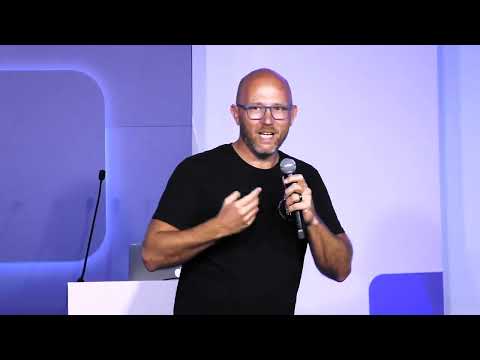
How Keboola Gave Away Its Services Revenue to Build a Partner Ecosystem and a Freemium Funnel (Talk by CEO Pavel Doležal)
- Talk Date
- March 10, 2022
- Speaker
- Pavel DoležalCEO
Company Metrics at Interview Time
Free Users (Active) (2022)
400
Marketplace Applications (2022)
1,400
Marketplace Developers (2022)
400
Year Founded
2014
Historical Snapshot
These numbers were reported by Pavel Doležal during a live founder event recorded in March 2022 and represent a historical snapshot, not current figures. See Keboola.com’s current numbers.
Key Takeaways
- 01Keboola bootstrapped from a cloud-migration consultancy, taking no venture capital and turning the services revenue over to partners
- 02400 free users are actively powering their businesses on Keboola on a daily and monthly basis as of 2022
- 033,000 companies started a Keboola account in the prior year; 1,000 engaged meaningfully with the platform
- 04100 free users converted to paid via credit card, and 10 of those 100 were already upsold
- 05Keboola has 1,400 applications in its marketplace developed by 400 different developers
- 06Over 20,000 women around the world went through Keboola's Data Girls program
- 07Rossum AI's fourth consecutive head of data hire demanded a Keboola license as a condition of joining
- 08A customer co-funded Keboola's data science hub with a $500,000 upfront payment
- 09Partners made four times the revenue Keboola itself made in year one of a client engagement
- 10Keboola gave free users 300 minutes of platform time per month at no cost
Company Metrics at Time of Interview
| Metric | Value | Source |
|---|---|---|
| Free Users (Active) (2022) | 400 | Founder talk, March 2022 |
| Companies That Started Keboola Account (prior year) (2021) | 3,000 | Founder talk, March 2022 |
| Companies That Started Keboola Account (cumulative) (2022) | 4,000 | Founder talk, March 2022 |
| Users Who Engaged with Platform (2021) | 1,000 | Founder talk, March 2022 |
| Free Users Converted to Paid (credit card) (2022) | 100 | Founder talk, March 2022 |
| Paid Users Upsold (2022) | 10 | Founder talk, March 2022 |
| Free Platform Minutes per Month (2022) | 300 minutes | Founder talk, March 2022 |
| Marketplace Applications (2022) | 1,400 | Founder talk, March 2022 |
| Marketplace Developers (2022) | 400 | Founder talk, March 2022 |
| Data Girls Program Participants (2022) | 20,000+ | Founder talk, March 2022 |
| Customer Co-Funding (Data Science Hub) | $500,000 | Founder talk, March 2022 |
| Partner Revenue Multiple vs. Keboola (Year 1, Mall Group) | 4x | Founder talk, March 2022 |
| Year Founded | 2014 | Founder talk, March 2022 |
Growth Breakdown
Revenue
Pavel Doležal does not give a revenue figure in this talk. What he describes is the shape of the business: bootstrapped from a cloud-migration consultancy with no venture capital, scaled first through referrals, then through a partner ecosystem the company deliberately handed its own services revenue to, and more recently through a freemium product-led motion.
Customers and Users
As of March 2022, 4,000 companies had started a Keboola account, with 400 actively using the platform as free users on a daily and monthly basis. Of those, 100 had converted to paid via credit card, and 10 of those had already been upsold to higher tiers.
Team and Community
Keboola hired an internal recruiter based in Seattle three years before the interview, which Pavel described as a real game changer. The company also built a community program called Data Girls, through which over 20,000 women around the world learned to work with data.
Funding and Profitability
Keboola remained bootstrapped throughout its history, relying on paying customers from its agency days to fund early product development. Pavel noted the company made mistakes by not hiring a CFO early enough and not leveraging financial instruments such as venture debt, subsidies, and short-term debt sooner.
Growth Strategy
Referrals and Community Building
Keboola's first years of scale came entirely through referrals from customers who grew their own companies using the platform. Pavel credited community building, including the Data Girls program and partnerships with groups like Czech IT Girls, as a long-term growth driver that is hard to replicate.
Partner Ecosystem and Cashflow Sharing
Keboola deliberately gave away professional services revenue to a partner ecosystem, allowing partners to earn four times what Keboola itself made in year one of a client engagement. This created an extended sales and delivery arm that strengthened the company's market position.
Customer Co-Funded Feature Development
Rather than funding all product development internally, Keboola asked enterprise customers to pay upfront for features on the roadmap. A single customer paid $500,000 upfront to fund the development of Keboola's data science hub, enabling bootstrapped product expansion without dilution.
Freemium and Product-Led Growth
During the COVID pandemic, Keboola opened its platform as a freemium product, offering 300 free minutes of platform time per month. This generated 4,000 account signups, 400 active free users, and 100 credit card conversions, with 10 of those already upsold.
Value-Added Resellers and Virality
Keboola grew through value-added resellers who embedded the platform into client engagements, and through organic virality as data professionals who had used Keboola demanded it as a condition of joining new employers, as illustrated by the Rossum AI example.
Best Quotes
“We actually, you know, like, put it all together into end to end platform. So you don't have to have, you know, 20 different tools. You have one login. You can get data in. You can get all the connectors. We have the biggest marketplace in the in our space. We have 1,400 applications in our marketplace, developed by 400 different developers.”
“We started to scale first couple of years by referrals. You know, people started to use us. They started to grow their own companies. Right? And then some of them are now now now unicorns, like like Productboard or Rohlik Group in Europe.”
“In the first year, we made 0.7 of the target number we wanted, but our partners made four times that money. Four times. Right? And that was the money we originally had in our cash flow when we were when we were a service company. Now we gave it away. Right? And it was actually one of the best one of the best decisions we made.”
“If you are bootstrapping, you don't have to do everything yourself. Right? If you have a vision, you have a road map, and you have customers that you actually engage with, they can pay for the development upfront.”
“I've been trying to hire people as head of our data, you know, team, And this is the fourth one who came and said, well, I'm gonna join you, but only if you get a Keboola license. So that's the power of community.”
“Out of those 1,000, 400 are using Keboola to actually power their businesses as a freemium on daily, daily and monthly basis. And we give them three hundred minutes of of platform for free. That's a lot. And out of those, already 100 actually paid with via their credit card. Now those 100, we already upsold 10.”
“If you are bootstrapping, learn how to work with financial instruments. Cash is not the only financial instrument you have.”
What Happened Next
This talk captures Keboola at a specific moment in March 2022, when the company was in the early stages of its freemium product-led growth motion. The figures Pavel Doležal shared reflect the company's position at that point in time and may not reflect current performance. Visit the Keboola company profile on GetLatka for the most up-to-date metrics and funding information.
View Keboola.com’s current profile and metricsFull Transcript
Chapters
- 0:00Event Introduction and Context
- 0:37Pavel's Opening: Why He Is Sharing Keboola's Story
- 0:59The Data Ecosystem Problem Keboola Solves
- 1:43Keboola's End-to-End Platform and Marketplace
- 2:28Two Personas: Coders and Business Users
- 3:44Bootstrapping Origins and Early Referral Growth
- 5:58Giving Away Professional Services Revenue to Partners
- 7:43Balancing Partners and Professional Services for Enterprise
- 8:58Customer Co-Funded Feature Development
- 10:40Community Building and the Data Girls Program
- 11:06Rossum AI: Virality Through Talent Demand
- 12:45Freemium Launch and Product-Led Growth Results
- 14:08Learning to Use Financial Instruments as a Bootstrapper
- 16:03Overexposure During COVID and Recovery
- 17:52Closing Lessons: Cash, Community, and Change
Event Introduction and Context
Nathan Latka
00:00Founders, what's going on? You guys know I love in person events and they are back. The recording you're about to hear is from our most recent event where we had hundreds of founders come together, share intimate details, templates, KPIs, OKRs about their business, and it was something special, something special. We'd love to meet you in person. If you want to see the next live events we have coming up via our schedule. The link will be down
00:23below in the description. If you're listening on iTunes, check this out on YouTube, you'll see the links in the description. Or you can just Google Founderpath or Latka next event. We'd love to see you in person. In the meantime, though, enjoy this recording. It's a good one.
Pavel's Opening: Why He Is Sharing Keboola's Story
Pavel Doležal
00:37So I'm gonna make this really quick because, like, yesterday was awesome. I'm not gonna teach you anything that John didn't teach you, Godard, Nathan or anything. So what I can do, I can share just our story. Where we what we did wrong, what we did good, and just like, yeah, talk, learn, share. Right? That's why we are here. Okay. So let me figure out how this works. Okay. Like this. Okay. So everybody here has been talking
The Data Ecosystem Problem Keboola Solves
Pavel Doležal
00:59about data. Right? Nathan is showing you, like, all the data points. Right? And then we saw G2, data, data, data. That's great. We love that. We love that. Data is everywhere. That's why we exist. We exist, you know, companies like you, enterprises, small, you know, SaaS companies to actually help with data. But data ecosystem has been, like, really hard for the last couple of years. When Snowflake started, they actually solved all of the big data
01:23issues, you know, No more Hadoop wrangling. But there is, like, 20 different tools you need to use to process data into Snowflake and out of Snowflake. And it only starts with getting data in. So what we did, we actually oh, by the way, see G2. You know, we have the stars on G2 as well. We love G2. Right? So what we did, we actually, you know, like, put it all together into end to
Keboola's End-to-End Platform and Marketplace
Pavel Doležal
01:43end platform. So you don't have to have, you know, 20 different tools. You have one login. You can get data in. You can get all the connectors. We have the biggest marketplace in the in our space. We have 1,400 applications in our marketplace, developed by 400 different developers. You can actually, you know, create automations to power your data once it's in Snowflake to actually run it somewhere, put it in your Salesforce, you know, and just like
02:06have it where you want to have it. Right? And last but not least, you have the data science part. Because a lot of people, you know, like, you get the data in, you look at it like Nathan did. Right? Perfect. But underneath that, there is a lot of machine learning models. And you need to have all of those parts, three parts working together. So, yeah, that's what we did. And in this part, you know, like, actually
Two Personas: Coders and Business Users
Pavel Doležal
02:28people who started data are geeks. Right? They are nerds. They love their CICD pipelines. They love their DevOps tools. Right? Like, I was talking to that guy last night. Right? And he's like, yeah, he's actually really smart. Know, he spent like hour talking to him. He is smart. And he likes, you know, he he likes code. Right? So but then you go to business departments, nobody wants to code. People want to have click interfaces. And in
02:53data, we see these two different personas, two different worlds. So what we had to do, we started with code. We started with APIs. And then we are slowly adding on interfaces for business users. That was Scott was saying yesterday, right, about small things, you know, like like putting together and stuff. Right? That's what we're trying to do. We are not in this for one year. We actually had that plan. Like yesterday, the guy from the credit
03:18card company was saying about ten year, 10 x. Right? Plan three years, then go back one year, two years. That's what we did, you know, five years ago. And finally now, it's materializing. So what actually you get when you start using our platform? Well, inside your company, people don't do only the biggest, you know, like the largest use case that everybody is, you know, doing in the data world. You unlocked all of these small use cases.
Bootstrapping Origins and Early Referral Growth
Pavel Doležal
03:44And that's really, really cool. But enough about our product. I just wanted to make make sure kinda like like we have. So when when got out it was funny. When got out, I was, you know, like, asking who did who was there in 2000. I was there. I remember the, you know, like, boom and bust. Oh, that was hard. Right? And when we started Keboola, we were like, okay. We don't want to take venture money when
04:05we start. We don't really care about it. We care, you know, about, you know, making best product. Because we had an agency which was actually doing cloud migrations, helping companies to go to cloud, companies like Red Bull, and then scale it. And more and more we were doing that, we saw that there is one issue. We were everybody was asking us to build a data platform for that. Integrate data. Right? Run it in Amazon. It's just
04:29like we were lazy because we had done it so many times. We thought there has to be a better way. So we started to make automations internally. And then in 2014, we said, well, let's make it into a product. This should be a product, not an internal tool. Right? So we did. And we're like, well, are we gonna raise? Wow. That would be awesome. Right? Well, I was like, no. I don't think so. Because like once
04:50you raise, you know, you you better know what you wanna do with the money. Right? You know, you you have to know how to use it. Right? In when when Gora was saying that when they were starting in 2000, they needed a million dollars to buy servers. I remember that. We were shipping 400 Dell servers. You know, it was crazy. You know, half of them didn't come. But in 2014, we did not need that. You know,
05:12we had paying customers, you know, in in our in our agency, and just like start a machine, well, it didn't cost anything on Amazon. Right? So we're like, well, this is the great time to actually build a SaaS company without, you know, like, giving too much equity the way in the beginning. We can achieve product market fit without, you know, actually getting the VC money. So that's what we did. And we started to scale. We started
05:35to scale first couple of years by referrals. You know, people started to use us. They started to grow their own companies. Right? And then some of them are now now now unicorns, like like Productboard or Rohlik Group in Europe. Right? And then something happened. I'm gonna show you what we did wrong and and what we can learn from it. So okay. So couple of lessons that we've learned the hard way when you are
Giving Away Professional Services Revenue to Partners
Pavel Doležal
05:58actually going from agency or consultancy to product. First, it seems counterintuitive, but you have to let go your professional services revenue. We were making so much money doing professional services before, right? Helping all these people. They paid us dollars, cash, right? But then, when we actually wanted to do a product, we had to rethink that. We would not be able to support everyone. Right? So we had to actually give that money away to our partners. We
06:30started to create a partner ecosystem. And that's the red line which is trending down. And people ask, well, what does it mean? Like like, when you go and, like, we put your product somewhere in the client and partner comes, how much money you make? How much money they make? Well, this is kinda like actually, the the table is comes from our our actual client Mall Group. When we actually started to implement there, we said, well, our
06:54target, what we want to get is, let's say, 1. Right? $1. In the year one, we'll actually give them discounts, so we'll put 1.7 per our software. And we need to bring in partner. How much are they gonna make? So we then look back at the numbers. And in the first year, we made 0.7 of the target number we wanted, but our partners made four times that money. Four times. Right? And that was
07:19the money we originally had in our cash flow when we were when we were a service company. Now we gave it away. Right? And it was actually one of the best one of the best decisions we made. Because like with that, we started to make an ecosystem of partners. And, you know, like yesterday, everybody talked about it. Partners. Partners. Partners. Right? Partners have a great way to help you to strengthen what you what you are doing
Balancing Partners and Professional Services for Enterprise
Pavel Doležal
07:43and help you actually they are like your extended arm. Right? So that's great. But there is also a bad side about it, and we made a huge mistake. Pascal was saying she's she just left, but she was saying yesterday, when when when when you were talking about the professional services, she was like, I hate them. Right? When I see professional services, I hate them. Well, yes, if you are Pipedrive, right, which is kinda like really SMB,
08:09and you are just like churning through customers. But if you are doing enterprises, you really want professional services. And that's where we made our mistake, and that kind of participated in the dip that you saw. Because we went to enterprise level, enterprise customers, and we said, let's bring those partners that we developed. Right? Like, there are 50 people company, 50 people company, they're gonna do it. And no. That was our big mistake. And if you want to
08:35know more, there's Fischer, my my my colleague, and he's the head of professional service. He can tell you everything about the mistakes. So that was that was that was a big learning. So another big learning. Yeah. Well, my my learning is it needs to be balanced. You don't want it for SMBs that you kinda, like, go like that. You want partners. But for for enterprises, yes, you want professional services. If you look at UiPath, UiPath, when
Customer Co-Funded Feature Development
Pavel Doležal
08:58they went public, they had 47% in professional services of their recurring revenue. 47%. That's huge. Because they are enterprise. And another learning that we made is kinda like when you go to enterprise features or you want to develop new features and you are bootstrapped, you don't have to pay for it. That's a big learning. You know? There's a lot of customers who are willing to pay for it. If you go, you ask them, you work with
09:24your customers, and they say, well, like, our data science hub. Right? Like, we went to we are working for Erste Bank. This is our, you know, screen from Productboard. And what I highlighted is all the features attribute attribute them to to a customer. Right? So what does each customer want? And we have a top 10 and top 50. Right? And then we go to them and say, well, listen. This is actually on our road map.
09:47Right? That that ten x, three years thinking. Right? But we don't want to develop it now because we have other priorities and we don't have cash for it. Would you be willing to pay for it? Right? Yeah. Totally. We would. Right? How much? Well, can you give us 500,000 upfront? Yeah. No problem. And that's how we got our data science out. You know? So that's a big lesson. If you are bootstrapping, you don't have to do
10:13everything yourself. Right? If you have a vision, you have a road map, and you have customers that you actually engage with, they can pay for the development upfront. We love that. Third lesson is and and Nathan is all about it. Right? Community. Community. Community. Right? Because that's something it's hard to replicate. So what we did five, four years ago, we actually we actually started to work with the with the with the women in tech group in
Community Building and the Data Girls Program
Pavel Doležal
10:40Czech Republic, which called Czech IT girls. And we actually developed a a data girls program. So it was, like, for all the lay it was originally we thought it's gonna be for small girls, but then it's quickly, you know, like, went totally out the opposite direction. And now there's been over 20,000 ladies around the world who went through that program and who actually learned how to work with data. That is so awesome. Because, like, when we
Rossum AI: Virality Through Talent Demand
Pavel Doležal
11:06go somewhere and people actually have been using us before or went through our programs, they just want to use us because they know us. Right? They know that they can get to results 10 times faster. They know that because they have tried it. So this is actually a quote from one of our customers, Rossum AI, which is on the track to become another unicorn in in ML. And one day, the guy called me and was like,
11:34what the fuck is happening? I'm like, what do you what do you what do you mean? And I was like, well, we need to buy you. I'm like, like, like a license. Right? I'm like, well, you said you don't want to buy us. You want to use the modern data stack and all the 20 tools because it feels cool and nice. Right? He was like, yeah. But I've been trying to hire people as head of our
11:54data, you know, team, And this is the fourth one who came and said, well, I'm gonna join you, but only if you get a Keboola license. So that's the power of community. Right? It's hard to scale globally in the first year, second year. But if you go and you create your market, your niche, and you you kinda, like, get your mini brand, like, as Jason Lemkin says, in that, it's doable. And this is really powerful. And
12:18those couple of first years that we actually did scale, we scaled through referrals. Right? So referrals, people who used us. So okay. Before I get to numbers, you know, like, how are we doing now? Well, during COVID pandemic, and that was where where the dip comes, we made two decisions. We made a decision to actually open up Keboola as a freemium to actually enable product led growth. And second decision, we made decision to go to enterprise
Freemium Launch and Product-Led Growth Results
Pavel Doležal
12:45because that's where, you know, all the money kinda like for us was in the beginning, and they pay us a lot of money and they need us. It's somehow counter into counterintuitive. I can talk about it a little more, but this is kinda like the product led growth. So we started we opened up Keboola as a freemium last year. And last year, a lot of 3,000 companies actually started Keboola account. Now it's 4,000. Out of those
13:103,000 last year, 1,000 actually started to engage. They did something. Connect the data, build pipelines, you know, did something. Out of those 1,000, 400 are using Keboola to actually power their businesses as a freemium on daily, daily and monthly basis. And we give them three hundred minutes of of platform for free. That's a lot. And out of those, already 100 actually paid with via their credit card. Now those 100, we already upsold 10. So that's the
13:40power of product led growth. But it would not happen without those five years, you know, of developing community, developing partnerships, and developing the product. So that's really awesome, and we love it. By the way, our clients, the the the the black box, that's that's the amount of data they actually process within our platform every month. They take it from raw data into business insights and actions. They give it value and meaning. So next lesson or or
Learning to Use Financial Instruments as a Bootstrapper
Pavel Doležal
14:08area, and Nathan was now talking about it. I'm I'm so I was I'm like, so sorry we didn't start, you know, like, the year when Founderpath actually started. Like, it's about financials. You were talking about it yesterday. When we started, we actually thought that every financial instrument is evil. Right? It's evil. Cash is the king. Right? We come from Europe, and we come from Eastern Europe, what you would call. So like my grandma would like never
14:34take loans. Never, never, never ever. Right? So that was our mentality. Right? We started that, then we're like, only cash. Only money, baby. Right? And well, yes and no. As everything else, it's an instrument, and you should learn how to play it. You should learn how to use it. And we didn't, you know, soon enough. So if we would have known how to kinda, like, use it sooner, we would have scaled even faster. But we made
15:04one great decision. We hired an internal internal person for, you know, like, what's it called, Fischer?
15:14Head hunting, but internal. Right? And recruiting. She sits in Seattle, and she's been awesome. And that that's a real game changer. Bob was talking about that yesterday. We did it three years ago, and it was, like, really incredible. But we made one mistake in that regard. We didn't hire a CFO in fast enough. You know? And that's one thing I would do differently, totally. Since, like, early, you know, like, once we had a product market fit,
15:38we started growing, our customers started recommending us, I would actually hire a professional who would help us, to actually work with financials. Because today, you have so many options. Right? Yes. Prepaid cash. Right? You can do short term debt. You can do, like, founders and family, right, to help you with that. But you also can do venture debt, venture financing. Or if you are in Europe, you can do a lot of subsidies from European Union. Right?
Overexposure During COVID and Recovery
Pavel Doležal
16:03Nobody told us about it before. Right? And we were like, subsidies, that's only for bad guys. Well, yes and no. Right? And well, so that's that's kinda like my thing. If you are if you are bootstrapping, learn how to work with financial instruments. Cash is not the only financial instrument you have. Okay. So now what happened? Right? Well, we were overexposed. So remember that graph that Nathan is showing kinda like your exposure and, you know,
16:31exposure to several clients. That what that that's what happened to us. So first, we were overexposed during the COVID into hospitality and retail industry in US. So our clients were just going bankrupt. Right? We had a client who was who was doing, like, three hundred thousand year went bankrupt. Right? A lot of the clients actually went into down sales and then started to pick up. Right? Because we actually started to take care of them. And that
16:57was that was really, really interesting. Another client was in Asia. It was a big financial institution, and they lost 90% of their business within the first month of COVID. So that was it was kinda like it. And everybody says, well, overexposure to a couple of clients is bad. Well, yeah, in the ideal world, it is. But if you, again, are starting and bootstrapping and kinda like somebody, you know, you have a client who actually pays you
17:25million dollars in advance, and it's aligned with your vision, that is pretty awesome. You can do a lot of stuff with that. And the bad stuff is you are overexposed. So, yeah, we got over that. We actually we actually, you know, reshuffled the company. We went into product led growth. We started, you know, like, working differently with enterprises, and now we are growing very nicely. So that's my couple of lessons, you know, like so, like, yeah.
Closing Lessons: Cash, Community, and Change
Pavel Doležal
17:52Work with cash, bootstrap early, you know, like, work with your clients and build community. And always, always, you know, change. Godard was saying that. You know, the only constant we have is the change. Okay, thanks very much. Thanks, Pavel.