

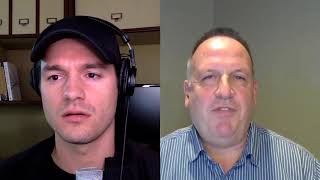
 Watch: LogicBay CEO: Love Venture Debt! Helped us pass $10m in ARR (Ep1075 John Panaccione)
April 2011
LogicBay CEO: Love Venture Debt! Helped us pass $10m in ARR (Ep1075 John Panaccione)
Read the transcript
hello everyone my guest today is John panitch own he's the CEO of a company called logic Bay and it works with leading companies to develop and implement strategies for scaling in direct sales channels using a combination of services and technology that logic Bay offers he's also the co-founder of vet to CEO a non-profit focused on helping veterans transition into being entrepreneurs John are you ready to take it to the top I sure AM what branch did you serve in the Army very good thank you for your service I appreciate that oh you're welcome all right tell us about the company what do you do and how do you make money all right we're a partner relationship management software company which is kind of a derivative of CRM so we have the cloud-based software that helps manufacturers work with their dealers resellers and bars around the world I've been doing it for about 15 years now and we make money through subscription revenue about 90% of our revenue is recurring subscription revenue and that continues to grow that's great and give me a general sense of size so what's the average customer paying you per month would you say well the range in size from free with a revenue share at over 6 digits a month depending on the size of the client and how much for each globally we have with them just to avoid going down every cohort you serve because I'm sure there's many of them if I forced you in an average would you say like a grand on average 10 grand a hundred grand a month yeah between one and five thousand fair enough between one and five thousand a month and you said you launched 15 years ago so this would have been back what in 2002 2003 2004 3 and I mean where was your mind at that point why jump in and start your own company well I like a lot of entrepreneurs I just had a series of circumstances kind of collapsed into my lap the company I was with I was a VP of Sales & Marketing and I was brought on to that company to run sales and marketing but also position the company for a sale mm-hmm we accomplished that and that we sold the company to an Indian company offshore and one of the contracts I had sold was a three million dollar US government contract tied to Homeland Security funds so that contract clearly was not going to be assigned to the acquiring company so long story short I got permission and to handpick a few people that were working on that contract and move them into a new company and launched a company with that Wow that what a great story so are you bootstrap today tall from that initial 3 million or of you raised yeah we've raised about two and a half million in equity and we've done about three million dollars in debt deals over the years to finance the business which I'm proud to say because that's not a lot of equity for a 15 year old company doing the kind of revenue we've done over 15 years yeah what kind of revenue are you doing generally generally we're you know we don't like to disclose that publicly yeah you know we're between 10 and 15 million okay that's pretty healthy and and what rate are you growing at year-over-year would you say I worried about a 10 to 15 percent growth rate right now we have a very mature large fortune 500 customer base our larger customers so where we tend to do a lot of renewal and and more and more scope of work within our client base versus new account growth got it so you year-over-year are focused on gaining more wallet share from the same base versus expanding the base yeah we've got like a 99% renewal rate and we have some long-term contracts as well so yeah we're all about growing the accounts once we could have what's net revenue retention typically would like year-over-year or said differently net revenue expansion it's north of 90 percent so you know we've got good recurring revenue good recurring renewals and then that that provides the base upon which we put incremental revenue on and about a 10% growth rate you know historically over the last few years just to make sure I understand that so someone that might start paying you a hundred grand per year you pretty confidently grow that to 110 grand in year - yeah yeah proportionally that's about right you know the smaller deals grow faster on a percentage basis cherm you know but the larger ones about what you said okay interesting and what do you add today I mean how many customers are you serving now we've got north of 60 customers right now a bulk of our revenue 80/20 rule applies you know 80% of our revenue comes from a subset of that but you know we're proud of that and we're very profitable to which wasn't easy to get to but you know we focus on maintaining strength through profitability be financially strong be severe competition and that goes a long way with our customer base I'm missing something here so correct which number I messed up if you have 60 customers and you give me an R puh between a grand and 5 grand per month I'm gonna give you the best there five grand if I multiply that times 60 that's 300 grand per month or about 3.6 annually you're doing you said two or three times that which switch my numbers are wrong well we have a couple of very large customers there are six digits a month in fees sometimes the other way up yeah yeah it's very heavily skewed interesting interesting okay what has made profitability difficult for you obviously you were there but what made it difficult well it actually goes back to your last question you know we built like a lot of startups we built our product off the revenue from early customers so we had very large early customers like John Deere for example and they needed what we have years ago so we built our what today is now our our out-of-the-box product really from a custom basis with many of our early large customers that needed our application where none existed at the time so those years were very unprofitable was very hard to make money was a lot of services and custom development of the product so we had to fund our early losses through the font funding that I summarized for you but as the product mature and it became a matter of configuration versus customization and as we do more and more configuration of a rather mature product now profitability is a lot higher and we can sustain our historical customers on a much more profitable basis and spin up new customers much more profitably how profitably are you running today you like to take 10% to the bottom line 20% what do you kind of target yeah weird about 10% Hiba die right now and about a 65% gross margin that's pretty oh wait that's a low gross margin for a software company what's cutting into your what you must have a hidden cost of goods sold what's the hidden costs well I don't know specifically we've been running the books the same way for 15 years you know some software companies divide up their engineering dollars differently as I've compared our financials to others so we basically split it we try to be really disciplined about what we put in cogs when we put a lot of our engineering dollars which is a size of our cost structure below the line well so what do you put above the line no date to pull down to the 65% we put our hosting expenses up there our labor expenses associated with the services and the support that goes you put your labor expenses up there too yeah the part that is associated with with the customer delivery we have a pretty robust partner program ourselves we practice what we preach to our sales and marketing organization is below the line I mean uh you know it's part of our GA and sales and marketing expenses not not factored into our gross margins so that's why I bro smaran is what it is got it what's your team size look like today now we've got about sixty full timers full-time equivalents around the world we've got a couple of partners in India we've got folks up in Canada and we've got people across the u.s. supermoto team uh basically when I founded the company we've been remote since day one we've got an office here in Wilmington North Carolina which I've got about eight people in but this is where the critical mass is but we've got folks all over the world interesting talk to me about churn what's your turn look like annually and how do you mitigate it turn with our customer base yeah I thought you talk a lot my employees either one charge pretty low like I said our retention rate is very very high so you know our challenge is new account growth because we're so busy keeping up with our existing customers and so our turns really low like how about good news bad news it's about 5% annually analytics about not logo basis or revenue basis a logo base logo base mes that's super so 95 percent retention is great on the logo basis interesting in terms of growth the economics around that what do you like to you know I mean what are you paying ready to acquire new customers and how quickly do you like to make that money back I don't have exact numbers for you I've always managed the business as a portfolio our older customers we've got most of our gross profit from our newer customers or lost leaders right that's pretty much any cloud-based software company model if you ask me it's tough to make the same amount of money on every single customer well we look those people that you sell though and they're still in year one of their lifecycle how long does it take them to turn from loss leaders to depends on the scope of the implementation but generally speaking less than a year usually a three to six months you know we can recover it's a healthy payback Parthians yeah again it's a lot of configuration these days because of our product and how a you know robust it is without having to put a lot of services into each implementation we can spin up a new customer in less than a day technically now which if you think about it we have an enterprise-wide globally scalable nine different language solution it's not naughty it's not hard now to spin up a new customer so that's really where we get our cost savings yeah and I bet six months if folks are folks who pin on average five grand a month that's what about 30 grand and CAC and you get it paid back in six months obviously we're taking serious a ver adjust here and every customer is different but generally speaking those are accurate you know I'm just I'm just wrong with your numbers man yeah I'm just a machine and you're feeding me that's how it works all right good stuff have you have you dope into any paid acquisitions stuff yet like like hard paid Google Ads Facebook Ads conferences things like that or no oh yeah that's my favorite subject we've experimented with all the above there tell us any of them work or no yeah I'm a big fan of inbound strategies that's a good way of saying no we lost a lot of money you know I've evidence sales marketing for a long time and you know I get great stories about our transition inbound but yeah we're very heavy users of HubSpot where we're power users so we get a lot of good lead flow from our inbound activities but we also know that there's a balance there you know we're employing an ABM strategy this year and getting a little bit more hitting the gas a little bit more on the outbound strategies but we found it has to be a healthy mix there last question before we wrap up with the famous five what kind of Kapil do you like more equity or debt driven capital that really interesting on both that's great on both that's great all right let's wrap up here with the famous five jon number one what's your favorite business book one not many people know about but I changed my life and in terms of how I think about businesses called start with know by Jim Camp you've ever heard of that one no but I'll check it out start with no all right number two John is there a CEO you're following or studying right now yeah I really I have studied for a while Jeff Bezos from Amazon and what he's done in a very innovative way number three besides your own with your favorite online tool for building your business pulse app I don't know if you ever heard of that one it's cash flow tool I live but number of me out of going out of business several times number four how many hours of sleep to get every night hey six to eight yeah it's pretty good in the situation married single you have kids I'm married with two kids two kiddos or daughters and how are you John I'm fifty two ok last question take us back to thirty two years what he was your 20 year old self new I wish I knew about negotiation skills you go into a bookstore you got the negotiation books over on your left and you got the sales books on your right for some reasons it's to this day and there's a lot of overlap and I wish I knew more about negotiation and sales back then there you guys have from John something convenient happen back in 2003 his company he was brought on to sell the company they sold that problem was one of the big contracts two million our contract couldn't go with the deal so he said he know I'm gonna get permission here spend on my own business that's how he funded the initial concept behind logic pay the initial coating today there were 60 people he's funded the company with a combination of both debt equity and 2.5 are sorry debt capital and 2.5 million in equity raised or fundraising they're currently doing about you know north of 10 million bucks an AR are less than 5% annual logo churn cocktail to be super healthy serving about 60 customers that pay somewhere on the order of called 5 to up to 14 grand in some cases per month usually on annual contracts John thank you so much for taking us to the top hey thanks a lot for having me