
Founder Interview
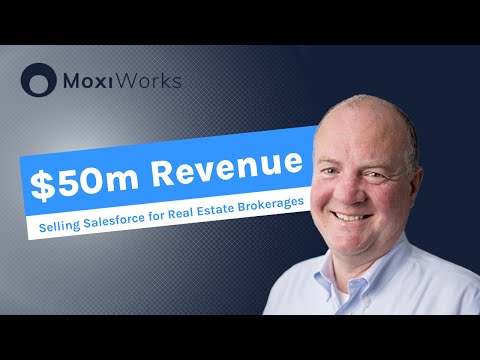
How MoxiWorks Reached $50M Revenue Serving 3,500 Enterprise Brokerages (Interview with CEO York Baur)
- Interview Date
- January 5, 2023
- Interviewee
- York BaurCEO
Company Metrics at Interview Time
Annual Revenue (2023)
$50M
Customers (Brokerages) (2023)
3,500
Agents on Platform (2023)
400,000
Average Contract Value (2023)
$100K ARR
Largest Customer Contract (2023)
$1M per year
Historical Snapshot
These numbers were reported by York Baur during his interview with Nathan Latka recorded in January 2023 and represent a historical snapshot, not current figures. See MoxiWorks’s current numbers.
Key Takeaways
- 01MoxiWorks generates approximately $50M in annual revenue as of early 2023
- 02The company serves 3,500 brokerage customers covering around 400,000 agents
- 03Average contract value is $100K ARR, with small deals starting at $50K ARR
- 04About half a dozen customers pay single-digit millions per year each
- 05The largest customer, Anywhere, spans more than 200,000 agents across seven franchise brands
- 06MoxiWorks was founded in 2011 as a spinout from Windermere Real Estate, with only one customer at launch
- 07Vector Capital, the oldest tech-only private equity firm in the US, took a majority stake in 2019
- 08The company has completed three acquisitions in the last three years
- 09MoxiWorks uses COLA inflation clauses in multi-year enterprise contracts to drive ARPU expansion
- 10Revenue growth comes primarily from selling additional products to existing customers, not from adding new licenses
Company Metrics at Time of Interview
| Metric | Value | Source |
|---|---|---|
| Annual Revenue (2023) | $50M | Founder interview, Jan 2023 |
| Revenue at Founding (Single Customer) (2012) | Low single-digit millions | Founder interview, Jan 2023 |
| Customers (Brokerages) (2023) | 3,500 | Founder interview, Jan 2023 |
| Agents on Platform (2023) | 400,000 | Founder interview, Jan 2023 |
| Average Contract Value (2023) | $100K ARR | Founder interview, Jan 2023 |
| Minimum Deal Size (2023) | $50K ARR | Founder interview, Jan 2023 |
| Largest Single Customer Annual Value (2023) | $1M | Founder interview, Jan 2023 |
| Customers Paying Single-Digit Millions Per Year (2023) | About half a dozen | Founder interview, Jan 2023 |
| Ecosystem Partners (2023) | 150 | Founder interview, Jan 2023 |
| Acquisitions Completed (2020-2023) | 3 | Founder interview, Jan 2023 |
| Board Size (2023) | 7 seats (1 vacant) | Founder interview, Jan 2023 |
| Year Founded | 2011 | Founder interview, Jan 2023 |
| Private Equity Investment (2019) | Majority stake by Vector Capital | Founder interview, Jan 2023 |
Growth Breakdown
Revenue
MoxiWorks reported approximately $50M in annual revenue as of early 2023, up from low single-digit millions when York Baur joined in 2012. The company sells multi-year enterprise licenses with COLA inflation clauses and performance accelerators, and grows revenue primarily by selling additional products from its suite to existing customers rather than adding new license seats.
Customers
The company serves 3,500 brokerage entities covering approximately 400,000 agents. Its largest customer, Anywhere, accounts for more than 200,000 agents across seven franchise brands including Coldwell Banker, Sotheby's, and Century 21. About half a dozen customers pay single-digit millions per year.
Team and Board
MoxiWorks operates with a seven-person board, including representatives from Vector Capital and customer-investors such as Windermere Real Estate. York Baur serves as CEO and has led the company since 2012, describing his role as taking an embryonic spinout and building it into a mature enterprise business.
Funding and Profitability
The company was originally funded by Windermere Real Estate and a small number of key customers. Vector Capital, the oldest tech-only private equity firm in the US, acquired a majority stake in 2019. MoxiWorks has completed three acquisitions in the three years prior to the interview and is positioned to pursue further acquisitions as market conditions compress deal prices.
Growth Strategy
Enterprise-Only Focus
From early on, MoxiWorks chose to concentrate exclusively on enterprise brokerages rather than individual agents or small businesses. York Baur noted that agent-facing businesses behave like consumer businesses with high CAC, high support burden, and high churn, making the enterprise the only durable path.
Multi-Year Enterprise Licensing with COLA Clauses
MoxiWorks licenses its entire platform to enterprise customers upfront on multi-year deals rather than selling seat by seat. Where possible, contracts include cost-of-living adjustment clauses that function as annual inflation accelerators, preserving revenue growth within existing contracts.
Product Expansion Across the Platform Suite
The primary driver of net dollar retention is selling additional products from the MoxiWorks suite to existing customers. The company built a modular platform called Moxi Cloud with products covering CRM, websites, presentation software, management tools, and recruiting tools, allowing upsell without requiring new license agreements.
Partner Ecosystem Revenue
MoxiWorks has built an ecosystem of 150 partners that plug into its platform. The company takes a share of the revenue generated through these integrations, creating an additional growth layer beyond direct product licensing.
Acquisitive Growth
Backed by Vector Capital, MoxiWorks has completed three acquisitions in the three years prior to the interview. York Baur described the company as built to grow acquisitively and indicated plans to pursue further deals as market conditions make valuations more attractive.
Best Quotes
“We sell to brokerages and in particular, the enterprise brokerage. One of the lessons learned, I think is the consumer and small business part of the market is very hard. As a SaaS company, you always have to be concerned about churn and boy, you can't avoid it at the low end of the market. So we chose a decade ago when we started this journey to concentrate on the enterprise.”
“Think of us as salesforce.com for residential real estate and it's more than just CRM, it's a whole suite of products, websites, presentation software, the CRM of course, management tools, recruiting tools, etcetera, everything you need essentially for a brokerage to give an agent to be successful.”
“Our small deals are typically 50,000 in ARR, although we don't concentrate heavily on that end of the market, we tend to focus on more, we would call at least the middle market, which is, I'd say, 100 k to 500 k ARR, but we have customers, a number of them that are single digit millions per year for us. So it's really a spectrum.”
“Yeah, actually we have about half dozen.”
“I came into the company actually in 2012. The company started as a spinout in 2011. The leadership there was a change made in the leadership which brought me in in 2012.”
“When I came to the company, I have both an enterprise and a B2C background in my career, I actually got tempted to go after the agent, but I realized pretty quickly it's like a consumer business. It it masquerades as business because these are agents and they're doing business, but in reality they behave like a consumer, which means the CAC is really high, the support burden's really high and they churn like crazy.”
“It's typically a COLA, cost of living, you know, is how we phrase it so that it seems reasonable. It's essentially an inflation clause.”
“mox is the overnight success that took ten years. I mean, that's the other message for entrepreneurs out there. This business takes grit and I think the successful businesses, when you look at them, they all have a long history of grinding and we are no exception.”
What Happened Next
This interview captured MoxiWorks at a moment when the company was reporting approximately $50M in annual revenue and serving 3,500 enterprise brokerage customers, with York Baur acknowledging that the housing market slowdown would make breaking $100M in the near term challenging. The company was actively pursuing further acquisitions with Vector Capital and expanding its product suite and partner ecosystem. For current revenue, customer count, and other live metrics, visit the MoxiWorks company profile on GetLatka.
View MoxiWorks’s current profile and metricsFull Transcript
Chapters
- 0:00Introduction and Company Overview
- 1:15Why MoxiWorks Focuses on Enterprise Brokerages
- 1:45How Interest Rate Changes Affect the Business
- 2:18Product Suite and Salesforce Comparison
- 3:33Pricing and Contract Structure
- 4:09Customers Paying Over a Million Per Year
- 4:33Company Origin as a Windermere Spinout
- 7:10Funding History and Vector Capital Investment
- 9:38Customer Count and Largest Customer Anywhere
- 10:26Why MoxiWorks Does Not Sell Directly to Agents
- 11:16Revenue and Path to $100M
- 12:21York Baur's Role as Recruited CEO
- 14:58Acquisitions and PE Partnership with Vector Capital
- 17:19Multi-Year Deal Structure and COLA Clauses
- 19:32Famous Five and Closing Remarks
Introduction and Company Overview
Nathan Latka
00:00Guys, moxiworks start off a spin off with one big customer paying single digit millions per year back in 2012. They brought in York to scale the business. They now serve 3,500 brokerages. Think of them almost like Salesforce, but for brokerages and a lot of other details and and in in individual products sort of silos built on top of that base platform. Those customers are paying a bunch of money now, multiyear deals. They've they're close to $50,000,000
00:23in a run rate, growing rapidly. They've got healthy expansion revenue through ARPU expansion and also what they called COLA, those multiyear deals they accelerate. Looking to be acquisitive. Obviously, they're backed by private equity firm called Vector, looking to do more deals hopefully in the near future as the markets compress and deal prices get a little bit more into York's liking. We'll see what happens. Hey, folks. My guest today is York Baur. He's a startup and turnaround
00:46executive with a unique blend of general management, sales, and marketing skills. He specialized in venture backed and family owned technology companies, helping them get their product right, then go to market using direct sales marketing, BD, to make revenue growth, scale, and profitability happen. He's now building moxiworks.com, which is a leading residential real estate platform. York, you're ready to take us to the top?
York Baur
01:06Yes, sir. Thanks for having me, Nathan. Great to be with you.
Nathan Latka
01:09Alright. What does that mean, leading residential real estate platform? Are you selling to brokers, consumers, buyers, or someone else?
Why MoxiWorks Focuses on Enterprise Brokerages
York Baur
01:15We sell to brokerages and in particular, the enterprise brokerage. One of the lessons learned, I think is the consumer and small business part of the market is very hard. As a SaaS company, you always have to be concerned about churn and boy, you can't avoid it at the low end of the market. So we chose a decade ago when we started this journey to concentrate on the enterprise.
Nathan Latka
01:35How does adjustments in SOFR affect your business? A lot of these brokers can't get cheap money anymore, it was 4%, 5% cheaper about eight months ago, does that mean they churn from moxi?
How Interest Rate Changes Affect the Business
York Baur
01:45No, because again, with the enterprise focus, the customers we have, we're not only on the large brokerage end, we're also on the quality brokerage, the full service brokerage end, which means that these companies tend to be better run, they are profitable and they don't rely on the kind of funding that you've seen some of the new model real estate experiments, I'll call them in the last five to ten years, you know, that have been heavily dependent
02:09on funding that's now dried up. That's not the case for the traditional well run full service brokerage.
Nathan Latka
02:14Very cool. Okay, so what are they paying for? What do they get?
Product Suite and Salesforce Comparison
York Baur
02:18So think of us as salesforce.com for residential real estate and it's more than just CRM, it's a whole suite of products, websites, presentation software, the CRM of course, management tools, recruiting tools, etcetera, everything you need essentially for a brokerage to give an agent to be successful. And they're buying it though very much like they would buy, like any company would buy salesforce.com, they're buying it on a monthly ARPU SaaS basis and we license, we don't do
02:48what are in our industry at least are known as hunting license deals, we're licensing the entire enterprise upfront on a multi year deal as opposed to, Hey, we have X customer, here's love, we have X customer. What really means is you can just, you're allowed to sell into them onesie twosie, that's a beating. So we, again, have focused on the enterprise and that would be the one word of, I guess, advice I would give. If you
03:12can generate something for the enterprise, it's gonna be a higher it's harder to sell into at the beginning, yes, but it's so much more durable and stable over time.
Nathan Latka
03:23Yep, so you say you're selling multi year deals. Give us a sense of range here, right? What's the average brokerage paying you per year to access this technology? Are we talking $10, a $100, a million?
Pricing and Contract Structure
York Baur
03:33Sure, it varies all over the map. Our small deals are typically 50,000 in ARR, although we don't concentrate heavily on that end of the market, we tend to focus on more, we would call at least the middle market, which is, I'd say, 100 k to 500 k ARR, but we have customers, a number of them that are single digit millions per year for us. So it's really a spectrum.
Nathan Latka
03:58That's the best clue you can look in a SaaS company to go, do they have the ability to drive net dollar retention above 150 is how many customers are paying more than a million bucks a year? It sounds like you've already got a couple of them.
Customers Paying Over a Million Per Year
York Baur
04:09Yeah, actually we have about half dozen. It's we've
Nathan Latka
04:14Oh wow, okay.
York Baur
04:16Yeah, and it's funny, one of the jokes I make is mox is the overnight success that took ten years. I mean, that's the other message for entrepreneurs out there. This business takes grit and I think the successful businesses, when you look at them, they all have a long history of grinding and we are no exception.
Nathan Latka
04:31So you launched, what, in 2010?
Company Origin as a Windermere Spinout
York Baur
04:33Yeah. I came into the company actually in 2012. The company started as a spinout in 2011. The leadership there was a change made in the leadership which brought me in in 2012.
Nathan Latka
04:45Oh, what's going on there, YouTube? Good to see you guys. Now imagine this, you love watching these interviews with SaaS founders, but imagine if we took all of the valuation data out from over 2,807 interviews I've done manually, Saves you a lot of time. Well, we've done this. We've built it into the beautiful interface inside of Founderpath. Check this out. I'll show you how you can access this in a second. But you log in, you connect
05:09your Stripe account, you see your valuation real time, you can see what changed over the past eighty eight days and even set goals for valuation this year. Now the secret evaluation is there's many different ways to value a SaaS business. So the reason you're gonna see three or four different valuations inside of your Founderpath dashboard, this is all free by the way, is because depending on who's doing the buying of your SaaS company, you're gonna get
05:33a different valuation. A VC is gonna pay a different valuation. Private equity firm is different. If you're gonna do a minority sale, that's different. And if you sell the whole business, that's a different valuation. You can see all those when I hover over here. Right? So the teal is what a VC would pay. Yellow is what private equity and red is if you sold the whole thing outright. Now what's cool about this is this is not
05:55built off random data. Again, you guys hear these interviews on YouTube. All these datas are built from real time valuation data points founder share with us on the show. So traction, 1,200,000 seed round, 3.7 raise. They sold 22% of their business. Go in here and filter by the event. Maybe you only wanna see companies that have sold the whole business. Well, here are a bunch that have been acquired the valuation and the multiple. Maybe you're going
06:21out right now and you're raising your seed round. We'll go in here and look at all this recent seed deals that went down, what they raised, what valuation they raised at, and what percent that they sold. There's never been a larger dataset of SaaS valuations than what you can get now inside of Founderpath. And we're thrilled to bring it to you. Alright. We're gonna go back to the YouTube video here in a second, but if you
06:43wanna check this tool out, if you wanna jump in and sign up, you can check it out for free to get your valuation at this link. This link, founderpath.com/products/valuations. Or if you go to founderpath.com and hover over products, click on get your valuation here, and go ahead and sign up to give it a whirl. Again, all that valuation data live right inside the platform. I hope to see you there. Alright. Let's jump back into the interview.
Funding History and Vector Capital Investment
Nathan Latka
07:10Did that also come with a round of funding? Were you backed sort of by VCs?
York Baur
07:14Interesting. We're we're kind of on the SAT test. We're the ones that don't belong in terms of funding. We started, as I mentioned, as a spin out. We're originally funded by the parent that spun us out, which was a real estate brokerage here in the I'm in Seattle here in the Northwest called Windermere Real Estate. And then we had some funding from them and a couple other key customers that helped us get going, then we brought
07:35actually private equity firm in, Vector Capital, in 2019. That's been our capital partner since then.
Nathan Latka
07:42Interesting. Was that a minority buyout or majority buyout?
York Baur
07:46It was a majority but our three existing customer investors, the previous investors remain both customers and investors of significance. So it's been a really good partnership actually to have both both customers and an experienced PE in the boardroom.
Nathan Latka
08:00I guess you weren't in charge of leading the spinout in 2012, right, or were you?
York Baur
08:04No, I came immediately after that.
Nathan Latka
08:06I see, I see, okay. I Yeah, mean, I was gonna ask you, those customers that were part of the funding back in 2012, are they one of those six handful today paying more than a million bucks per year? That would be great alignment.
York Baur
08:17Yes, they are and it's interesting because when I came to the company, the reason I consider it more of a startup than perhaps other spinouts is when we spun out, the only customer was the customer we spun out of. So I mean, really, it was a luxury in the sense that we actually had a customer, but beyond that, it was a total startup and we had to find and rebuild all the tech anyway.
Nathan Latka
08:39Can I ask you back in that day, back in 2012, what was total revenue just from that one customer? Do you remember?
York Baur
08:44Yeah. It was it was very low single digit millions.
Nathan Latka
08:48Very low. Okay. So it was a pretty significant it wasn't like a $10 a month customer.
York Baur
08:52Was Totally. And it and really really what it gave us was the experience of having a large enterprise customer from day one. As you guys, I'm sure your audience knows, if you're customer focused, which I've always believed in being, having that customer to interact with, to refine, to cycle through and use as a reference and all those things that we hope for, that was definitely, I used the term luxury earlier, that was definitely for me as
09:19a pseudo founder, I'm not the founder, I came in essentially at the beginning of the business, but to have that one anchor customer was certainly very helpful.
Nathan Latka
09:29Yeah, we call that one anchor customer paying these upfront fees, we call those product roadmap acceleration fees.
York Baur
09:34Yes.
Nathan Latka
09:35Right? Said, yes.
Customer Count and Largest Customer Anywhere
Nathan Latka
09:38All right, so from that one customer who was your spin out in 2012, fast forward to today, how many customers are you serving now?
York Baur
09:46It depends on exactly how you categorize it, but when you look at the total brokerage entities that we serve, it's about 3,500.
Nathan Latka
09:52Okay.
York Baur
09:53And in some cases that's through some master relationships. For example, our largest customer is a company called Anywhere, which is the largest real estate entity in The United States that has more than 200,000 agents across seven franchise brands that they operate, things you would recognize like Coldwell Banker and Sotheby's and Century twenty one. So we have we have 3,500 customers and about 400,000 agents under those 3,500 customers that use our stuff.
Nathan Latka
10:18Interesting, okay, but just to be clear, the 3,500 sort of brands, logos, companies are the ones paying you directly, they pay for 400,000.
Why MoxiWorks Does Not Sell Directly to Agents
York Baur
10:26That's correct, yeah, we don't sell directly to the agent for reasons that and there's actually a bit of a lesson in here perhaps. When I came to the company, I have both an enterprise and a B2C background in my career, I actually got tempted to go after the agent, but I realized pretty quickly it's like a consumer business. It it masquerades as business because these are agents and they're doing business, but in reality they behave like a
10:49consumer, which means the CAC is really high, the support burden's really high and they churn like crazy. But other than that, it's amazing. So I learned that pretty quickly and shifted all all guns to the enterprise.
Nathan Latka
11:03That's pretty that's pretty wild. Okay. Yeah. That makes tons of sense. Now now can I take we talked about sort of ARPUs and ACVs earlier? I mean, can I take 3,500 times $50,000 a year? Mean, that would put you guys over a $100,000,000 in revenue at this point.
Revenue and Path to $100M
York Baur
11:16Yeah, we're not quite there because the pricing in volume, it's much more stratified in our business than it might be in a typical B2B. In other words, you have on the small end of the market, the pricing is pretty high and then on the volume end, it's very low. So we're more in the middle there, we're in the 50,000,000 range.
Nathan Latka
11:35Do you think you I don't know what your growth rate is. Do you think you can break a 100,000,000 this year in terms of run rate?
York Baur
11:40I think this year is gonna be challenging. You guys all see in the headlines what's going on in the housing market, so I think it'll be challenging to do this year. But we absolutely will break a 100,000,000, in the in the coming, you know, couple three years. That's certainly our plan.
Nathan Latka
11:54Let me go back to you personally for a second because this is sort of an interesting origin story. You've now been at the company for you had your ten year anniversary anniversary recently, but you're not the founder. I mean, what's it like being recruited in sort of after the original founders leave? And, also, why is it worth it for you? Why not you just go launch something yourself that you own a 100% of? How do they
12:11incentivize you?
York Baur
12:12Sure. No, it's great question and I think the entrepreneur's journey is a very lonely one and
York Baur's Role as Recruited CEO
York Baur
12:21I just felt like, you read my bio, I felt like one of the things that I've developed an expertise in is to help family offices essentially take businesses that they have in some form and really multiply them. So I've taken what was this embryonic thing and turned it into, I think, a pretty good mature business for them. I like doing that and the incentives along the way have been typical CEO equity based incentives as well as
12:50frankly a decent cash package. So it works out, it depends on what you want. Being an entrepreneur from zero sounds attractive, but it also comes with a lot of headaches. When you can come into something, as I mentioned, that already has some traction, already has a customer and has some basis of understanding, some organization to it that just accelerates your ability to grow it from there. And to me, to some extent, it's about having
13:19a smaller piece of a larger pie is how I like to to think of it. I'm not some, you know, ego driven person that has to own it all.
Nathan Latka
13:27Yeah. Yeah. I it's always an interesting question because there are some people that love zero to one, and there are some people that are like, I prefer one to 10. Yes. And I just always wonder with those folks that are in the one to 10 category, you know, look, don't know what your comp is. I'm not gonna ask you to to reel that live. But most CEO comps, you know, in this kind of situation, you're gonna
13:45be making cash two fifty to three fifty, and you're gonna have an equity slug that's something between sort of 5-20% of the business, somewhere somewhere sort of in that range. And I always just wonder, man, I don't know if it's a courage thing or if it's just a risk thing, but if they just start it from scratch, they can own a 100% and pay themselves whatever they
York Baur
14:00Well, in in fairness, I've done that a couple times. And zero to one, it sounds good, but for everyone that succeeds,
14:07like you say, and I say this for team,
14:08I just said this to somebody last week, zero to one is harder, right? Zero to one is the hardest thing. It can be the most gratifying thing, but boy, the failure rate is off the charts. And I've been there, I've done that, I've had successes and failures, and I figured at this point in my career, I just wanted to do the one to 10. I've had the good fortune, Nathan, to do all these things. I worked
14:29for Microsoft in the early '90s at 10,000 employees all the way down to starting my own stuff. So it's And I don't think, by the way, one is inherently better than any other of those range of models. It's what you prefer, and it doesn't have to be the same, right? It can vary throughout your career.
Nathan Latka
14:46Yeah. Who recruited you in? Was was was it, I think you pronounce it Jacobi or OB Jacobi at Windermere Obie.
York Baur
14:51Yeah. Ultimately, he was the decision maker, but I got found through through a headhunt, through an executive recruiter here in Seattle.
Acquisitions and PE Partnership with Vector Capital
Nathan Latka
14:58I see. Okay. And then I guess, you look, I I think, Robert Amin, managing director of Vector, sort of led the deal. What's it like sort of working with a PE firm? I mean, one of the advantages is you've got I think when they did the deal, they had 4,000,000,000 in AUM. Maybe it's more now. But if you can identify some takeover targets, you can really put together a nice sort of hub and spoke model here.
15:15Have you been acquisitive?
York Baur
15:17We have. We've done three acquisitions actually in the last three years. So we haven't been drunken sailors. It's important to note that that both I personally, but also Vector and Rob have good discipline. So we we haven't you know, we didn't go nuts. And that was the difference, I think, by the way, between a PE and a VC approach in these last several years. PEs are much more disciplined and I think that serves things well now
15:39in a slowdown. It's been really good. Vector is not only of size with, as you mentioned, the 4,000,000,000 under management, but also the oldest, sort of a fun fact for your audience, the oldest tech only private equity firm in the country still run The same guy that founded it, Alex Slusky, Rob's been there twenty years. So this is the OG of this. And I think we were, I don't wanna call this an experiment, but we were
16:05a bit, you know how the PE and VC worlds have blended somewhat in the last five years, we were one of those in the middle of the blend kind of experience because we were much more of a growth investment than they would be typically used to doing as a PE, but it's worked out really, really well and I mentioned earlier the combination of their expertise with our customers that also sit on the board, so it's been
16:27really good for me as CEO because I can draw on the expertise and sort of alternate perspectives that they each bring to the conversation. It's been a very productive relationship.
Nathan Latka
16:38How many are on the board? Three, five, seven, twelve?
York Baur
16:42I'm not a fan of huge boards as as a side comment, but, but there's six of us in total on the board.
Nathan Latka
16:48Oh, that's rare. Very I mean, so how do you I mean, usually, you very rarely hear an even number. Right? It's either five or seven.
York Baur
16:54You're right. It's actually a seven person board. There's just a vacant seat at the moment.
Nathan Latka
16:58Oh, I see. Okay. Very cool. Got it.
York Baur
16:59But it's been a very collaborative approach. It has never we've never had contention that would cause a a problem in that regard anyway. So yeah.
Nathan Latka
17:06That's nice. That's nice. Just to be clear that there is no traditional VC dollars here. I mean, the cap table today looks like an ESOP pool, you, Windermere, maybe a customer or two, and Vector. Right?
York Baur
17:18That's right.
Multi-Year Deal Structure and COLA Clauses
Nathan Latka
17:19Yeah. Yeah. Very cool story. I guess last couple of questions here because you're unique in this regard in the multiyear contract deal. Now when I see founders doing multiyear deals, the smart ones build an accelerators of something like five to 10% or inflation adjustments sort of at the end of every year. Talk to me how you structure those multiyear deals.
York Baur
17:36Sure. Yeah. We've we've done that as well. Not a 100% of the deals. Sometimes it's hard to get that over the finish line, those those accelerators, but where we can, we have. The other thing I think that's
Nathan Latka
17:48Well, York, what do you ask for? What accelerator do you ask for typically?
York Baur
17:52It's typically a COLA, cost of living, you know, is how we phrase it so that it seems reasonable. It's essentially an inflation clause.
Nathan Latka
18:00So it's a couple points per per year. Right? 3% after year 4% after year two.
York Baur
18:04That's right. That type of scenario. We also have in some cases some performance accelerator clauses with some of our customers, like if we can drive certain results that that they will pay us incrementally. But the thing that I would say
Nathan Latka
18:17The hit the hit was gonna say real quick before we move on. The hit on multi year deals is you lose the ability to drive NDR because you've already locked them into like a committed fee. How do you preserve your ability to
York Baur
18:27Okay, I'll go back real quick to my Salesforce comment. So and you mentioned hub and spoke. So the the way that we've chosen to go about our business is put the platform in place, we call that moxi cloud, and then we have these modular products that we put on top, as well as we've built an ecosystem of 150 partners that plug into our platform. So we make money, we license the entire enterprise typically for either a single
18:51or in some cases, a subset of our product family. So our growth comes less from license count growth, although sometimes our customers grow acquisitively or organically. Most of our growth comes by adding products,
Nathan Latka
19:04not license ARPU for the expansion, A7, Yeah.
York Baur
19:09And so it depends on your model, but I think in an acquisitive, you know, I've been building this company to be acquisitive and grow through that acquisition as well as this partner model because of course we take part of the freight for the partner. So that's how we built the business the way it is. So our primary growth is not about driving more licenses and the fee for the single product that we have, it's about selling
19:30them more of our product family.
Famous Five and Closing Remarks
Nathan Latka
19:32Yeah. That makes tons of sense. Alright. Let's wrap up here with the famous five. Number one, favorite business book.
York Baur
19:40I'm a I'm a motorcycle guy, as you can probably tell by some of the paraphernalia, and there's a book from way back called Well Made in America, and it's a story of Harley Davidson. It's a fascinating business story behind that company that is a favorite of mine.
Nathan Latka
19:57Number two, is there a CEO you're following or studying right now?
York Baur
20:01This is a controversial one, but I do watch very actively what Musk does.
20:08I'm an all in podcast listener, for example, and as you know, those guys are pretty close to the man. And I just well, I don't necessarily agree with everything. I think he challenges us to think outside the box is the trite phrase, but he actually does it, and I find that very helpful to spur thought.
Nathan Latka
20:25Number three, what's your favorite online tool for building moxiworks?
York Baur
20:30Oh, I'm not sure that there's a single one.
20:37I will say I do find the online, and there are many sources obviously of the information about what's going on in PE and VC land, and frankly podcasts like yours are it's important to have a multitude of perspectives and you gotta have that coming in all the time.
Nathan Latka
20:57York, how many hours of sleep are you getting every night?
York Baur
21:00I'm old, so I'm getting six to seven.
Nathan Latka
21:03Look. I'm young, I think, and I get eight or nine. So I sleep
York Baur
21:07Oh, man. You're my hero.
Nathan Latka
21:08Yes. Sleep's important. Alright. And what's your situation? Married, single, kids?
York Baur
21:12Married, long time. My wife and I have been we're three over three decades in now.
Nathan Latka
21:18Wow. How many any kids?
York Baur
21:20Two kids. Son, he's a data scientist at 31, and then daughter who actually worked for moxi and just left. She and her husband, he's a big time influencer and former Olympian runner, so they're working on that business together pretty successfully.
Nathan Latka
21:34Did she make it past her cliff?
York Baur
21:37Yeah. And, you know, as the CEO, I was pissed that she left, but as her dad, I was excited. So, you know, one of those
Nathan Latka
21:40That's awesome.
York Baur
21:41One those days.
Nathan Latka
21:45Alright. And how old are you, York?
York Baur
21:46I'm 58.
Nathan Latka
21:47Last question. Something you wish you knew when you were 20.
York Baur
21:50I'm sorry. Say it again?
Nathan Latka
21:51Something you wish you knew back when you were 20 years old.
York Baur
21:55The same thing that you hear a lot, which is, you know, take the entrepreneurial route. I started my career less entrepreneurially and that was pretty common by the way for people in my generation then, But, you know, start early with the entrepreneurship because it doesn't get easier as you have a family and other obligations.
Nathan Latka
22:13Guys, moxiworks start off as spin off with one big customer paying single digit millions per year back in 2012. They brought in York to scale the business. They now serve 3,500 brokerages. Think of them almost like Salesforce, but for brokerages and a lot of other details and and and individual products sort of silos built on top of that base platform. Those customers are paying a bunch of money now, multiyear deals. They've they're close to $50,000,000 in
22:37a run rate, growing rapidly. They've got healthy expansion revenue through ARPU expansion and also what they called COLA, those multiyear deals, they accelerate. Looking to be acquisitive. Obviously, they're backed by private equity firm called Vector, looking to do more deals hopefully in the near future as the markets compress and deal prices get a little bit more into York's liking. We'll see what happens. York, thanks for taking us to the top.
York Baur
22:58Thanks. Appreciate it, Nathan.
Nathan Latka
23:00One more thing before you go. We have a brand new show every Thursday at 1PM central. It's called Shark Tank for SaaS. We call it deal or bust. One founder comes on, three hungry buyers, they try and do a deal live and the founder shares back end dashboards, their expenses, their revenue, ARPU, CAC, LTV, you name it, they share it and the buyers try and make a deal live. It is fun to watch every Thursday 1PM
23:25Central. Additionally, remember these recorded Founder interviews go live. We release them here on YouTube every day at 2PM Central. To make sure you don't miss any of that, make sure you click the subscribe button below here on YouTube, the big red button and then click the little bell notification to make sure you get notifications when we do go live. I wouldn't want you to miss breaking news in the SaaS world, whether it's an acquisition, a big
23:47fundraise, a big sale, a big profitability statement or else. I don't want you to miss it. Additionally, if you want to take this conversation deeper and further, we have by far the largest private Slack community for B2B SaaS founders. You want to get in there. We've probably talked about your tool if you're running a company or your firm if you're investing. You can go in there and quickly search and see what people are saying. Sign up
24:09for that at nathanlatka.com/slack. In the meantime, I'm hanging out with you here on YouTube. I'll be in the comments for the next thirty minutes. Feel free to let me know what you thought about this episode. If you enjoyed it, click the thumbs up. We get a lot of haters that are mad at how aggressive I am on these shows, but I do it so that we can all learn. We have to counter those people. We got
24:29to push them away. Click the thumbs up below to counter them and know that I appreciate your guys'support. Alright, I'll be in the comments. See you.