
Founder Interview
How SaleCycle Reached 500+ Customers and 101% Net Revenue Retention While Bootstrapped (Interview with Founder Dominic Edmunds)
- Interview Date
- February 11, 2018
- Interviewee
- Dominic EdmundsFounder and CEO
Company Metrics at Interview Time
Customers (2018)
North of 500
Year-over-Year Growth (2018)
30%
Net Revenue Retention (2018)
101%
Gross Revenue Retention (2018)
91%
CAC Payback Period (2018)
5.6 months
Historical Snapshot
These numbers were reported by Dominic Edmunds during his interview with Nathan Latka in February 2018 and are a historical snapshot, not current figures. See SaleCycle’s current numbers.
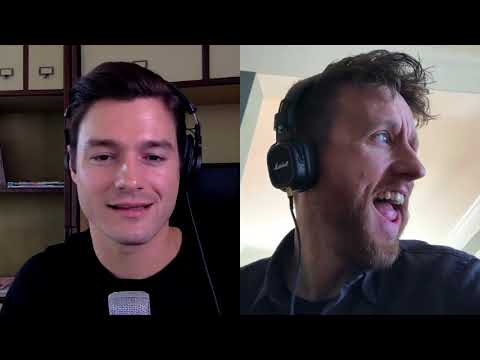
Key Takeaways
- 01SaleCycle had north of 500 customers as of early 2018
- 02Average customer MRR (ARPU) was about $5,000 per month
- 03The company was growing at 30% year over year
- 04Gross revenue retention was 91% and net revenue retention was 101%
- 05CAC payback period was approximately 5.6 months
- 06Customer LTV was just under $400,000 at the time of the interview
- 07SaleCycle was profitable and had been for five years
- 08The company was bootstrapped, having raised only £80,000 in total investment
- 09SaleCycle had 180 employees globally across offices in the UK, Paris, Singapore, and the US
- 10The company was founded in February 2010 and, at the time of the interview, was a behavioral marketing business working across email, on-site, and SMS channels
Company Metrics at Time of Interview
| Metric | Value | Source |
|---|---|---|
| Customers (2018) | North of 500 | Founder interview, Feb 2018 |
| Year-over-Year Growth (2018) | 30% | Founder interview, Feb 2018 |
| Gross Revenue Retention (2018) | 91% | Founder interview, Feb 2018 |
| Net Revenue Retention (2018) | 101% | Founder interview, Feb 2018 |
| Average Customer MRR (ARPU) (2018) | About $5,000 per month | Founder interview, Feb 2018 |
| CAC Payback Period (2018) | 5.6 months | Founder interview, Feb 2018 |
| Customer LTV (2018) | Just under $400,000 | Founder interview, Feb 2018 |
| Total Funding Raised | £80,000 | Founder interview, Feb 2018 |
| Team Size (Global) (2018) | 180 | Founder interview, Feb 2018 |
| Years Profitable (2018) | 5 years | Founder interview, Feb 2018 |
| Year Founded | 2010 | Founder interview, Feb 2018 |
| Professional Services Revenue Share (2018) | Around 10% | Founder interview, Feb 2018 |
Growth Breakdown
Revenue
SaleCycle had north of 500 customers paying an average of about $5,000 per month in MRR as of early 2018. The company was growing at 30% year over year and had been profitable for five years, having raised just £80,000 of investment and no institutional money.
Customers
The company served over 500 customers across multiple sectors and geographies. Net revenue retention of 101% indicated that expansion revenue from existing customers more than offset any churn, while gross revenue retention stood at 91%.
Team
SaleCycle had 180 employees globally at the time of the interview, with offices in the northeast of England (headquarters), Paris, Singapore, and the United States. The US team alone numbered 35 people.
Profitability and Funding
SaleCycle was bootstrapped, having raised only £80,000 in total investment with no institutional money. The company had been profitable for five years, and Dominic called its cost of acquisition "pretty solid": SaleCycle paid back its CAC in around 5.6 months, and he put customer LTV at just under $400,000.
Growth Strategy
Service-Led Retention
Dominic credited hands-on client support as a key driver of retention, noting that having someone to pick up the phone was important to the business. This relationship-focused approach created cross-sell and upsell opportunities that contributed to net revenue retention above 100%.
Pricing Model Evolution
SaleCycle iterated through performance-based, blended base-plus-performance, and finally flat-fee pricing models over eight years. The flat-fee model smoothed revenue predictability while keeping average billing equivalent to prior arrangements, making the business more attractive to CFOs.
Multi-Channel Behavioral Marketing Expansion
The company expanded beyond cart abandonment email into on-site engagement and SMS channels, allowing it to capture more data and serve customers across the full shopping funnel. Cart abandonment had been SaleCycle's entry to market; as Dominic put it, being a behavioral marketing business "opens it up much further."
Data Asset Development
SaleCycle was building toward becoming a data marketing business, leveraging its unique transactional and behavioral dataset captured at the individual user level across devices. Dominic noted inbound interest from third parties in purchasing this data, signaling its perceived value.
Bootstrapped Discipline and Unit Economics
Dominic called SaleCycle "the definition of bootstrapped": it raised £80,000 of investment and no institutional money. Asked how quickly a bootstrapped company gets its money back on customer acquisition, he said SaleCycle paid back in around 5.6 months, with customer LTV just under $400,000.
Best Quotes
“We've got north of 500 customers. We've been profitable for five years. Yeah. Life's good.”
“So gross churn, you're looking at 91%. Sorry, gross retention. I shouldn't say gross churn. That's completely the wrong thing. You'd be out of business. 91% and net retention, 101. Yeah.”
“So our LTV at this moment, as it continues to grow, sits just under $400,000”
“I think we're the definition of bootstrapped in in terms of US terms. So we raised £80,000 of investment to build this.”
“When we started the business, we focused very heavily on the cart abandonment piece because that was our entry to market. But when we talk about being a behavioral marketing business, it opens it up much further. Email is a channel, and within that channel you have cart abandonment.”
“I think what I would tell myself if I was 20 years old is find the balance. I think in the early days of business, you can be pretty sucked into it, and that makes perfect sense, but you've got to stop and enjoy the journey. If you become too focused on where you're trying to get, you can't enjoy every step.”
What Happened Next
At the time of this interview in February 2018, SaleCycle was a bootstrapped behavioral marketing SaaS company with over 500 customers, 180 employees, and offices across four countries. Dominic Edmunds described plans to expand into data marketing and pursue larger players in the marketing cloud space, though those ambitions were still in early stages. This page reflects the company as Dominic described it during the recording. Visit the SaleCycle company profile for current figures.
View SaleCycle’s current profile and metricsFull Transcript
Chapters
- 0:00Introduction and How SaleCycle Is Winning
- 0:35Revenue Mix: Professional Services vs. SaaS
- 1:13Pricing Model Evolution: Performance to Flat Fee
- 2:50Average Contract Size and ARPU
- 3:11Founding Story and Agency Background
- 4:26Bootstrapping and Funding
- 4:58Team Size and Global Offices
- 6:16Growth Rate and Customer Count
- 6:34Product Expansion: Channels and Data Strategy
- 12:37Unit Economics: CAC, Payback, and LTV
- 14:20Famous Five: Books, Tools, and Sleep
- 16:22Advice to 20-Year-Old Self
Introduction and How SaleCycle Is Winning
Nathan Latka
00:00Hello, everybody. My guest this morning is Dominic Edmunds. He's the founder and CEO of a company called SaleCycle and is focused on utilizing customer data to drive conversions and ROI through behavioral marketing. Dominic, are you ready to take us to the top?
Dominic Edmunds
00:14Hell yeah.
Nathan Latka
00:14Alright. This is a tough, tough space. How is SaleCycle winning?
Dominic Edmunds
00:19Yeah. We're winning pretty well. I think that helps being one of the early entrants to the space, which means that we've been able to develop our offering together with the view of the market as it's grown itself. So yeah, we went through a blend of our technology features together with service as well. We don't shy away from giving people the best in class.
Revenue Mix: Professional Services vs. SaaS
Nathan Latka
00:35What percentage of your revenue over the past twelve months was from professional services versus recurring SaaS?
Dominic Edmunds
00:41Off the top of my head, you're going to say it's relatively small, given that the professional SaaS piece is what we build on in terms of scalability. But my background in agency means that I understand that when you talk about building relationships rather than investing in hands on client support, it allows you for cross sell, upsell opportunities. So it's all about building a relationship. Having somebody to pick up the phone is really important to us.
Nathan Latka
01:01So when you say relatively small, mean, are we talking less than 10% as professional service?
Dominic Edmunds
01:08Less than? Sorry, I lost
Nathan Latka
01:09you 10%?
Dominic Edmunds
01:11Yeah, around about that.
Pricing Model Evolution: Performance to Flat Fee
Nathan Latka
01:13Okay. All right. Then tell me about the rest of your model. Is the rest like a pure play SaaS model?
Dominic Edmunds
01:18Yeah, absolutely. Yes. So we've been through a number of different pricing models over the eight years that we've existed. We started out in a pure performance based pricing model, which was really cool because it allows you to really get ballsy with the market and really talk about what you want to deliver. But as you mature, you understand that actually you need to build something a little more predictable for those tough CFOs out there.
Nathan Latka
01:35Yep, and your model, so how are you making money in that model? And when did you shift it to more SaaS?
Dominic Edmunds
01:43So we've had a number of iterations. So we started out with performance, now I would still class performance SaaS for us because having done that for kind of three, four years in the early days, we understood seasonality down to an art, meaning that we understood what to expect from a client depend on their sales cycle, excuse the pun. So that was fairly predictable. However, taking something then to a blend of a base fee, which allows us
02:04to talk about servicing, allows us to talk about the implementation fees, the costs that go with it, and then applying a performance fee on top was our second iteration. And now we've moved into a 100% flat fee model, which again matches with the same kind of fees people would have been paying us on average, but it smooths it out rather than making it choppy, I guess.
Nathan Latka
02:21I don't understand that. If you have a bunch of customers paying flat fees, your revenue is gonna be really chunky up and down versus predictable kind of stacking SaaS. What am I misunderstanding?
Dominic Edmunds
02:31No, no. So when I say flat fees, those flat fees means instead of a customer who may go through a period where they're in sale on their, let's say it's a fashion retailer and they're paying us 20,000 a month, and when they're not in sale, could be paying us 5,000 a month. What we're talking about is picking effectively the equivalent of an average billing. So a flat fee is between those, I mean, over the year, nobody
02:49loses out.
Average Contract Size and ARPU
Nathan Latka
02:50I see. Okay. And then generally, just so we can better understand your customers, average contract size in year one is what? Are we talking $10, 1,000,000, 100,000?
Dominic Edmunds
02:58We do have variance because obviously we're working in different sectors as well. Work very On average though. Yeah, on average, you'd be looking at a monthly MRR, which is technically what we live in. We'd be talking around about the $5,000 a month mark.
Founding Story and Agency Background
Nathan Latka
03:11Okay. Now you launched, let's go back and learn more about your story here, launched in 2009. Where was your head at at that time? Were you, you know, struggling, back against the wall, had to make this work? Did you just sell your last company? Where were you at?
Dominic Edmunds
03:23So I came out of agency. So strictly speaking, we started in 2010, February 2010, February 5, actually just passed her eighth birthday. But I came out of an agency role where it was becoming clear to me that clients were approaching us to address abandonment issues on their side, because they would list them as they had a high abandonment rate. They didn't, they had an average abandonment rate. The challenge you face, Mr. Client, is the same challenge
03:44your competitors are facing. That really was a crystallization behind SaleCycle could be a singular enterprise level product, which can address this issue for a number of customers.
Nathan Latka
03:53Okay. Interesting. So you... And give me a sense of the size of the agency before you started thinking about building software. I mean, were you doing a million bucks a year or a $100?
Dominic Edmunds
04:01So we would be doing around, well, 5,000,000 a year.
Nathan Latka
04:045,000,000. Okay. So it takes some energy and focus to basically slowly shut that down while you ramp SaaS, or are they both running in parallel right now?
Dominic Edmunds
04:12So I stepped away from that. That business has gone from strength to strength. The interesting thing is the shareholders in that agency are the same shareholders I have in SaleCycle, which means my relationship with them has continued. But there's certainly a 12 transition period where I was wearing both hats.
Bootstrapping and Funding
Nathan Latka
04:26Interesting. Now, you talk about shareholders, I start wondering about investment. Have you bootstrapped this thing? Or if not, how much have you raised?
Dominic Edmunds
04:33I think we're the definition of bootstrapped in in terms of US terms. So we raised £80,000 of investment to build this.
Nathan Latka
04:40And nothing on the agency side? You mentioned you have shareholders there. Was that totally bootstrapped as well?
Dominic Edmunds
04:45Yes. Totally bootstrapped.
Nathan Latka
04:46Okay. Got it.
Dominic Edmunds
04:47With no institutional money to date.
Nathan Latka
04:49That's great. So I I love that. And you're based... I think you told me earlier, you're based in Leesburg, Virginia, my hometown, which is great. Where are you based there? What part of the city?
Dominic Edmunds
04:57In Lansdowne.
Team Size and Global Offices
Nathan Latka
04:58Ah, very good. That's a good that's a good spot to be in. And what's the team size today?
Dominic Edmunds
05:02Team size in The US is 35, but globally, 180.
Nathan Latka
05:06Okay. And walk me through the breakdown. So where else do you have offices and what do they do?
Dominic Edmunds
05:11So offices currently, we still have our headquarters based out in the Northeast Of England. We then have one in Downtown Paris, and we've got one in Singapore together here in The US as well. In terms of what they do, I suppose we split the business into regions, as you might expect. So we have the Americas office space here in The US, which allows us to win customers, manage those customers, support them, implement them locally. We do
05:32exactly the same thing in Paris, the same thing in Singapore, exactly the same thing in The UK. However, we also have a central division as it's referred to, which is core technology functions, finance roles like myself, strategic roles, which effectively all of the regions benefit from.
Nathan Latka
05:46Interesting. Now you're the founder, you're one the founders, correct?
Dominic Edmunds
05:49I'm the founder, yeah.
Nathan Latka
05:50Do you have any other co founders or just you?
Dominic Edmunds
05:52It's just me.
Nathan Latka
05:54How have you kept yourself sane? Who you go talk to when you're having a bad day?
Dominic Edmunds
06:00My wife, the cats, the children. Realistically though, I can speak to my shareholders because they have a strong track record themselves of entrepreneurship and investment and seeing journeys like this through to multiple points of exit. So no, I do rely on those relationships.
Growth Rate and Customer Count
Nathan Latka
06:16And what are you growing at right now? Would you say year over year, just the software side, ignore the agency?
Dominic Edmunds
06:20Yeah. Yeah. Well, I step fully away from the agency. So growing at 30% year on year.
Nathan Latka
06:25That's great. I mean, Bootstrap Company, that's healthy. And what are at now today in terms of total customers you're serving?
Dominic Edmunds
06:29We've got north of 500 customers. We've been profitable for five years. Yeah. Life's good.
Product Expansion: Channels and Data Strategy
Nathan Latka
06:34And is that all... Just to be clear, is this all kind of cart abandonment related, or you're branching into other parts of the sales cycle and other kinds of business models?
Dominic Edmunds
06:43When we started the business, we focused very heavily on the cart abandonment piece because that was our entry to market. But when we talk about being a behavioral marketing business, it opens it up much further. Email is a channel, and within that channel you have cart abandonment. Yours have post purchase, cross sell, upsell, survey based information. But then we have the on-site channel, which allows us to engage the users throughout the shopping funnel, capture additional data,
07:05provide them with different points of entry to complete their purchase, etcetera. That's a channel. And then we have the SMS channel as well. So that's really the way the business is structured at the moment.
Nathan Latka
07:14Interesting. So you're valued, say, as you're pulling all these data channels together so the business can make the smartest decision on how to drive more sales?
Dominic Edmunds
07:20That's exactly right.
Nathan Latka
07:21Interesting. Are you selling access to the data to anybody else, kind of like a Clearbit model or no?
Dominic Edmunds
07:26Not currently.
Nathan Latka
07:27Okay. Something you're expanding to?
Dominic Edmunds
07:29Yeah.
Nathan Latka
07:30Interesting. Why?
Dominic Edmunds
07:31Enough said. I can't go into any more about that.
Nathan Latka
07:34Okay. Why? Is it just too sensitive?
Dominic Edmunds
07:36Yeah. It's sensitive based off. We're going through a great deal of opportunistic learnings within the and I think it's fair to say that we're in a path to become a data marketing business, but there's a lot of sensitive information involved in that.
Nathan Latka
07:48Interesting. Interesting. Okay, good. In terms of size, by the way, 500 customers, 5,000 monthly ARPU, mean, puts you at about north of 2,000,000 a month. Is that generally accurate?
Dominic Edmunds
07:58Yes. Pretty close to that.
Nathan Latka
07:59Okay. And growing 30% year over year, that means you're doing somewhere about, what, 1.7 ish about thirteen months ago monthly?
Dominic Edmunds
08:07Yes. Roughly speaking. Forgive me, again, not digging through the detail in front of me. Yeah. I'm just gonna say, yeah, your math's pretty solid so far.
Nathan Latka
08:14You trust me.
Dominic Edmunds
08:16It's something like that.
Nathan Latka
08:16All right, good. Yeah, you're right around. If it is 30% year over year growth, was about 1.7 last year. So that's healthy. Now, a model like this, obviously churn can kick your butt if it's not in check. Tell me about churn.
Dominic Edmunds
08:27Oh yeah. No, we've been through those pains, absolutely. Where you can win customers fast and you can lose them fast. That really boils down to the service element I touched on before. And being able to focus the team, not just on renewals, but also on growth opportunities means that actually currently, if you look at our retention analysis, if you look at our gross retention, it's around about 90%. If you look at our net retention, it's around
08:51about 101%. So actually,
Nathan Latka
08:53that's on revenue basis or a logo basis?
Dominic Edmunds
08:56That's revenue basis. So say
Nathan Latka
08:57it one more time.
Dominic Edmunds
08:59So gross churn, you're looking at 91%. Sorry, gross retention. I shouldn't say gross churn. That's completely the wrong thing. You'd be out of business. 91% and net retention, 101. Yeah.
Nathan Latka
09:12So just to be clear, sorry, to break that down, you're churning 9% of your revenue annually, but you're adding 11% or sorry, 10 to give you 101.
Dominic Edmunds
09:19We're growing the customers that we're holding on to.
Nathan Latka
09:21Yeah. Interesting. And would you say, generally speaking, as you think about new products like potentially this kind of data play, is your focus going to be getting more wallet share from current customer base, increasing ARPUs there, or actually bringing on brand new customers you weren't able to serve earlier?
Dominic Edmunds
09:36It's got to be both. It generally does. Obviously, we've got tremendous foothold in the customers that we actually hold at the moment, and we understand them very well. So there is in theory a soft sell there. But the whole point in having large ambitions is that truthfully, I want to go there and I want to eat the lunch of some very established players, but they can't do what they say they do. I'll leave that for now.
Nathan Latka
09:54Oh, come on. You can't can't act like you're all competitive and then not throw out names. Who are you targeting?
Dominic Edmunds
10:00You want me to tell them I'm coming from?
Nathan Latka
10:01Name a big one, Dominic.
Dominic Edmunds
10:04I'll let you know.
Nathan Latka
10:06Well, I don't know the space. You know your business. I mean, what... Are we are we talking like a are we talking like a Shopify or are we talking like a demand
Dominic Edmunds
10:13Way bigger.
Nathan Latka
10:15Well, Shopify is pretty big.
Dominic Edmunds
10:17Way bigger.
Nathan Latka
10:17Shopify is a multi billion dollar company. I mean Way bigger. Who?
Dominic Edmunds
10:22I'm big. I'm going ballsy. It is what it... If you think of the marketing cloud space, let's call it that. If you consider the marketing cloud providers that have been built, have been constructed on technology that was acquired and cobbled together that was never designed to work in tuition, meaning that actually they make a lot of promises they can't deliver on. If you focus on the data initially and how you can actually use it to not
10:41only identify propensity to buy, but also effective ad spend and realistically communication based digital spend, then that means you can take yourself into a space where you can deliver a significant uptick in ROI with a greater reduction in cost, moving into, I guess, what you'd classify as certainly the marketing cloud space, DMP space, start to blend them together, it becomes really interesting on what we can do if you consider the data we capture is
11:04all transactional. This is understanding what people want to buy, when they want to buy, what they just bought and why they bought it, together with understanding, okay, if you're going to contact that same customer, let's understand that data pool together.
Nathan Latka
11:15On the marketing automation side, you've got the Infusionsofts, the Hubspots, the Marketos of the world. You start getting a DMP and DSP side, you've got the, you know, Bill Wise is at Mediaocean of the world. There's a whole market over there. You are interested in kinda bringing both those sides together. My question to you would be the the the the fastest way to bring those sides together is who has access to the most data? Then you
11:35make your engine the smartest, so you train your thing.
Dominic Edmunds
11:37How do you It's not just the volume of data.
Nathan Latka
11:38Okay. Why?
Dominic Edmunds
11:39Not just the... It's the quality of the data.
Nathan Latka
11:41So you're saying they have shitty quality?
Dominic Edmunds
11:44No. I would never say that about them. What I'm saying is the quality of the data that we have is very unique to us.
Nathan Latka
11:49Well, they've got transactions. They have, I would say, much, much larger, by a factor, maybe a 100 or a thousand X your data size and it's actual transactional data. Why is your data better?
Dominic Edmunds
11:58If you were to consider the impression based data and shopping based specific data that we capture on a daily basis based on the individual user, not just an individual session, and being able to glue that together across device to understand specifically what results are generated across different customers in terms of the ability to pull this data together. It's a very unique dataset. We've had a lot of inquiries inbound asking us as to whether we would actually
12:23sell that data into parties such as that, because they see the value in it. At this moment in time, we're not looking to do that. We're looking to further enhance that data, further enrich that data. We've looked about bringing on both third party data to further enrich it ourselves. So, we've got some fun times ahead of us.
Unit Economics: CAC, Payback, and LTV
Nathan Latka
12:37Okay, good. I'm picking up what you're putting down. I get it. Real quick before we wrap up, unit economics. You're bootstrapped. You can't pay a lot upfront and wait two years to get your money back. How quickly do you like to get your money back, your your CAC?
Dominic Edmunds
12:49Oh, cost of acquisition is pretty solid. So give me a little... Our cost of acquisition LTV ratio. So we pay back around about five point six months.
Nathan Latka
12:57Okay, five point six months. And if people are paying on average $5,000 a month, so what, you're spending $30,000 to acquire these customers?
Dominic Edmunds
13:03Under, just under, yeah.
Nathan Latka
13:04Okay. And that's a max, right? So $30,000, your payback's healthy. What do you assume this... Now, we have to be careful here. What do you assume these customers are gonna give you over their lifetime? How long do they stay with you on average?
Dominic Edmunds
13:15So our LTV at this moment, as it continues to grow, sits just under $400,000
Nathan Latka
13:20Okay. And that's probably like a minimum, right? You're conservative with that?
Dominic Edmunds
13:26Guess the question is, so I expect it to be larger next month and larger the month after because we're retaining these customers. So as much as it's conservative, when I look at the future, it's actual. If I looked at the last time we ran it, it was two Interesting. Months
Nathan Latka
13:37Okay. And that comes out to about how many years of them staying with you?
Dominic Edmunds
13:41Oh, okay. Now you're asking me. I have to come back to you, take the 400,000 divided by our average deal value, and you get roughly what it is.
Nathan Latka
13:49Yeah. So if I divide it by 5,000 a month, that gives you obviously eighty months or approximately seven years.
Dominic Edmunds
13:54Yeah, but some will be obviously paying us a great deal more. Some will be paying a little bit less. There is a blend in these things. I try not to get too lost in what you call the traditional SaaS based average metrics. Once they exist, they're averages, the edge cases are the things you can learn more from. Why is it you have a customer who pay less? What's the unique case opportunity there? What is the wider
14:13opportunity to get them to pay more? Why would someone pay vastly more? What are they getting that others aren't? So I think it's important to understand the full breadth of the business, not just the middle point.
Famous Five: Books, Tools, and Sleep
Nathan Latka
14:20Yep. No. It makes good sense, Dominic. Let's wrap up here with the Famous Five. First one, what's the last business book you read?
Dominic Edmunds
14:26I couldn't tell you, truthfully. I'm not really a business book reader.
Nathan Latka
14:30What's last book you read?
Dominic Edmunds
14:31I believe you go... Oh, I'm currently reading The Essex Serpent.
Nathan Latka
14:35The Essex Serpent?
Dominic Edmunds
14:37Oh, yeah. And I have just ordered the Watchmen sketch edition. It's called Watchmen Noir, so I'm looking forward to reading that.
Nathan Latka
14:45Number two. Number two, name your favorite CEO in Leesburg you like to go out and get coffee or dinner with.
Dominic Edmunds
14:51Oh, that's a good question. I can't choose me. No?
Nathan Latka
14:54No, not you.
Dominic Edmunds
14:57Think, truthfully, when I look at the book question and actually the CEO and studying question, really, I like people to be themselves. As I talk to people who join the business and they want to maybe look up, find a mentor, etcetera, who's it they wanna be? The great sports sign of go out and be yourself because everyone else has taken, you've got to understand the skills that you have because those are the skills So Dominic, taken
Nathan Latka
15:15name a place on CEO in Leesburg you really enjoy chatting with?
Dominic Edmunds
15:19I don't think I can.
Nathan Latka
15:20You don't you don't... There's not people you brainstorm with in Leesburg.
Dominic Edmunds
15:23Love talking to people. Don't get me wrong.
Nathan Latka
15:24Okay. That's the question.
Dominic Edmunds
15:25Ask me to pull one person out who I'm gonna focus on is put them at the top of the tree. I don't believe in
Nathan Latka
15:30putting It wasn't top of the... It's not top of the tree. You're not ranking people, but this is for other people when they're going through that area or they're researching Northern Virginia, who should they be thinking about? Name someone who you think is a good thought leader there.
Dominic Edmunds
15:40I'd take a look at the CEO who splits his time between Leesburg and San Francisco, who is the CEO of Sobriety, although I can't necessarily remember his name.
Nathan Latka
15:50That's okay. Let's move to the third question. What's your favorite online tool besides your own?
Dominic Edmunds
15:56Business wise, we use Google across everything, so Hangouts is a big deal for us because we've got international offices and we connect to everything via video conference, by G chat, etc. So whether it's the best, it's what I use every damn day.
Nathan Latka
16:07Number four. How many hours of sleep do get every night?
Dominic Edmunds
16:09I'm gonna go with roughly six and a half.
Nathan Latka
16:12Okay. And what's your situation? Married, single, have kiddos?
Dominic Edmunds
16:15Yeah. Married, two kiddos, 11 and six.
Nathan Latka
16:17Oh, wow. Okay. And how old are you?
Dominic Edmunds
16:19No. I'm 40. Turned
16:20Good, just this Ken.
Nathan Latka
16:21Happy birthday. Last question.
Advice to 20-Year-Old Self
Nathan Latka
16:22Take us back to your 20 year old self. What do you wish she knew?
Dominic Edmunds
16:26Yeah. I think what I would tell myself if I was 20 years old is find the balance. I think in the early days of business, you can be pretty sucked into it, and that makes perfect sense, but you've got to stop and enjoy the journey. If you become too focused on where you're trying to get, you can't enjoy every step. I remember being at a business conference in the North East Of England around about ten years
16:45ago, where Elle Macpherson came to speak. You might think Elle Macpherson Business Conference at that time necessarily why, talking around her perfume, lingerie, beauty brand stuff. And there's a line she said about enjoying the daily journey. She said, I don't dance to get to the end of the song. And I just think that's quite a poignant way of putting it. Gotta enjoy what you're doing. It's not just about reaching the target.
Nathan Latka
17:05There you guys have it from Dominic, salecycle.com. He's enjoying his dance. Well, maybe I'll have to get a video, Dominic, of you dancing. Don't Nolan's watching. We've launched in maybe not. Maybe not. Maybe not. But we launched in 2010, now 180 people all over the place. Again, really focused right now on some specific data points, cart abandonment, things like that. But their breadth and their expanse of their data is growing fast. It's powering a much smarter engine.
17:28He came from an agency background, grew that to about $5,000,000 in annual revenue before branched off and did software exclusively. It's bootstrapped, which I love. They're serving 500 customers, paying on average $5,000 a month. So doing about 2,500,000 per month right now. That's up from about 1.7 just 13 months ago. So 30% year over year growth. Really healthy revenue retention year over year at a 101%. CAC to LTV, super healthy as well. They get paid back
17:49in under six months. Dominic, thank you for taking us to the top.
Dominic Edmunds
17:53Thank you, Nathan.