
Founder Interview
How Symbl.ai Raised $17M at a 50x Revenue Multiple with 125% NDR (Interview with CEO Surbhi Rathore)
- Interview Date
- December 8, 2021
- Interviewee
- Surbhi RathoreCEO and Co-Founder
Company Metrics at Interview Time
Series A Raise (2021)
$17M
Revenue Multiple (Series A) (2021)
50x
Net Dollar Retention (2021)
125%
Minutes Processed per Month (2021)
5M to 10M
Team Size (2021)
54
Historical Snapshot
These numbers were reported by Surbhi Rathore during her interview with Nathan Latka recorded in December 2021 and are a historical snapshot, not current figures. See Symbl.ai’s current numbers.
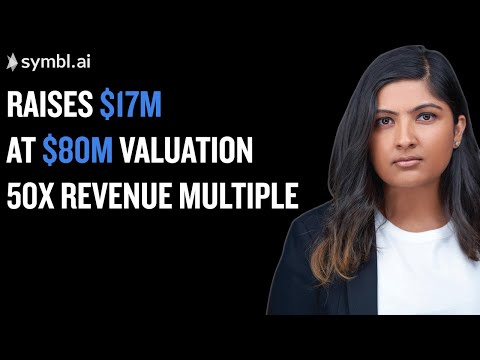
Key Takeaways
- 01Symbl.ai closed a $17M Series A led by GreatPoint Ventures in late 2021 at a 50x revenue multiple.
- 02The company reported 125% net dollar retention as of December 2021.
- 03Symbl.ai was processing between 5 and 10 million minutes per month, with minute volume growing at roughly 20% per month.
- 04The platform is priced on usage at $0.05 per minute at the entry level, with committed volume deals reaching $100,000 to $200,000 ACV.
- 05The largest account was in the $150,000 to $200,000 ACV band as of 2021.
- 06The company had 54 full-time employees, with 80% in engineering and 60 to 65% based in India.
- 07Symbl.ai was founded in May 2018 and first acquired customers through LinkedIn cold outreach.
- 08The $1.8M pre-seed round in 2019 included $120,000 from Techstars Seattle (6% equity).
- 09The company grew valuation roughly 4x from approximately $20M in 2020 to the Series A valuation.
- 10All meaningful revenue growth occurred in the 12 to 14 months following the COVID-era launch of the self-service platform.
Company Metrics at Time of Interview
| Metric | Value | Source |
|---|---|---|
| Series A Raise (2021) | $17M | Founder interview, Dec 2021 |
| Series A Lead Investor (2021) | GreatPoint Ventures | Founder interview, Dec 2021 |
| Revenue Multiple at Series A (2021) | 50x | Founder interview, Dec 2021 |
| Seed Round (2020) | $4.7M | Founder interview, Dec 2021 |
| Pre-Seed Round (2019) | $1.8M | Founder interview, Dec 2021 |
| Techstars Investment, Included in the $1.8M (2019) | $120,000 for 6% equity | Founder interview, Dec 2021 |
| Valuation (2020) | $20M | Founder interview, Dec 2021 |
| Net Dollar Retention (2021) | 125% | Founder interview, Dec 2021 |
| Minutes Processed per Month (2021) | 5M to 10M | Founder interview, Dec 2021 |
| Monthly Minute Growth Rate (2021) | 20% | Founder interview, Dec 2021 |
| Largest Customer ACV (2021) | $150,000 | Founder interview, Dec 2021 |
| Entry-Level Price (2021) | $0.05 per minute | Founder interview, Dec 2021 |
| Team Size (2021) | 54 | Founder interview, Dec 2021 |
| Engineering Share of Team (2021) | 80% | Founder interview, Dec 2021 |
| India-Based Employees (2021) | 60 to 65% of team | Founder interview, Dec 2021 |
| ESOP Pool (Series A) (2021) | 15% | Founder interview, Dec 2021 |
| Year Founded | 2018 | Founder interview, Dec 2021 |
Growth Breakdown
Revenue
Surbhi Rathore declined to disclose revenue, refusing the host's estimates twice on the record. She did confirm the Series A was priced at a 50x revenue multiple. What she gave instead was shape rather than size: the company went from $0 in revenue twelve months earlier and was "doing like peanuts" at the same point in 2020, with all of the growth landing in the twelve to fourteen months after the self-service platform launched post-COVID.
Customers
Symbl.ai had customers in the higher double digits as of December 2021, with Surbhi expecting to cross 100 customers in Q1 2022. The customer base is split between pay-as-you-go developers and committed-volume enterprise accounts, with the largest account in the $150,000 to $200,000 ACV band.
Team
The company had 54 full-time employees at the time of the interview, with 80% in engineering roles. Approximately 60 to 65% of the team was based in Pune and other Indian cities, with the remainder split between Seattle, the Bay Area, and Boulder.
Funding
Symbl.ai raised a total of $23.5M across three rounds: a $1.8M pre-seed in 2019 (which included the $120,000 from Techstars Seattle), a $4.7M round in 2020, and a $17M Series A led by GreatPoint Ventures that closed a couple of weeks before this December 2021 interview. The valuation grew roughly 4x from approximately $20M in 2020.
Growth Strategy
Product-Led Acquisition via Developer Sign-Ups
Symbl.ai's primary growth motion is product-led: developers sign up on the platform, activate, and experiment with use cases. The team monitors which domains are activating and qualifying by product usage, then reaches out or waits for the enterprise product team to initiate contact.
Organic SEO and Content
After the early LinkedIn cold outreach phase, the team shifted to generating content and capturing organic SEO-driven sign-ups. Surbhi credited this as the main inbound channel by the time of the interview, supplemented by developer hackathons and community events.
Usage-Based Pricing for Natural Expansion
Charging per minute of audio analyzed rather than per seat means customers naturally expand their spend as they roll out more use cases and process more conversation data. This structure directly drives the 125% net dollar retention the company reported.
Committed Volume Enterprise Deals
Alongside the self-serve tier, Symbl.ai signs committed volume deals with enterprises, running roughly $100,000 to $200,000 depending on the tier. A subset of customers who already know exactly which use cases they want to implement start higher, while the customers still experimenting sit lower down the range. These anchor accounts provide predictable base revenue on top of the variable usage layer.
Series A Investment in Go-to-Market
A key motivation for raising the $17M Series A was to build out the go-to-market team, which was minimal at the time of the raise. Surbhi noted the company had essentially one sales person despite a growing pipeline, and the new capital was earmarked to scale developer evangelism and sales capacity.
Best Quotes
“We were working in the conversation AI space, both me and my co founder before at Amdocs, and continuously over and over again came across chatbots, but nothing for calls, which actually connects humans together. And we just wanted to put together a platform that enables and empowers people to maximize value information from human to human conversations and not just human to machine. And that's how we started.”
“We truly believe in kinda like peanut butter your intelligence all over the products that you have. So you only pay based on usage and irrespective of how many seats, how many products you apply, it doesn't matter. At the end of the day, it's the number of minutes which are analyzed by the platform that people get charged on.”
What Happened Next
This interview captured Symbl.ai at a specific moment in December 2021, shortly after the company closed its $17M Series A and was scaling its self-service platform. The figures here, including the 125% NDR, team size of 54, and minutes-per-month growth rate, reflect what Surbhi Rathore reported at that time and will not be updated on this page. Visit the Symbl.ai company profile on GetLatka for the most current available data on revenue, customers, and funding.
View Symbl.ai’s current profile and metricsFull Transcript
Chapters
- 0:00Introduction and Company Overview
- 0:26Who Symbl.ai Sells To
- 0:43Origin Story and Problem Discovery
- 1:07Pricing Model: Per-Minute Usage
- 2:01No Seat-Based Upsell, Pure Usage Billing
- 3:00First Customer via LinkedIn Cold Outreach
- 3:27Current Customer Count and Growth Target
- 3:46Growth Motion: SEO, Content, and Product-Led Acquisition
- 4:24Minutes Processed Per Month and Growth Rate
- 5:14Series A Details and GreatPoint Ventures
- 5:30Why Raise Capital: Doubling Down on Growth
- 6:16Valuation History and 4x Growth Since 2020
- 8:18ESOP Pool: 10% Then 15% at the Series A
- 9:02Team Size and the India/US Split
- 11:38The 50x Revenue Multiple
- 13:32Net Dollar Retention at 125%
- 14:10Famous Five
Introduction and Company Overview
Nathan Latka
00:00Hey, folks. My guest today is Surbhi Rathore. She's the CEO and cofounder of Symbl dot ai. The company is bringing to life a vision for a programmable platform that empowers developers and business to monitor, act, and comply with voice video conversations at scale in their products and workflows without building their own in house data science expertise. Surbhi, are you ready to take us to the top?
Surbhi Rathore
00:19>> Do it. Let's do it.
Nathan Latka
00:21Alright. I'm stoked that you're here. People wanna follow along.
Surbhi Rathore
00:23>> It's symbl dot ai.
Who Symbl.ai Sells To
Nathan Latka
00:26Who are you selling to?
Surbhi Rathore
00:27>> We're selling to developers and businesses that are really bullish on expanding their brand to go beyond communications and use the power of AI machine learning to build awesome next generation experiences that delights their users in conversations.
Nathan Latka
00:40And how did you discover that this was a problem?
Origin Story and Problem Discovery
Surbhi Rathore
00:43>> We were working in the conversation AI space, both me and my co founder before at Amdocs, and continuously over and over again came across chatbots, but nothing for calls, which actually connects humans together. And we just wanted to put together a platform that enables and empowers people to maximize value information from human to human conversations and not just human to machine. And that's how we started.
Pricing Model: Per-Minute Usage
Nathan Latka
01:07There's so much audio and video data like this being It's created every a powerful space to be in. What do you charge for this? What's the average customer paying you per month to use the tech?
Surbhi Rathore
01:16>> So ACV is dependent upon whether you're a developer or you're an enterprise doing committed volumes. We have you can just start pay as you go without any commitment all the way from like 0.058 per minute, which is like super cheap for anyone to get started with all the capabilities, not just speech to text, but also intelligence, insights, analytics, all included.
Nathan Latka
01:35You said 0.05¢?
Surbhi Rathore
01:37>> Point $0.05. Point $05.
Nathan Latka
01:42Point yeah. So 5¢.
Surbhi Rathore
01:44>> Yeah. 5¢.
Nathan Latka
01:44Okay. Just making sure. Yeah. So all
Surbhi Rathore
01:46>> the way from 5¢ to all the way to, you know, committed volume deals of 100, 200 ks depending upon what's your tiers. So we charge based on volume and usage.
Nathan Latka
01:56I see. And so the volume is quantified by minutes. Is that right?
Surbhi Rathore
02:00>> That's right. Yeah.
No Seat-Based Upsell, Pure Usage Billing
Nathan Latka
02:01Okay. And what about is there a seat based upsell motion or no?
Surbhi Rathore
02:06>> Is there sorry?
Nathan Latka
02:07Do you upsell based off number of seats or no?
Surbhi Rathore
02:10>> No. So we truly believe in kinda like peanut peanut butter your intelligence all over the products that you have. So you only pay based on usage and irrespective of how many seats, how many products you apply, it doesn't matter. At the end of the day, it's the number of minutes which are analyzed by the platform that people get charged on.
Nathan Latka
02:26Okay. And interesting. I think if don't obviously name the customer, it's private information, but their largest account, are we talking like $100,000 ACV or is do you
Surbhi Rathore
02:34>> have a More than that. Not a million, but, yeah, $150,000 to $200,000.
Nathan Latka
02:40Okay. I mean, do you see a path to having, you know, million dollar customers in 2022, 2023?
Surbhi Rathore
02:44>> Absolutely. Super bullish about it and actually talking to a few customers about that.
Nathan Latka
02:48Really interesting. And and so, again, it's nice because you've natural upsell based off just number of minutes. It's really simple. Yep. Talk to me about day one. When did you guys launch the business?
Surbhi Rathore
02:59>> May 2018.
First Customer via LinkedIn Cold Outreach
Nathan Latka
03:00May 2018. Okay. And how'd you get the first customer? Do you remember?
Surbhi Rathore
03:04>> Yes. LinkedIn cold outreach.
Nathan Latka
03:06Wow. What what give me, like, the verbiage. What was the copy?
Surbhi Rathore
03:10>> Nothing. It was, hey. We're building conversation intelligence system that will automate meeting notes out of your platform, very, very focused on their particular use case that they were gonna solve for, and got a meeting, took a phone call, followed by a meeting demo, and then boom, pilot signed.
Current Customer Count and Growth Target
Nathan Latka
03:27Wow. Okay. That was number one. How many customers today?
Surbhi Rathore
03:30>> Today, we have customers in higher double digits.
Nathan Latka
03:33Double digits, you said?
Surbhi Rathore
03:34>> Higher double digits. Yes.
Nathan Latka
03:36When when do you think you can pass a 100?
Surbhi Rathore
03:38>> Soon. Probably first first quarter of the next year.
Nathan Latka
03:43Okay. So you're talking, like, seventy, eighty customers and something like that?
Surbhi Rathore
03:45>> Yeah.
Growth Motion: SEO, Content, and Product-Led Acquisition
Nathan Latka
03:46Where are you getting new customers? Still LinkedIn Outreach?
Surbhi Rathore
03:48>> No, no, no. That was way back.
Nathan Latka
03:51You never know. Sometimes it works, you know?
Surbhi Rathore
03:53>> Yeah, we focus a lot on generating content and just SEO organic sign ups through developer hackathons, community events, all of that. Our entire motion is kind of like product led acquisition. That's kind of what we do. So, developers sign up on the platform, get activated, try. We see whether they are from which domains are they activated, have they qualified from a product usage, and then either we reach out to them or get reached out by their
04:20>> product teams, and that's how we get connected on meetings with them.
Minutes Processed Per Month and Growth Rate
Nathan Latka
04:24Fascinating. And today, like across all your customers, how many, like, I don't know what the right word is, but how many minutes are you managing per month?
Surbhi Rathore
04:31>> We are doing millions of minutes, and we've been doing that since, I think, the last seven, eight months, specifically once products matured post COVID and implemented some of the key use cases that are giving value in accessibility compliance or call tracking, which are the most important ones. Since then, we have really taken off on the minutes consumption.
Nathan Latka
04:52Are we talking like 3,000,000 minutes a month or like 30,000,000 No, minutes per
Surbhi Rathore
04:56>> no, not 30 yet. Between five to 10.
Nathan Latka
04:59Five to 10. And how many I wanna get a sense of growth rate. How many more minutes are you adding per month?
Surbhi Rathore
05:05>> I would say 20% is kind of like our average growth.
Nathan Latka
05:08Wow. Okay. I mean, that's pretty impressive.
Surbhi Rathore
05:11>> Yes. Which is why we raised the Series A.
Series A Details and GreatPoint Ventures
Nathan Latka
05:14Okay. So tell me about that. When was the Series A?
05:16How much?
Surbhi Rathore
05:17>> Yeah. We just closed, I think, couple of weeks back, a 17,000,000 Series A, which was led by Greatpoint Ventures. Really pumped to work with Real Lean and got them from there. And they have scaled massive enterprise scale companies. So yeah, super pumped.
Why Raise Capital: Doubling Down on Growth
Nathan Latka
05:30And why do you need the capital? Because obviously there's dilution associated with it.
Surbhi Rathore
05:34>> There is. And that's a great question because like, that's always something that we think about as entrepreneurs is like, we take the capital for growth as opposed to really surviving. That has always been like one of our motives that we see an opportunity, it's already working, can we double down on the investment in our developer evangelism or relations that we are doing? We're already writing pieces of content that's getting the reaction. Can we actually do it
05:58>> 10x times? Things like that is always an opportunity of growth for companies, and I think timing is so critical based on where we are today, where businesses have started to realize that transcription is not good enough. They need something more than that. And, like, that's what we're bringing to the table, which makes this time really exciting.
Valuation History and 4x Growth Since 2020
Nathan Latka
06:16Mhmm. And, Surbhi, most folks, most of the deals I'm seeing today, at least folks that come on the show, Series A's folks are selling between 10 to 20%, say it's pretty standard. Were you guys sort of in the standard range or do you do something weird?
Surbhi Rathore
06:26>> No, standard range.
Nathan Latka
06:27Standard range, okay.
06:29So that would be like 170,000,000 to $250,000,000 ish valuation. Did that feel right for you or did you feel sort of that was high or low?
Surbhi Rathore
06:37>> We did a 17 no, I mean, it wasn't the range that you're talking about. It was different.
Nathan Latka
06:44I'm sorry. I did that wrong. Sorry. Would be between 100 and 200,000,000.
Surbhi Rathore
06:52>> Yeah. So a little lesser than your lower range, the one that you just mentioned right now. But I think it was just a function of where we are as a company and what was our previous because we got a pretty good multiplier based on our previous valuation.
Nathan Latka
07:04Well, yeah, so what was the 4.7 that you raised in 2020, I think?
Surbhi Rathore
07:09>> Yeah, it was a 4,700,000 round that we did that time.
Nathan Latka
07:12But no, but I'm curious how much you grew valuation over the past, like, eighteen months. Can you share that?
Surbhi Rathore
07:17>> Like, four x.
Nathan Latka
07:19Four x. Okay. Got it. So you were like 20,000,000 valuation back in 2020?
Surbhi Rathore
07:23>> Somewhere around that.
Nathan Latka
07:24Interesting. Do you do you come from a bootstrap background? Did you bootstrap like your first company?
Surbhi Rathore
07:29>> We first company?
Nathan Latka
07:31What do
Surbhi Rathore
07:31>> you mean by that?
Nathan Latka
07:32Well, no. I don't know if you had a first company. I'm just curious. Is this your first
Surbhi Rathore
07:34>> Oh, this is our first company. Yeah. It is.
Nathan Latka
07:38And who is we?
Surbhi Rathore
07:40>> Me and my co founder.
Nathan Latka
07:42Well, how did you guys meet? Who are they?
Surbhi Rathore
07:44>> We were so Toshish, we were together in Amdocs, the same organization that we were working with, working together on the product that we were really pumped to get to market, and then ideated same time and then jump ship.
Nathan Latka
07:56So were you guys just peaceful at the start? You said, You know what? We'll just do a fifty-fifty split?
Surbhi Rathore
08:00>> Yes.
Nathan Latka
08:01You should have fought for 60%. Know? Now you say, You know what? I I have more charisma. I'm doing all the podcast interviews. You know?
Surbhi Rathore
08:09>> Well, you haven't met him yet, So we'll take that for the next time probably.
Nathan Latka
08:14That's funny. I'm I sure
Surbhi Rathore
08:15>> bet you'll go and tell him sixty-forty.
ESOP Pool: 10% Then 15% at the Series A
Nathan Latka
08:18That's so funny. I'm sure he's a great guy. So, okay, cool. So you split 50 to get the start. You're growing now. Now a lot of founders that are, you know, doing the kind of raises you're doing, always ask me, Nathan, what's a standard pool that we should be setting up? I imagine you guys set one up. How much is your ESOP pool today?
Surbhi Rathore
08:31>> We did. We did a 10%, 10% at our previous rounds, but this round specifically, we set up actually 15%. We set up a higher ESOP one at this time because this is a great time to get awesome people in the company and we wanted to make sure not just we get great people inside but also incentivize the people which are inside the company. It's really important that people inside the company continue to get their ESOPs refreshed,
08:56>> I think, as with their years of contribution. And we have some awesome people that have completed two years, three years
Team Size and the India/US Split
Nathan Latka
09:02So in the How many folks full time now?
Surbhi Rathore
09:05>> 54.
Nathan Latka
09:06Wow. Okay. And what's the split between, like, how many engineers?
Surbhi Rathore
09:10>> 80% engineers still. We are just building out our go to market team, which is a big thing that we took on after our series A. That was one of the biggest motivations of investment, those dollars. 80% is engineering and 60% of the overall company actually is in India. We are split between India and Seattle. So yeah, sixty to sixty five percent in India, thirty to thirty five percent in The US.
Nathan Latka
09:32Which part India? Pune, Chennai, Bangalore?
Surbhi Rathore
09:34>> Yeah. So Pune is majority of the team. We have some people in Bangalore, some people in New Delhi. And here in The US, we are mainly centered in Seattle, and we have some people in the Bay Area, some people in Boulder, so kind of split like that.
Nathan Latka
09:46That's amazing. And then going back to know I asked you what, like, highest customers are in sort of total number of minutes per month, what would you say the sweet spot is? What's the average customer paying you per month?
Surbhi Rathore
09:55>> I think 30 to 40 k is, like, a great area for people to kind of get started.
Nathan Latka
10:01ACV, annual.
Surbhi Rathore
10:02>> Yeah, yeah. And that way, it's very comfortable for them to get started by that amount and start seeing the value at a very small percentage of conversation data they have, and then go from there and keep incrementing it. There are some folks which already know the use cases, and they usually start at 200 above because they exactly know how to start. This is the volume that I want to implement, and that's how I go ahead and
10:25>> get started. But for the folks that are trying to experiment with the use cases for them, that that is a good sweet spot.
Nathan Latka
10:31Yep. Yep. So I mean, we can take three well, $40,000 ACV, 70 ish customers. I mean, you guys are doing, $250,000 a month right now in revenue, something like that.
Surbhi Rathore
10:38>> I cannot disclose that information at all.
Nathan Latka
10:41I'm just multiplying your numbers.
Surbhi Rathore
10:44>> I'm I did not share the previous numbers and letter numbers. So yeah.
Nathan Latka
10:48No. You did share though. You did share those numbers. You said you had something between 50 and a 100 customers and a $40,000 average you can multiply. Right?
Surbhi Rathore
10:54>> But those 50 to 100 are split in between pay as you go, committed volumes all across.
Nathan Latka
11:00Okay. So 40,000 is not an average then?
Surbhi Rathore
11:03>> Yeah. I mean, average across committed customers, not across pay as you go customers. Those are the two different kind of customers that we have. So developers which are already upgrading from the platform, they sign up for a different amount because they are just experimenting. And then these are the other customers that basically we sign committed volume deals with. It's a pretty similar Twilio model. So it's base revenue and that there's a variable revenue.
Nathan Latka
11:24You you can't be far, though, sorry, from a $3,000,000 run rate. You've got to be flirting with it.
Surbhi Rathore
11:29>> I cannot disclose that information.
11:35>> I'm sorry. I'm gonna be a pain here, but yeah, no.
The 50x Revenue Multiple
Nathan Latka
11:38What what revenue multiple you shared valuation on the Series A. I'm curious because I like these benchmarks like 10x, 20x, 50x. What was the revenue multiple?
Surbhi Rathore
11:48>> Revenue multiple was, yeah, 50x.
Nathan Latka
11:51Five zero? Yeah. Does it make you nervous growing into that valuation or no? You're ready for it?
Surbhi Rathore
11:56>> No. Totally ready for it. It's I think it's a lot about the opportunity that lies in front of us that we can tap into. It was all a function of manpower. Like this round was so exciting because we had bunch of pipeline, but no one to actually we have literally one sales guy, like that's insane. And we grew from like $0 in revenue to where we are right now over the last kind of like twelve months.
Nathan Latka
12:19Oh, so you had no revenue this same time in 2020?
Surbhi Rathore
12:25>> At 2020, same time, we were doing like peanuts.
Nathan Latka
12:30Five k a month?
Surbhi Rathore
12:31>> Yeah, we had customers a little more than that. We had customers that was with us from a beta customer standpoint, but we only launched our platform post COVID. That's when we actually became live from a self-service perspective. Did
12:45>> not have self-service function after COVID.
Nathan Latka
12:46I see.
Surbhi Rathore
12:47>> So all the growth that we have come across is over the last twelve to fourteen months.
Nathan Latka
12:51Yeah. Your capital must be like pretty messy though. Mean, because you did like $120 k pre seed round back in February 2019. Then you did another 1,800,000 pre seed, I think in September 2019, right?
Surbhi Rathore
13:01>> Yeah. So 1,800,000 included the 120 k that we got from Techstars. So 1,800,000 was our first round that we did. That was the first price round that we did.
Nathan Latka
13:10Oh, okay. Okay. Okay. And that was what? Like a like a 10 cap, something like that?
Surbhi Rathore
13:15>> Yeah. Interesting.
Nathan Latka
13:16And Techstar standard deal, think, is what? 120 k for 7%?
Surbhi Rathore
13:20>> That's right. Yeah. 6%.
Nathan Latka
13:21Yeah. 6%. 6% for one twenty. Interesting. Very and that was Seattle?
Surbhi Rathore
13:25>> Yeah. That was Seattle.
Nathan Latka
13:26Yeah. Very cool.
Surbhi Rathore
13:27>> Talk to me. Actually, we were in the Bay Area, we moved to Seattle just for Techstars.
Net Dollar Retention at 125%
Nathan Latka
13:32Smart. Oh, that's very cool. Real quick. I'm trying to get more founders to do this pay as you go model like you're doing because your net dollar retention can go through the freaking roof. When you look at your last twelve months, I assume you guys are well above a 100% NDR.
Surbhi Rathore
13:43>> Yeah. One twenty five.
Nathan Latka
13:45Well, interesting. I think bet you guys should get up to, one fifty, one sixty.
Surbhi Rathore
13:48>> Yeah. We wanna do at least one thirty two by the end of next quarter. That's our objective.
Nathan Latka
13:52Is that, like, the key thing when you're pitching a series a? Is that one of the key metrics?
Surbhi Rathore
13:56>> That is. Absolutely.
Nathan Latka
13:57Yeah. What was the second most important metric?
Surbhi Rathore
14:00>> Dollar.
Nathan Latka
14:01Just like revenue growth.
Surbhi Rathore
14:03>> Yeah. Absolutely. Revenue growth is an important number for us. And obviously, number of developers on the platform, I think that also is really critical.
Famous Five
Nathan Latka
14:10Alright, Surbhi. Let's wrap up with the famous five here. Number one, favorite business book?
Surbhi Rathore
14:15>> Hard Things About Hard Things.
Nathan Latka
14:17Number two, is there a CEO you're following or studying?
Surbhi Rathore
14:20>> Jennifer Tejada, PagerDuty.
Nathan Latka
14:22Ah, yes. Number three, what's your favorite online tool for building the business?
Surbhi Rathore
14:26>> Notion.
Nathan Latka
14:27And number four, how many hours of sleep do get every night?
Surbhi Rathore
14:31>> Six.
Nathan Latka
14:33Six. Okay. That's not horrible. And what's your situation? Married, single, kids?
Surbhi Rathore
14:37>> I am married. My husband lives in Sydney, Australia.
Nathan Latka
14:39Oh, wow. Okay. Any kids?
Surbhi Rathore
14:40>> No.
Nathan Latka
14:41Okay. And do you mind me asking how old you are?
Surbhi Rathore
14:44>> I'm 34.
Nathan Latka
14:4534. Last question.
Surbhi Rathore
14:46>> Something you wish knew when you were 20.
14:49>> Start a company right now. Don't wait until you're 32.
Nathan Latka
14:54Guys, symbl.ai helping you guys make more sense of all the video data you're capturing during COVID, post COVID, organize it, pay per minute, analyze it. They've got over, know, call between 1,500 customers already on the platform scaling nicely, doing like five, ten grand a month in revenue like a year ago. Now well over that. Did a $17,000,000 series A recently at a 50X revenue multiple. She's gonna hate that I'm saying this, but if it's a 50X
15:14multiple and an 80,000,000 valuation, because they sold 10 to 20%, that we can back into revenue of about 1,500,000 run rate about a year ago. She's gonna smile and hate me for that. She can't comment, but check them out. I'm very bullish on these guys. Surbhi, thank you for taking us to the top.
Surbhi Rathore
15:28>> Absolutely. Thank you so much, Nathan.
Nathan Latka
15:31One more thing before you go. Have a brand new show every Thursday at 1PM Central. It's called Shark Tank for SaaS. We call it deal or bust. One founder comes on, three hungry buyers, they try and do a deal live and the founder shares back end dashboards, their expenses, their revenue, ARPU, CAC, LTV, you name it, they share it and the buyers try and make a deal live. It is fun to watch every Thursday, 1PM Central.
15:57Additionally, remember these recorded founder interviews go live. We release them here on YouTube every day at 2PM Central. To make sure you don't miss any of that, make sure you click the subscribe button below here on YouTube, the big red button, and then click the little bell notification to make sure you get notifications when we do go live. I wouldn't want you to miss breaking news in the SaaS world, whether it's an acquisition, a big fundraise,
16:19a big sale, a big profitability statement or something else. I don't want you to miss it. Additionally, if you want to take this conversation deeper and further, we have by far the largest private Slack community for B2B SaaS founders. You want to get in there. We've probably talked about your tool if you're running a company or your firm if you're investing. You can go in there and quickly search and see what people are saying. Sign up
16:41for that at nathanlatka.com/slack. In the meantime, I'm hanging out with you here on YouTube. I'll be in the comments for the next thirty minutes. Feel free to let me know what you thought about this episode and if you enjoyed it, click the thumbs up. We get a lot of haters that are mad at how aggressive I am on these shows, but I do it so that we can all learn. We have to counter those people. We
17:00got to push them away. Click the thumbs up below to counter them and know that I appreciate your guys'support. All right. I'll be in the comments. See you.