Latka logo

Valuation

$2.5M

2024 Revenue

$281.1K(Est.)

Customers · 2022

30

Funding

$2.5M

Team

6

Founded

2020

HirePort Revenue, Valuation & Funding (2024)

HirePort is an Amsterdam-based recruitment marketplace founded in 2020 by Bram Medema and two co-founders, Alexander and Remco. The platform connects companies seeking tech talent with a curated network of independent recruiters, operating on a no-cure-no-pay placement model supplemented by SaaS subscription fees for applicant tracking system integrations.

As of May 2022, HirePort reported approximately $192,000 in annualized revenue, derived primarily from placement fees. The company charges a fixed fee of roughly 16,000 euros per successful placement, retaining about 20 percent while passing over 80 percent to the placing recruiter. Thirty client companies were active on the platform, served by 104 screened recruiters, of whom 60 were active and 10 had completed at least one placement.

HirePort raised a $500,000 pre-seed round in September 2021 at a post-money valuation of approximately $2.5 million, selling roughly 20 percent of the company. At the time of the interview, Medema was preparing to raise 2,000,000 euros to fund expansion across the Netherlands and into broader European markets in 2023. The team stood at six full-time employees.

Last updated

HirePort Revenue

HirePort generated approximately $192,000 in annualized revenue as of May 2022, based on reported monthly activity. In April 2022, the company completed four placements, producing roughly 16,000 euros in monthly revenue. Medema confirmed the business was pre-revenue through most of 2021, meaning meaningful revenue generation began only in late 2021 or early 2022.

HirePort Revenue GrowthReported revenue / ARR over time · latest figure estimated$0$60K$120K$180K$240K$300K20202021202220232024$0$192K$281.1KSource: GetLatka.com interview on May 10, 2022 with Bram Medema
YearMilestoneSource
2024HirePort Hit $281.1k revenue in October 2024Estimated
2022HirePort Hit $192k revenue in January 2022Watch[1]
2020Launched with $0 revenue

Placement fees account for approximately 90 percent of total revenue. SaaS subscription fees contributed roughly 10 percent of revenue at the time of the interview, with Medema describing that share as small but expected to grow rapidly. The company reported quarter-on-quarter growth of between 30 percent and 50 percent, though Medema acknowledged the base was still early-stage.

GetLatka estimates that if HirePort sustains its trailing quarterly growth rate of 30 to 50 percent, annualized revenue could reach roughly $250,000 to $290,000 by mid-2023 at the low end, or approach $400,000 at the high end. These figures are GetLatka estimates based on the stated growth range applied to the $192,000 base and should not be treated as company projections.

HirePort Valuation, Funding Rounds

HirePort reached a $2.5M valuation in 2021, set during its Pre-Seed round.

HirePort has raised $2.5M in total funding across 2 rounds, most recently a $2M Raising 2H 2022 round in 2022.

HirePort Capital Raised & ValuationCumulative capital raised and post-money valuation by roundCapital raised (cum.)Valuation$0$0$600K$600K$1.2M$1.2M$1.8M$1.8M$2.4M$2.4M$3M$3M202020212022$2.5MSource: GetLatka.com interview on May 10, 2022 with Bram Medema
YearRoundAmountValuation% SoldSource
2022Raising 2H 2022$2M--
2021Pre-Seed$500K$2.5M20%Watch[2]

Founder / CEO

Bram Medema

CEO

Bram Medema is the CEO of HirePort. He is an industrial engineer by training and has prior experience as a venture capital and private equity investor. He is 40 years old and lives in Amsterdam with his wife Tanja and their two-year-old son Marcus.

Medema co-founded HirePort in 2020 alongside Alexander and Remco, with equity split evenly at 33 percent each at founding. Before HirePort, Medema and his partners operated a recruitment agency focused on placing tech talent in permanent roles. The agency was founded in 2016 and at its peak in 2019 completed approximately 70 placements in a year, generating revenue in the millions of euros. Medema described the agency as high quality but structurally unable to scale without adding headcount linearly. The agency was shut down rather than sold when the founders pivoted to building HirePort in 2020, with key client relationships transferred to the new platform.

Medema's stated equity position of 33 percent, applied to the $2.5 million post-money pre-seed valuation, implies a GetLatka-estimated stake value of approximately $825,000 at that round's pricing, before dilution from the planned 2,000,000 euro raise. Net worth was not discussed in the interview and no further basis for estimation exists.

Q&A

QuestionAnswer
What's your age?43
Favorite online tool?-
Favorite book?-
Favorite CEO?-
Advice for 20 year old self-

Customers

HirePort had 30 client companies on the platform as of May 2022, each with an average of two to three open vacancies, implying between 70 and 100 active job listings at any given time. GrandVision is a named client. The four placements in April 2022 were spread across four separate companies.

On the recruiter supply side, 104 recruiters had been screened and admitted to the platform. Of those, 60 were active, defined as logging in weekly and reviewing vacancies. Approximately 30 percent of the 104 screened recruiters were actively proposing candidates, and 10 had completed at least one successful placement.

SaaS pricing ranges from 99 euros per month for smaller companies using standard applicant tracking systems such as Recruitee or Homerun, to 500 euros per month for enterprises using Workday or SAP SuccessFactors. At the time of the interview, HirePort had one signed SaaS contract and one additional contract in progress, both tied to ATS integrations including Greenhouse.

HirePort serves 30 customers.

HirePort Business Model

HirePort earns revenue through two streams: a transaction fee on successful candidate placements and monthly SaaS subscription fees for ATS integrations. The placement fee is fixed at approximately 16,000 euros per hire. HirePort retains roughly 20 percent of that fee, or approximately 4,000 US dollars per placement, with over 80 percent paid directly to the recruiter who made the placement. SaaS fees range from 99 euros to 500 euros per month depending on the complexity of the integration required.

As of May 2022, placement fees represented approximately 90 percent of total revenue and SaaS fees approximately 10 percent. The average contract value per client company is approximately 16,000 euros per placement, with clients typically carrying two to three open vacancies simultaneously. Medema stated that the existing infrastructure and team could support 10 to 15 times current revenue without structural changes, citing the marketplace's scalability as a core advantage.

Profitability was not discussed in the interview. Churn, gross margin, CAC, LTV, burn rate, and runway were not disclosed.

Point-in-time figures shared on the GetLatka podcast, each linked to the exact moment it was said on camera.

Customers (2022)

30

Bram Medema: Right now, let's say amount of recruiters that are active from those 104 is over 60. And the amount of recruiters proposing is around 30%. And that is already with the size that we are today, which is relatively small as 30 companies that are on the platform right now with on average two to three vacancies.

Watch

HirePort Employees & Team Size

HirePort employed six full-time team members as of May 2022, up from the three co-founders at founding in 2020. Medema did not provide a breakdown of roles or departments beyond identifying himself, Alexander, and Remco as the three co-founders.

HirePort employs approximately 6 people as of 2026. It serves 30 customers that rely on its solutions.

HirePort Team GrowthReported headcount over time02356820202021202220232024006666Source: GetLatka.com interview on May 10, 2022 with Bram Medema
YearMilestoneSource
2024Reached 6 employees (October 2024)
2022Reached 6 employees (May 2022)

Frequently Asked Questions about HirePort

What is HirePort's revenue?

HirePort generates an estimated $281.1K in annual revenue.

Who founded HirePort?

HirePort was founded by Bram Medema.

Who is the CEO of HirePort?

The CEO of HirePort is Bram Medema.

How much funding does HirePort have?

HirePort raised $2.5M across 2 rounds.

How many employees does HirePort have?

HirePort has 6 employees.

Where is HirePort headquarters?

HirePort is headquartered in Amsterdam, Netherlands.

Compare HirePort to the industry

HirePort operates across multiple industries. Browse revenue, funding, and growth data for HirePort in each sector below.

Full Interview Transcripts

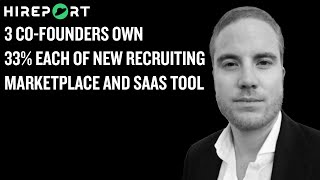
3 co-founders own 33% each of new recruiting marketplace and SaaS toolMay 10, 2022

[00:00] Hey, folks. My guest today is Bram Medema. He's the CEO at HirePort, a platform that brings back speed, scale, and simplicity to external recruitment. He's an industrial engineer, former VC and private equity investor, and serial startup founder, Now living in Amsterdam with his wife, Tanja, and two year old Marcus. All right, Bram, you ready to take us to the top? [00:18] >> Absolutely, Nathan. [00:19] Okay, let's jump in here. So who's paying for HirePort today and how are they using you? [00:24] >> Yes, it's a mix of companies, I would say. It's startups, scale ups, and also smaller corporates today. The model is very simple. It's 100% no cure, no pay. That's what most companies know in the external recruitment business. So decided to offer them something they understand already. On top of that, there will be layers with SaaS solutions. So there's additional services that have a monthly subscription. [00:48] So let's talk about the SaaS first. What are people paying per month? What's the fee they're paying per month? Will they get? [00:54] >> Yeah, it depends on the kind of integrations that they want. We have applicant tracking system integrations today for mid sized companies and smaller startups that would be about €99 a month. For larger companies that would, for example, use Workday or SAP SuccessFactors, those are applicant tracking systems for enterprises. They would pay around €500 a month. [01:19] So the SaaS fee is dependent on the level of integrations they want, whether it's a startup tool or an enterprise tool? [01:26] >> 100%, that's it. [01:27] I see. Okay, very cool. And if you split down your total revenue, what percent would you say is coming from SaaS versus other, or just call it other revenue? [01:37] >> Yeah. Currently it's a small percentage from SaaS. It's about 10%. But we expect that to grow really rapidly. The biggest part of the recurring business is actual placements taking place on the platform. [01:52] Now let's talk about that, the success. How do you charge when you successfully place a candidate? [01:58] >> Yeah, there's a fixed fee that we charge. So when there's, for example, a senior engineer that's placed at one of our companies in the platform, there's a fee that's around €16,000 and a small part of that lands with us, transaction fee, and most of that fee goes to the actual recruiter who made that placement. The recruiters are the heroes on our platform. I think today, maybe there's not a lot of people who really love the external [02:24] >> recruiters anymore. We do, we filter out the best ones and we give them a podium to be able to deliver at the best companies in Europe [02:32] So 16 thousand euros, right? About 20,000 USD, what percent of that 20,000 success fee will the recruiter typically get? [02:41] >> Over 80%. [02:42] Eight zero or one eight? [02:44] >> Eight zero. 80. [02:45] Wow. [02:46] Okay. So I mean, we're talking like 16,000, something like that. So is the rest of the other 20% goes directly to you? [02:52] >> Yeah. The other percentage goes to us. That's what we live from. So that's the most important revenue driver right now, which is supported by the SaaS subscriptions. [03:02] I see. Interesting model. So basically every candidate you place, you're going to make 4,000 USD or something like €3,000 per placement? [03:11] >> Yeah, that's amazing. [03:14] Give me some sort of history here. When did you launch the business? What year? [03:18] >> Yeah, we launched it 2020, really a few months after COVID hit. So this is something that we always wanted to do. I've been active in many industries, but I rolled into recruitment by accident years ago. We had our own agency, so we have four years or five actually, years of experience in this business, but we always operated in a model that didn't scale. So, it was high quality what we did, but you just had to put [03:44] >> more people on a payroll to scale. And it doesn't work anymore, you know? These days you see in the platform economy that people need an exponential solution to the problems, not a linear one. So we decided to bundle all the forces of all these small independent players that are there everywhere and put it all together, give them a platform to be able to deliver to the most interesting companies. You have something that scales instantly. [04:09] Oh, what's going on there, YouTube? Good to see you guys. Now imagine this, you love watching these interviews with SaaS founders, but imagine if we took all of the valuation data out from over 2,807 interviews I've done manually. Saves you a lot of time. Well, we've done this. We've built it into the beautiful interface inside of Founderpath. Check this out. I'll show you how you can access this in a second, but you log in, you connect [04:33] your Stripe account, you see your valuation real time. You can see what it changed over the past eighty eight days and even set goals for valuation this year. Now the secret evaluation is there's many different ways to value a SaaS business. So the reason you're gonna see three or four different valuations inside of your Founderpath dashboard, this is all free by the way, is because depending on who's doing the buying of your SaaS company, you're gonna [04:57] get a different valuation. A VC is gonna pay a different valuation, private equity firm is different. If you're gonna do a minority sale, that's different. And if you sell the whole business, that's a different valuation. You can see all those when I hover over here. Right? So the teal is what a VC would pay. Yellow is what private equity and red is if you sold the whole thing outright. Now what's cool about this is this is [05:19] not built off random data. Again, you guys hear these interviews on YouTube. All these datas are built from real time valuation data points founders share with us on the show. So traction 1,200,000 seed round 3.7 raise. They sold 22% of their business. Go in here and filter by the event. Maybe you only wanna see companies that have sold the whole business. Well, here are a bunch that have been acquired the valuation and the multiple. Maybe you're [05:45] going out right now and you're raising your seed round. We'll go in here and look at all this recent seed deals that went down, what they raised, what valuation they raised at and what percent that they sold. There's never been a larger dataset of SaaS valuations than what you can get now inside of Founderpath. And we're thrilled to bring it to you. Alright. We're gonna go back to the YouTube video here in a second, but if [06:07] you wanna check this tool out, if you wanna jump in and sign up, you can check it out for free to get your valuation at this link. This link, founderpath.com/products/valuations. Or if you go to founderpath.com and hover over products, click on get your valuation here, and go ahead and sign up to give it a whirl. Again, all that valuation data live right inside the platform. I hope to see you there. Alright. Let's jump back into the [06:33] interview. So what you're saying is you had troubles recruiting at your agency and you said there needs to be a solution for this and then you're your own itch effectively. [06:42] >> Exactly. The amount of people on your payroll just limits how scalable your solution is. And most companies would call us and say, Listen, I need a team of 10 engineers and I need them within two months. That is not something that any agency can easily do. There's only something that you can do when you bundle all the forces of a lot of players and you instantly make that available. [07:02] Talk to me a bit about the agency. So what was the agency doing? [07:07] >> Yeah, the agency was helping companies find tech talent for permanent employment. [07:12] Oh, it was also doing recruiting. Okay, so you weren't recruiting for yourself, but you were having problems recruiting for other people in an agency model. [07:18] >> Yes, exactly. Exactly that. And then we run into this ceiling that made us see that the only way to do this is to use technology to unlock all that power and take away all the pains. So [07:33] when did you launch the agency? [07:35] >> The agency we launched in 2016. [07:40] 2016, okay. And up right until 2019, so the year before you launched HirePort, how much total revenue did the agency do? How big did you were able to grow it? [07:50] >> There was a number of millions of euros. [07:53] Okay. Millions. And I guess translate that to number of candidates placed in 2019 via the agency. [08:00] >> In 'nineteen, that's a good one. [08:03] Or your best year. How many did you place in your best year? [08:05] >> Yeah, I think it would look at about 70 placements a year. [08:09] 70 placements, okay. [08:12] Were you And So if you're doing millions of euros of revenue off 70 placements, you're not making only 4 ks per placement. You were really a traditional recruiter back then charging big placement fees. [08:22] >> Yes. You would get the full placement fee, but you would also have the people on the payroll and all those extra costs of course. [08:28] Oh, I see. Interesting. Okay. So you then pivot in 2019 into 2020 to HirePort. Do you shut down the agency completely or do you transfer all the talent over? [08:37] >> No, we shut it down. [08:39] >> We shut it down. [08:40] Why not sell it? I mean, you're doing 3,000,000 or 4,000,000 in revenue. Why not go try and sell it? [08:45] >> Yeah. Think that the most interesting thing to sell is the client relationships. Actually some of those clients we brought with us to the new platform. So you always have this cold start problem, let's say, to get things running, right? And this really helped us to straight away have a number of paying customers that wanted to join, that believed in what we wanted to achieve. And we also already had a network with other recruiters at other agencies. [09:08] >> So we had kind of a good starting point and that really helped us get things going. [09:13] And then I guess help me understand traction today at HirePort. So last month, how many candidates did you place? [09:21] >> I think what's more interesting right now is to look at the annual recurring revenue under the level that we're at. A number of placements every month. I think we're now at about, let's say €600,000 annual recurring revenue that we're achieving. And how are [09:39] you calculating that? Are you taking last month's revenue times 12? [09:43] >> No, in this case, I'm taking this month's expected revenue times 12 because we already have placements in the books and we see that more is coming. [09:53] Okay, let's be more specific. Both of those though are projection, right? You're guessing how much you're going do this month and then you're multiplying by 12. Those are both huge assumptions. Want give you credit for what you've already done. So last month, what was total revenue run rate? [10:04] >> Yeah. [10:07] >> Let's see, last month was 16 ks. [10:10] Okay, one six. So is that coming from four placements where you earned four ks per placement or is that really like three placements where it's four ks, so 12 ks there and then the other four ks of revenue is coming from SaaS fees? [10:23] >> Yeah, no, this is four placements and going up and the SaaS part is really, really small at this point in time. [10:29] Okay, got it. [10:31] >> So don't have any, I mean, [10:32] how many customers, I guess, do you have paying an actual, like a SaaS fee? One or two or you're still pre launch on that? [10:39] >> No, we have one or two, actually, have one, let's say signed contract, one coming up. So this is an integration applicant tracking system of Greenhouse, and we have a number of other applicant tracking systems like Recruitee is very popular here. We have people running on Homerun, Workday, SAP SuccessFactors. These are ATS systems that we developed the API connections with right now. [11:03] Got it. And those four placements that you placed last month, was that all into one company or how many unique companies did you place those in? [11:11] >> Those were four companies. [11:13] Four separate. Okay, interesting. [11:15] What are the measurements you care about? Is it number of placements per month or per year? Is it number of unique companies that hire at least one person through your platform? Is it number of recruiters that make a dollar through the marketplace? What is it? [11:26] >> Yeah, I think the most important things for us is the amount of interesting jobs that are on the platform and the amount of highly skilled recruiters that are on the platform. Those two you want to match. With the current infrastructure and team that we have, we can do 10 times, 15 times the revenue that we do right now. It's super scalable. So once you have a company on the platform, we now have companies like, GrandVision is [11:52] >> a client of ours. They have one role, very happy with what we did. They want another role, they expand. So it's a super scalable model in that sense. [12:01] How many recruiters are on the platform today? [12:04] >> Right now, it's 104 recruiters on the platform. And that is growing hand in hand with companies. [12:11] How do you define on the platform? You know, getting a million recruiters, but if no one's actually hiring anybody, right, that doesn't do you any good. So how do you define on the platform? [12:20] >> Yeah, that means that we have screened someone for an hour and they came through that screening with a positive outcome. They've been given access and they can actually see what is happening on HirePort. That is the potential power on the recruiter side. Then also we measure, of course, how large the percentages of people that are active, that log in every week and check out the vacancies and actually propose people. Those are different metrics. It's very high [12:46] >> actually. So right now, let's say amount of recruiters that are active from those 104 is over 60. And the amount of recruiters proposing is around 30%. And that is already with the size that we are today, which is is relatively small as 30 companies that are on the platform right now with on average two to three vacancies. So between, let's say seventy and one hundred vacancies, jobs. But that could scale really quick. [13:14] Okay, got it. So 30 companies with an average of two vacancies, 104 recruiters trying to help those 30 companies, that's the marketplace model. How many of the 104 recruiters have placed at least one candidate successfully? [13:29] >> That'd be around 10. [13:32] 10. Yeah. So serious power laws here, obviously, right? You've got your top 10 recruiters doing most of the business. [13:38] >> Yeah. There are definitely recruiters that have made several placements indeed. And yeah, that is an interesting metric to see. [13:46] And how many since launch, how many total candidates have you placed to date? [13:54] >> I think it would be [13:57] >> close to 20. [14:00] 20. I mean, that's the money metric, right? That's the ultimate success thing. You want that number to get up into the hundreds and thousands and millions eventually, hopefully. [14:06] >> Absolutely. But that's going up really quickly. You look at our growth right now, it's between 30% and 50% quarter on quarter. [14:15] If you keep doing this, those numbers per month will go up massively. Well, yeah, but it's really easy to go from one candidate place to two and call it 100% growth. [14:27] You know that as a VC private equity guy. Come on. You've seen pitch decks where founders try and throw you for 10. It's 300% growth, but they went from $1 to $3 you know? [14:38] >> Yeah. [14:39] Okay, fair enough. Fair enough. And just to be clear, so $16,000 sort of in monthly recurring revenue, or monthly rev, not recurring really, but monthly revenue last month. Where were you exactly a year ago? Were you totally pre revenue? [14:51] >> Pre revenue. [14:52] Okay, got it. So you spent 2020 and then almost all of 2021 really building? [14:56] >> A 100%. We're building, building, and also on the supply side, making sure you have the right recruits on the platform, make sure you activate them on the company side as well. That's where most of the work is. And then once you have the trust, once the engine has started, which I think is fair to say, we solve this cold start problem for The Netherlands. That's the stepping stone for Europe. And then that's the stepping stone for [15:16] >> The US. That's where we are right now. The focus for 2022 is really expanding the business in The Netherlands, more placements, more learnings, stronger supply side, stronger demand side, interested companies. And then 2023, we will go abroad to Europe. I'm also preparing a funding round in the next months to make that possible. [15:39] Are you bootstrapped to date? [15:41] >> No, we have investors. So we did a lot of the investments ourselves up to the moment the platform was actually ready. Then we brought on a number of investors, informals, and also a venture capital fund. We raised $500,000. [15:55] In what year? [15:56] >> September last year. [15:58] 500,000 September last And then how much did you guys put in personally, I guess prelaunch when you jumped in? [16:04] >> That's a bit hard to say. I mean, not necessarily purely cash, but we had very low income, all kinds of stuff like that. So we had all the clients that we brought in from the previous company, which we funded. So in terms of value, substantial value. [16:20] But how much cash? I mean, like, literally, I always like to know, you drain your savings to launch the startup or are you playing it safe and keeping a cushion? No, [16:29] >> no, I'm all in, but that also has to do with, let's say the funding of everything up to the moment we launched HirePort that came from our pockets actually. But HirePort was a new venture that we then started. [16:43] And who is we? How many co founders? [16:46] >> Three. So there's Alexander, there's Remco and myself, and now there's six of us in total. [16:52] And did you guys split the three co founders split equity evenly at the start or no? [16:55] >> We did. [16:56] Okay. So 33% each, which is nice and diplomatic. Then it sounds like you're at six full time today. When you did that $500,000 pre seed round back in 2020, most pre seeds you're seeing sort of maybe a five cap, something like that. Were you sort of selling 10 to 20% of the business in that range? [17:11] >> Yeah, we were aiming for about that, but let's say closer to 20%. [17:16] Okay, got it. You sold about 20% so that you're talking like maybe a 2.5 post money valuation, right? [17:21] >> That's about right. [17:23] Okay. And what are you targeting now in this current round? [17:27] >> We are going to raise €2,000,000. [17:30] Okay. And do you know what you're targeting in terms of valuation? You don't want to sell more than X percent? [17:35] >> No, no, no. But there's so many factors that are important to us. Think the most important factor is to get VCs on board that open doors, that have a portfolio of companies that we can plug the solution in. Think all those factors are much more important than only the valuation. Of course, we're looking at a healthy model, right? You still have the ability to steer the company together with the lead investor and current lead investor, but [18:00] >> we're looking at the ranges. It's something that we need to discover. [18:04] Yep, very cool. All right, let's wrap up here, Bram, with the famous five. Number one, last book that you read. [18:09] >> Yeah. Last book that I read, that is my favorite book. I keep rereading it. It's Nelson Mandela in his own words. [18:17] Number two, is there a CEO you're following or studying? [18:21] >> I like Elon Musk, a very complicated person, very inspiring person, but I love the way he approaches old problems and new problems and solves it in a completely new way. [18:32] Number three, what's your favorite online tool for building HirePort? [18:36] >> Salesforce, love it. [18:38] Number four, how many hours of sleep do get every night? [18:41] >> I try to get eight, but my little boy has different plans sometimes, so between seven and eight. [18:47] All right. So what, married one kid? [18:50] >> Yes, married one kid and it's the perfect team for now. [18:53] That's awesome. And how old are you, Bram? [18:55] >> I am 40 years old. Last month I turned 40. [18:58] 40 years old, congrats. And last question. [18:59] >> Thanks. [19:00] Something you wish you knew back when you were 20 years old. [19:03] >> To wish myself? [19:08] Yep. [19:10] >> Good question. [19:13] >> I wish to keep on taking a lot of risk. High risk, high reward. I think that's one of the most important lessons. [19:21] Guys, HirePort. Started off as an agency in 2016, grew to about $3,000,000 in revenue before going, You know what? We need to build software for this. Shut down the $3,000,000 agency, launched HirePort.io, three co founders, 33% each. They're now scaling six people. They placed four candidates last month. They make on average 20 ks per place candidate, but they're building a marketplace. Recruiters on their platform actually take about 16,000 of that 20 ks fee and HirePort only [19:47] keeps about 4 ks. So they're allowing over 104 recruiters to build livelihoods on the platform and the marketplace serving 30 customers they have onboarded with about two job openings each. Marketplace is healthy, they're scaling 500 ks raised on the pre seed round at two point five post looking to raise 2,000,000 today. We'll see where Bram takes it next. Bram, thanks for taking us to the top. [20:05] >> Thank you so much, Nathan. [20:08] One more thing before you go. We have a brand new show every Thursday at 1PM Central. It's called Shark Tank for SaaS. We call it deal or bust. One founder comes on, three hungry buyers, they try and do a deal live and the founder shares back end dashboards, their expenses, their revenue, ARPU, CAC, LTV, you name it, they share it and the buyers try and make a deal live. It is fun to watch every Thursday 1PM [20:34] Central. Additionally, remember these recorded Founder interviews go live. We release them here on YouTube every day at 2PM Central. Make sure you don't miss any of that, make sure you click the subscribe button below here on YouTube, the big red button and then click the little bell notification to make sure you get notifications when we do go live. I wouldn't want you to miss breaking news in the SaaS world, whether it's an acquisition, a big fundraise, [20:56] a big sale, a big profitability statement or something else. I don't want you to miss it. Additionally, if you want to take this conversation deeper and further, we have by far the largest private Slack community for B2B SaaS founders. You want to get in there. We've probably talked about your tool if you're running a company or your firm if you're investing. You can go in there and quickly search and see what people are saying. Sign up [21:18] for that at nathanlatka.com slack. In the meantime, I'm hanging out with you here on YouTube. I'll be in the comments for the next thirty minutes. Feel free to let me know what you thought about this episode and if you enjoyed it, click the thumbs up. We get a lot of haters that are mad at how aggressive I am on these shows, but I do it so that we can all learn. We have to counter those people. [21:37] We got to push them away. Click the thumbs up below to counter them and know that I appreciate your guys'support. Alright, I'll be in the comments. See you.

Data and Sources

All figures on this page are taken directly from interviews or are estimates from public sources and proprietary models. Not financial advice. Read full disclaimer.

Claim this profile