
Founder Interview
How Ingage Grew from $1M to Over $10M in Revenue Selling Interactive Sales Presentation Software to Home Improvement Contractors (Interview with CEO Dean Curtis)
- Interview Date
- August 11, 2026
- Interviewee
- Dean CurtisCEO
Company Metrics at Interview Time
Revenue (2026)
$10M
Revenue (2023)
$5M
Revenue (2020)
$1M
Team Size (2026)
36
Gross Revenue Retention (2026)
80%
Historical Snapshot
These numbers were reported by Dean Curtis during his interview with Nathan Latka, recorded in August 2026, and represent a historical snapshot, not current figures. See Ingage’s current numbers.
Key Takeaways
- 01Ingage is an eight-figure software company, over $10M in revenue in 2026, up from $5M around 2023 and $1M in 2020
- 02The company was founded in 2008 and has gone through multiple major business pivots
- 03Dean Curtis joined as CRO in 2017 and became CEO in 2019, selling off the legacy agency business to focus on home improvement contractors
- 04Pricing is $90 per user per month for Ingage Suite and $50 per user per month for Ingage Pro
- 05The largest customer pays $250,000 per year
- 06Gross revenue retention is 80% and net dollar retention is right at 100%
- 07The team has 36 full-time employees, including 11 in product and engineering and 7 quota-carrying sales and retention reps
- 08The company is backed by three family office investors and has raised tens of millions of dollars in total capital
- 09Live industry events and partner co-marketing with manufacturers are the primary customer acquisition channels
Company Metrics at Time of Interview
| Metric | Value | Source |
|---|---|---|
| Revenue (2026) | $10M | Founder interview, Aug 2026 |
| Revenue (2023) | $5M | Founder interview, Aug 2026 |
| Revenue (2020) | $1M | Founder interview, Aug 2026 |
| Year Founded | 2008 | Founder interview, Aug 2026 |
| Team Size (2026) | 36 | Founder interview, Aug 2026 |
| Engineers (Product and Engineering Team) (2026) | 11 | Founder interview, Aug 2026 |
| Quota-Carrying Sales and Retention Reps (2026) | 7 | Founder interview, Aug 2026 |
| Gross Revenue Retention (2026) | 80% | Founder interview, Aug 2026 |
| Net Dollar Retention (2026) | 100% | Founder interview, Aug 2026 |
| Pricing (Ingage Suite) (2026) | $90 per user per month | Founder interview, Aug 2026 |
| Pricing (Ingage Pro) (2026) | $50 per user per month | Founder interview, Aug 2026 |
| Platform Fee (Ingage Suite, larger customers) (2026) | $4,500 | Founder interview, Aug 2026 |
| Biggest Customer Annual Contract Value (2026) | $250,000 | Founder interview, Aug 2026 |
| Manufacturer Partners on Platform (2026) | 50 | Founder interview, Aug 2026 |
| Products (2026) | 3 | Founder interview, Aug 2026 |
Growth Breakdown
Revenue
Ingage grew from $1M in revenue in 2020 to $5M around 2023 and passed $10M in revenue by 2026 - what Dean Curtis calls an eight-figure software company. This growth followed Dean Curtis selling off the legacy services business in 2019 and going all-in on the home improvement contractor market with a recurring software model.
Customers
The company serves customers in the high hundreds, ranging from small contractors with five sales reps to large enterprise remodelers doing billions of dollars a year. Half of the top 20 on the Qualified Remodeler Top 500 list are Ingage customers. The company also has 50 building product manufacturers who have built content on the platform and distribute it to their contractor networks.
Team
Ingage has 36 full-time employees spread across the US, with a headquarters in Pennsylvania. The product and engineering team is 11 people, and there are 7 quota-carrying sales and retention reps. The company held its first ever all-hands company event at headquarters in 2026.
Profitability and Funding
Ingage is backed by three family office investors who have been patient long-term partners through multiple recaps and restructurings. The company has raised tens of millions of dollars in total capital since 2008. Gross revenue retention stands at 80% and net dollar retention is right at 100%, meaning expansion revenue is currently offsetting churn.
Growth Strategy
Live Industry Events
Ingage invests heavily in home improvement industry conferences such as the Qualified Remodeler Top 500 event, spending roughly $10,000 to $12,000 per event as a gold-level sponsor. Dean Curtis emphasizes getting on stage early, participating in panels, and leveraging the presence of existing customers to speak with prospects. He has also used conference time to record customer podcast interviews on-site.
Partner Co-Marketing with Manufacturers
Ingage partners with 50 building product manufacturers including GAF, Owens Corning, and ProVia, who build branded content on the platform and make it available to their contractor networks. This gives Ingage access to large networks of contractors through trusted industry brands, reducing direct customer acquisition costs.
Industry Coach Partnerships
Ingage partners with industry sales coaches whose coaching programs are popular in the home improvement industry and are built out in Ingage. Because the coaching content already lives on the platform, contractors who follow these coaches can get up and running quickly, creating a warm referral channel.
Referrals
The home improvement industry is heavily referral-driven, and Ingage mirrors that dynamic in its own go-to-market. Existing customers at events and within contractor networks refer new customers, lowering acquisition costs and building trust with prospects.
Product-Led Growth with Ingage Pro
Ingage launched Ingage Pro at $50 per user per month as a simpler, template-based on-ramp designed to reduce both the price and effort barrier for smaller contractors. The goal is to get customers onto the platform quickly, demonstrate value, and then upgrade them to Ingage Suite as they hit the guardrails of the lower tier.
Best Quotes
“The company's been around since 2008. And if you look at where we were in 2008 selling books on the iPhone in the App Store to now, where we are helping home improvement contractors really help their teams prepare to be the most effective seller that they could be at the kitchen table when they come to sell you a new roof or windows or siding or doors, that's the problem we're solving.”
“Our sweet spot are replacement remodelers. So they sell the same thing over and over and over again. They replace roofs, windows, siding, doors, gutters, some one-day bath. So you see all these one-day bath companies out there, we have almost all of them on our platform because that sale is a very consistent thing.”
“So today we're in the gross revenue retention range of about 80%, which is which is good, but elite sales SaaS companies are in the 90% range, and that's our goal.”
“I can decrease my customer acquisition costs. I can get people up and running faster. I make them super happy. They could start with less users for less money and get something into the hands of their sales team that they're truly happy with, then we expand, right?”
“So that was essentially the first thing I did as CEO is I made the big bet to say we're going all in on this industry with these customers, with this product, and we're we're selling off team members, technology customers to this other entity who really wanted them and did a great job with them. So it was it was a win-win across the board. I got focus.”
“Number one, get on get on stage as much as you can. Whether that's a panel, panels are good because your voice is something you can be a part of the conversation. Get on stage as early in the event as possible. Never be the last person at the event because no one's going to come to your table afterwards.”
“We have thirty-six full time team members spread across the US. we have a headquarters here in Pennsylvania with about a dozen people who are pretty consistent in the office.”
“Where I see the the AI presentation space is things that don't last very long. Hey, Nathan, we're getting together. I want to do a status update. Here's my deck. I'm going, I'm going to do a one-time keynote. Here's my deck. What people build in our platform are sales systems. Those don't change overnight.”
What Happened Next
This interview captures Ingage at a specific moment in August 2026, when the company had grown to eight-figure revenue and was launching its product-led growth motion with Ingage Pro. Dean Curtis described aggressive growth plans centered on AI-assisted onboarding and faster time to value for new customers. For current revenue, customer count, and product updates, visit the Ingage company profile on GetLatka.
View Ingage’s current profile and metricsFull Transcript
Chapters
- 0:01Introduction: Dean Curtis and Ingage
- 0:21What Ingage Does Today
- 1:22Target Customer: Replacement Remodelers
- 2:48Pricing: Ingage Suite and Ingage Pro
- 5:11PLG Strategy and Avoiding Cannibalization
- 7:55Retention Rates and Unit Economics
- 8:52Customer Count and the Manufacturer Channel
- 11:22Dean's Background: Joining from Apple and Finding Product Market Fit
- 13:11Capitalization and Family Office Investors
- 15:34Eight-Figure Revenue and Customer Mix
- 19:11Revenue Milestones: $1M, $5M, $10M
- 19:42AI and Competitive Moat
- 23:08Customer Acquisition: Events and Partnerships
- 26:14Team Size and Structure
- 27:14AI Roadmap Preview
- 27:20Where to Find Dean Curtis
Introduction: Dean Curtis and Ingage
Nathan Latka
0:01Hey folks, my guest today is Dean Curtis. He spent over 25 years in enterprise tech, including nine years at Apple, where he helped drive iPhone and iPad adoption across the Fortune 500. Today he's running Ingage, which helps sell interactive or which sells interactive sales presentation software. Dean, you ready to take us to the top?
Dean Curtis
0:20Yeah, let's do it.
What Ingage Does Today
Nathan Latka
0:21All right. This is a heck of a story because I think you guys have gone through many pivots. Why don't we start though with where you are today? What what is the company today? What are you selling?
Dean Curtis
0:29Yeah, it's a w you many pivots. Yeah. The company's been around since 2008. And if you look at where we were in 2008 selling books on the iPhone in the App Store to now, where we are helping home improvement contractors really help their teams prepare to be the most effective seller that they could be at the kitchen table when they come to sell you a new roof or windows or siding or doors, that's the problem we're solving. So we help sales teams be prepared for everything that might come up. and we do that through great interactive content that helps them have confidence, builds trust with the prospect at the other end. And then we give sales managers all the tools to understand what actually happened in the home when they weren't there watching their sales team.
Nathan Latka
1:13And so are you selling mainly to independent contractors or large, you know, large folks that do, you know, home remodels or repainting the interior of a living room or things like that?
Target Customer: Replacement Remodelers
Dean Curtis
1:22Our sweet spot are replacement remodelers. So they sell the same thing over and over and over again. They replace roofs, windows, siding, doors, gutters, some one-day bath. So you see all these one-day bath companies out there, we have almost all of them on our platform because that sale is a very consistent thing. And when they train their sales team, they want to have the most consistent approach in the home because they know what converts. And if they're consistent with their sales, with their sales process, they can now measure and say, hey, we've been missing on financing. Let's do some training on financing. And we give them the tools to present in the home, but also have the the knowledge of how it's going so that they can then train their team to upskill and up level.
Nathan Latka
2:07When you say one day bath install, this is a homeowner says I want to install a bath and someone says, Okay, they pitched me on with the pr your presentation software, Hey, we can come install the the bath between twelve and two PM today. Here's what it'll look like when it's done, and here's the cost.
Dean Curtis
2:19That's right. So a one day bath is typically over the top of what you have. So or it's a quick rip and replace, just the wet space in the bathroom. So the stall shower, the tub and shower, those are the one day bath folks. The rebats, the bath fitters, those are those are the types of customers that we that we have.
Nathan Latka
2:38So how do you I'm gonna get your backstory, but I don't wanna I want everyone to understand where you're at today. What are you charging for the software on average? You know, the average customer pays you what per month?
Pricing: Ingage Suite and Ingage Pro
Dean Curtis
2:48Yeah. So the user fee for our Ingage Suite product is $90 per user per month. We also have a new offering that we're calling Ingage Pro, which gives you less flexibility to create whatever you want and you're tied to templates and customization of what we provide. That's $50 per user per month. So it's
Nathan Latka
3:05Okay.
Dean Curtis
3:06super affordable for a sales team that wants to invest in their team to have great content to sell with at the kitchen table.
Nathan Latka
3:14When Jeff K from East Coast Roofing signs up, is he typically buying one seat at ninety bucks a month or is the average team size five people signing up?
Dean Curtis
3:23Yeah. So when you have a bigger team, we typically get, you know, our sweet spot is five sales reps or more. Cause as soon as you have five sales reps, you have a problem. They're all not doing the same thing. They're probably not following your sales process. And we help them get aligned. So we would typically have in those cases, you know, five to ten to and we have massive companies with thousands of users on our platform as well.
Nathan Latka
3:46Okay, if I just to create clarity for my my audience, so if I forced you into an average, would it be the average logo or company like East Coast Roofing would pay you about four hundred and fifty dollars per month, which represents five seats for their five sales reps?
Dean Curtis
3:58Yeah. In that world, we also charge a platform fee. So the per user fee is one one cost, but then in when we get to that Ingage Suite, we charge a platform fee because the content creation, we help them with that from the beginning. So we want to make sure, because most people don't understand the concept of interactive content. They're used to very long linear. I mean, we have people come to us 90-page decks that they're just boring their customers to tears with. So we help them condense that into a really palatable, interactive piece of content that they can use at the kitchen table. So that platform fee helps offset that. And that's a forty five hundred dollar fee for those bigger customers.
Nathan Latka
4:39So are you charging a forty five hundred dollar setup fee for all of your customers?
Dean Curtis
4:43For the bigger ones, yes.
Nathan Latka
4:45Okay, I guess how do you define bigger? More than five sales reps? I see.
Dean Curtis
4:48That's correct. So Ingage Suite. So think of a three-tiered product suite, Ingage Pro, product led growth, individuals signing up, Ingage Suite, more for a team that has a marketing team and sales leadership and that. And then Ingage Enterprise, which we do white label, gray label. You can really go and and customize what we offer through our enterprise offer.
PLG Strategy and Avoiding Cannibalization
Nathan Latka
5:11What I'm trying to I want to understand your span because you told me in the pre-show you're moving to like a PLG motion. So one of the things founders struggle with is hey, listen, we have enterprise accounts at a hundred grand a year. We we want to widen our top of funnel. Let's go launch a t twenty dollar a month platform, but then it cannibalizes enterprise revenue. So I'm trying to get a sense of the data set you're looking at from your current paying customers. So we understand why you strategically are making some decisions you're making today. It sounds like the range, you've got customers paying as little as thirty or forty bucks a month. And don't obviously name the customer logo, that's confidential, but your largest customer today, what are they paying per year?
Dean Curtis
5:48quarter of a million dollars.
Nathan Latka
5:49So that's a huge range, right? How are you thinking about going P L G without cannibalizing that big customer?
Dean Curtis
5:54It's a great question. We we look at it in two different ways. Number one, there's people who have come onto the Ingage Suite where it's just too much for them. And we want to offer them a simpler on-ramp to the platform. And that's where the PLG
Nathan Latka
6:07Too too much work or too much price p money?
Dean Curtis
6:11Both. Well, one, they're willing to pay the money because they see the ROI, but the real challenge is the work required to build something custom for their business. So we've learned over the last seven years what it takes for a homeowner, for a home contractor to be successful on our platform. So we've codified a very finite set of content that most people are using, and we've built an experience so that they can literally sign up, customize that to their brand using AI. We have the ability to for them to swap in their warranty information, their licensing, their logos, all of that into the content with very little effort. Cause we we know that once they get up and running, they're super sticky on our platform. Our
Nathan Latka
6:54Mm-hmm.
Dean Curtis
6:55retention rate for, you know, year two, year three customers is incredible. It's getting up and running. So we we said, all right, well, what if we gave an easier on-ramp, both technically and price wise, get them into the platform. And then have an opportunity where a portion of that, probably the majority, is going to stay on that platform totally fine. Less customer acquisition cost for me, less customer support cost for us for our business. And they're really happy. I'm happy to make them happy. We want to see them win. That is our whole mission in life is to help our customers win. And there will be limits and they'll start hitting those. They want deeper integrations. They want to be able to do more flexibility, you know, more flexibly with the content. They want to create things from scratch. Great, now it's an upgrade opportunity. So we do see some of our core customers shifting to the to the the the pro product, but we also see a great opportunity for upgrades from the pro once they start bumping into the guardrails that we build in.
Retention Rates and Unit Economics
Nathan Latka
7:55So Dean, what is that year one net dollar retention?
Dean Curtis
7:59So today we're in the gross revenue retention range of about 80%, which is which is good, but elite sales SaaS companies are in the 90% range, and that's our goal.
Nathan Latka
8:11What about net when you add back, you know, add an upsells? Are you more than making up the churn gap?
Dean Curtis
8:16We are. We are.
Nathan Latka
8:17So you're above a hundred percent net dollar retention year one. Right at a hundred. Okay. It's not terrible.
Dean Curtis
8:20Right at 100. So, like, so when you look at the the the economics of it, if I can, you know, all of the things make sense, right? I can decrease my customer acquisition costs. I can get people up and running faster. I make them super happy. They could start with less users for less money and get something into the hands of their sales team that they're truly happy with, then we expand, right? It is a it's a and it's a great story for bigger customers and smaller customers. The whole idea is a faster on-ramp. And more quick time to value.
Customer Count and the Manufacturer Channel
Nathan Latka
8:52I want to go back to February of twenty seventeen when you joined the business as CRO. Obviously, now you're CEO. I believe that was in 2019 that announcement came out. Before we do that, though we're missing one critical number here. What's the customer base you're serving today? How many total paying customers?
Dean Curtis
9:06Yeah, we're in the high hundreds of paying
Nathan Latka
9:08Okay.
Dean Curtis
9:09customers. Now that's so it's interesting. So we go to market two different ways. We go direct to customer, direct to the contractor, but we also sell through our building product manufacturer relationships. In the home improvement space, you can't be a roofer without tiles, without shingles. So they all have relationships with these big manufacturers. So we have 50 manufacturers who have built content on the Ingage platform that make it available to contractors. So We go to market through both channels, right? Direct and then also through these trusted brands. So if you look at someone like GAF or Owens Corning or ProVia, they're providing access to a whole network of contractors that allow us to very easily, easily is a good is a relative term, right? Get access to people to help them understand and get them up and running on something as simple as a ProVia window presentation. That we had one customer. They came in through Ingage Pro, all they downloaded was the ProVia deck. And through that presentation, in one weekend sold $100,000 in windows because they finally had.
Nathan Latka
10:15So ProVia has cut you have a direct relationship with ProVia, which is the manufacturer of windows and doors, you know, stairs and f stains and finishes. They're already templatized on your system. So when a new contractor is launching in Austin, Texas and wants to sell windows and doors, they can quickly get started with this presentation already from ProVia. ProVia does this because then obviously that contractor buys the windows and doors and shingles from ProVia. That's why they do it. Really
Dean Curtis
10:37You got it. You got it.
Nathan Latka
10:39interesting. But you're not charging ProVia. you are.
Dean Curtis
10:41We are. We help them build this content out. We make it look amaz I mean, look at that presentation. It's it's incredible. And we help them reimagine their marketing content within our platform and make it completely usable by the contractor.
Nathan Latka
10:57Okay, but your main recurring revenue stream are the contractors paying between thirty bucks a month or four hundred and fifty bucks a month if it's a five person sales team.
Dean Curtis
11:04Yeah, fifty to yeah. Fifty to ninety dollars a month. Yeah.
Nathan Latka
11:0950 to 90 a month. Well, that's per user per seat. You said your average team size of your paying customers was five seats.
Dean Curtis
11:14That's correct.
Nathan Latka
11:15Okay, yeah. So about four that would be on a logo basis, not a seat basis. On a logo basis, four or five hundred bucks a month.
Dean Curtis
11:19Correct. Correct. Yep.
Dean's Background: Joining from Apple and Finding Product Market Fit
Nathan Latka
11:22Okay, take us back. You joined a CRO in two twenty seventeen. Why? You were at Apple for nine years, you could have done anything in the world. Why join this company?
Dean Curtis
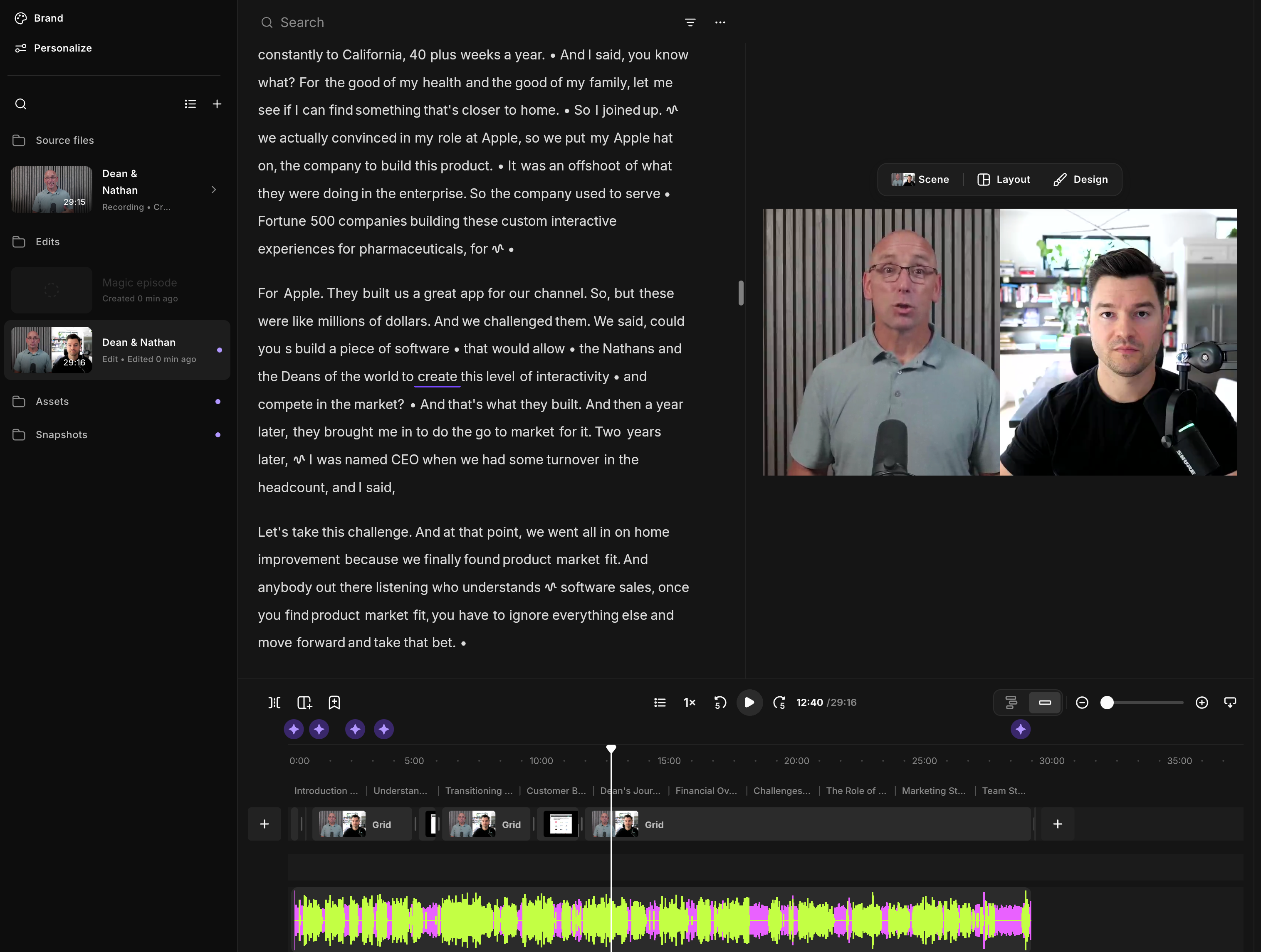
11:29Yeah. So the company was one of our partners at Apple. So the my final position when I was at Apple was building the mobility partner program. So I was a technical liaison through that program to all of the external partners, IBM, Salesforce, big, big companies, but also a whole host of independent software vendors. And this company was one of those. And you know, after an eight-year run at Apple, I was ready for a change. I was com it's personal reasons, I was commuting. constantly to California, 40 plus weeks a year. And I said, you know what? For the good of my health and the good of my family, let me see if I can find something that's closer to home. So I joined up. we actually convinced in my role at Apple, so we put my Apple hat on, the company to build this product. It was an offshoot of what they were doing in the enterprise. So the company used to serve Fortune 500 companies building these custom interactive experiences for pharmaceuticals, for For Apple. They built us a great app for our channel. So, but these were like millions of dollars. And we challenged them. We said, could you s build a piece of software that would allow the Nathans and the Deans of the world to create this level of interactivity and compete in the market? And that's what they built. And then a year later, they brought me in to do the go to market for it. Two years later, I was named CEO when we had some turnover in the headcount, and I said, Let's take this challenge. And at that point, we went all in on home improvement because we finally found product market fit. And anybody out there listening who understands software sales, once you find product market fit, you have to ignore everything else and move forward and take that bet.
Capitalization and Family Office Investors
Nathan Latka
13:11And talk to me about capitalization. I imagine you're not joining, you know, a pre revenue, you know, bootstrapped company, you know, as CRO in twenty seventeen. Had this company raised money, are you bootstrapped today or not?
Dean Curtis
13:23Yeah. So the company had raised lots of money and had gone through multiple pivots. I mean, the 08 to 2016, 27 timeline was probably three major business shifts: books on the iPhone, magazines on the iPad, interactive enterprise, you know, apps. So it was it was essentially when I started here, a digital agency building custom software for Fortune 500. We took the core of that technology, built Ingage. and have gone to market in the home improvement industry as a result.
Nathan Latka
13:56I see, so niche down. Give me the story there, though. Before you joined 08 to 2016, how much total capital had the company raised?
Dean Curtis
14:03Tens of millions of dollars.
Nathan Latka
14:05Okay, got it. My research said somewhere between 25 and 60 million, between eight to 10 rounds. Is that about with WPP participating in 2016? Is that about right?
Dean Curtis
14:13That's about right.
Nathan Latka
14:14Okay, interesting. So are this brings up the obvious thing. My audience is mainly founders, right? Did a VC come in and basically say, You guys aren't cutting it, we gotta bring in cur, we gotta bring in Dean. you know, as part of this new round coming in and then the founders are not there anymore.
Dean Curtis
14:28So we that's correct. The founders are no longer involved. they were still here when I got here. And when so another colleague came over from Apple as well, Alan Braun. He was the CEO. He brought me over to run the go to market. and at that point, we're funded by family offices primarily. And those fam, those three family offices are still our primary investors today. And we've done, you know, as you do, as you grow and change your business model, we've done recaps and cram downs and all of that. So all the old investment has been has been crammed down into the cap table. And we sit now with family office investors. And for those founders out there who are listening, I I I've been very fortunate to have these family office investors because they're they have a different investment profile than a venture capital or a private equity. They're extremely patient. They're great to work with. They have an amazing network. And it's helped us to buy time to really see this grow from literally nothing to, you know. We're, you know, a eight figure, you know, software company. So that's super helpful. Patient investors
Nathan Latka
15:30Mm-hmm. Mm-hmm. Mm-hmm. Help me.
Dean Curtis
15:33is helpful.
Eight-Figure Revenue and Customer Mix
Nathan Latka
15:34Patient is helpful. Help me understand the eight figure thing. Because if I take your high hundreds customer count number you gave earlier and maybe assume just 700, maybe it's 800. Let's just assume 700 times that $450 per month price point, or we'll call it $500 per month price point. That would put you somewhere around $350,000 a month of revenue, about $4.2 million annualized. But it sounds like you're above $10 million of revenue. So what am I missing there? Higher average ARPU?
Dean Curtis
15:57That's right. And we also have a very wide range of size of customers. So I mentioned earlier, you know, while the average might be in the five to 10 range, we have several who are in the hundreds. And we also have big enterprise deals with. So if for this market, the big the list that comes out is the qualified remodeler top 500, we have half of the top 20 on that list. So they're they're big companies. They're doing billions of dollars a year in home improvements. And they're selling at the kitchen table with Ingage.
Nathan Latka
16:27Mm-hmm. What help me understand the direct impact you've had since you joined in 2017 if you're comfortable sharing? What was revenue all the way back then when you joined? Do you remember?
Dean Curtis
16:37So I sold off the enterprise business that we had. So the revenue was essentially zero.
Nathan Latka
16:43Okay. So you came in, the first thing you did was sold off a historical revenue stream.
Dean Curtis
16:47So in twenty nineteen, we made the we made a big bet and we said this enterprise revenue stream that we've had for the last several years is
Nathan Latka
16:54Which was what by the way, like sub sub two, three million?
Dean Curtis
16:57Yeah, it was, it was, here's the thing. It was all services revenue. So very little software revenue, 10%, 90% services revenue. So non-recurring revenue. So we were always going out and singing for our supper for these companies to build more custom things. But there was a company that was a partner that really wanted these as customers. So I said, All right, I will sell you the software and the customers, and we will move forward with a different plan. And it worked out perfectly. But it it removed the distraction of those old customers. They were great customers, but it was a distraction for our moving forward plan. So that was essentially the first thing I did as CEO is I made the big bet to say we're going all in on this industry with these customers, with this product, and we're we're selling off team members, technology customers to this other entity who really wanted them and did a great job with them. So it was it was a win-win across the board. I got focus. They They receive customers and revenue and we move forward.
Nathan Latka
17:59So here's what I don't understand. You're a talented executive. You've been around the block. You had, I'm sure, a lot of options in 2017. If you're sitting there in your diligence when the company's trying to hire you and you're going, okay, this company's raised $50 million already. The founders are about to be gone. You know, the the team and ESOP pool plus me coming in is going to own a very small amount because of the family offices are already here. And by the way, I'm going to take the revenue to zero two years after I joined by selling off the legacy business. How do you think about? Just to get above a liquidation pref, let's say you raise 50 million bucks, you've got to get up to four, five, six, ten million of revenue, sell at a five X just to hit the fifty million dollar raise. That just sounds like you're starting not at zero. You're starting at a big negative number almost. How did you run that analysis in your head?
Dean Curtis
18:45it's it's one of those things where the more you know, the worse it would be. I probably didn't know any better at the time, right? I'd worked for big companies and I had never really thought through the long-term exit. I was encouraged by the challenge of it. I really enjoyed it. I love the technology. I love like I love presenting. I'm getting on stages, I'm I'm giving keynotes, like all of that excited me. And I and I looked at it as an adventure and an opportunity. And
Revenue Milestones: $1M, $5M, $10M
Nathan Latka
19:11Fair enough. Fair enough. Okay, so so you take it to zero, you sell the agency business. What year did you break a million of revenue on the new product?
Dean Curtis
19:19Within a year.
Nathan Latka
19:20Okay, so great by twenty twenty. So million. That's great. You had an install base you could upsell to from the legacy agency business. That was helpful. You keep scaling from there. When did you break five million?
Dean Curtis
19:31probably know that off the top of my head, but I don't. probably three years in.
Nathan Latka
19:372023 ish. Okay. Okay. And now you're
Dean Curtis
19:38Yeah, yeah, about there. That's about that's about right.
AI and Competitive Moat
Nathan Latka
19:42and now you're scaling. You're above 10 million of ARR. What's the game plan going forward? AI is dramatically changing this space. You know, are you seeing churn increase because people are building presentations themselves?
Dean Curtis
19:53No, we're not. And you would think we would, but the here's the thing. Where I see the the AI presentation space is things that don't last very long. Hey, Nathan, we're getting together. I want to do a status update. Here's my deck. I'm going, I'm going to do a one-time keynote. Here's my deck. What people build in our platform are sales systems. Those don't change overnight. And they have to be rock solid because your the turnover in this eight in this industry is massive. So you need to have a consistent training program. You have to have a consistent message to your clients. Everything about it is consistency over time, brand consistency, message consistency, sales process consistency. So we see people create these interactive experiences, train on them. They don't want to touch them. They'll tweak them here and there. this color's out of stock. This, this new shingles in style this month. Fine. But the core of what they're building stays the same. They last. And think that's one of the one of the moats that we have around it. I'm not dumb. I'm not naive to think that AI couldn't. And there's some companies who are super savvy and are doing some interesting things. What we're doing is helping them integrate those within our platform, because you can embed HTML right within our platform. So they're doing really cool things with calculators and widgets and visualizers and all kinds of stuff. But the core sales process is sacred in this industry. And that's what we help them embed into their content.
Nathan Latka
21:19So, Dean, what I'm hearing you say is you have 10 years of historical partnerships with companies like Provia that have invested significant amount of time, energy, and money, potentially even paid you a five to 10K setup fee to get this beautiful presentation in here, to know what the different oak stains are, the cherry stains are, to know what the different brass looks like and what the insurance looks like. And what you're saying is when you have hundreds of this sort of logic and intelligence built into your platform, it's very hard for a new AI tool to come along and immediately just rip this out.
Dean Curtis
21:48That's right. That's right. There's a lot of stickiness
Nathan Latka
21:49Yeah. Yeah.
Dean Curtis
21:50in what we do.
Nathan Latka
21:51Interesting. Okay. So what's next for the company? If someone comes to you today and says, Hey, we want to we wanna acquire you for sixty million dollars all cash, do you take the deal?
Dean Curtis
22:00Probably not. Probably not. We I mean, we have aggressive growth plans over the next 18 months. AI is obviously core to that strategy. time to value is core to that strategy. If if we can help companies get up and running on our platform in a matter of minutes and have incredible, like you saw the the level of content. And, you know, it maybe it's my Apple heritage, so I'm a little biased on this, but when people say this looks like an Apple keynote, this looks Apple-esque. This is as simple to use as an iPhone. Those are the things we're going for. And if we can do that and use AI in the background to help people improve their time to value, that's our focus. Because the faster we get people up and running, the longer they stay and the more success they have. Like I don't I don't want people to use our software just because it's cool. I want to use it. I want them to use it because they see their close rate go up, because they're spending less time in the home. They're getting a faster attach rate on financing. All of the things that matter in their business, the metrics by which they should be measuring technology adoption, I want to help them win across the board. And when we're doing that, our growth will improve.
Customer Acquisition: Events and Partnerships
Nathan Latka
23:08So what is your growth strategy going forward? We're recording this here in August of twenty twenty six. I'm trying to reverse engineer how you're getting new customers today. Usually SEO is a playbook. I don't think that's how you guys are doing it because respectful, your domain rating's fifty-four, which is, you know, average and you're not getting much organic traffic here. So how are you getting new customers today?
Dean Curtis
23:27Yeah. So we have a a few major channels. So one is simple referrals. this is a referral based industry. That's how they get a lot of their clients. We do it the same way. we we have an outbound or I'm sorry, a conference strategy. So industry conferences are huge for the home improvement industry. So we have a
Nathan Latka
23:45Name one or two of your most successful ones that you sponsored got a lot of leads from.
Dean Curtis
23:48Yeah, qualified remodeler, top five hundred is is one. the and then we partner with a lot of industry coaches. So we go to Chuck Toki's top rep or we go to the Yoho conference or those are all huge. that those are also huge force. Cause they're all their coaching programs are built out in Ingage so I can get up and running really quickly because I'm a Chuck Toki top rep guy. so
Nathan Latka
24:12This one is what you're talking about, right?
Dean Curtis
24:14that's right.
Nathan Latka
24:14QR okay, so walk me through like are you spending 10 grand a sponsor this? Are you keynoting? Is it just a booth? What makes what you know, for someone else thinking about using events to grow their software company, what advice would you give them?
Dean Curtis
24:24Number one, get on get on stage as much as you can. Whether that's a panel, panels are good because your voice is something you can be a part of the conversation. Get on stage as early in the event as possible. Never be the last person at the event because no one's going to come to your table afterwards. So get on stage, get on stage early as a panel, as a keynote, as a quick commercial. You have to have some visibility beyond the booth. That's one big thing we've learned. also. If you have customers at the event. So for example, at this at this event, 50% of the people who come here are already our customers. So having them available to talk to pro prospective customers is is huge. so to us, events have been a very, very good growth driver for us. The other one.
Nathan Latka
25:12And what what what what's an example of what you might spend here? You're listed here as a gold package. Ten. Okay.
Dean Curtis
25:16Yeah, ten, twelve thousand, something like that.
Nathan Latka
25:19Okay. Okay. So not bad. You can do a lot of those. Very cool. And if I go to if I go to agenda, will I see will I see you on stage?
Dean Curtis
25:21Yeah, totally. And there's there's some that are big expos. not so this coming year is that is that the twenty twenty six
Nathan Latka
25:32I'm actually not sure where I am. October twenty sixth, twenty seven. Maybe not, maybe it's an old one.
Dean Curtis
25:37Yeah. we are working to get on stage for this one. the this one, what's interesting, I actually last year rented a suite and interviewed 12 of our customers in the in a in and did a podcast series as a result of them being there. So that's the other thing. Leverage the time that you're there to do things outside of the actual conference. So as a CEO, I'm not talking I'm trying to talk to as many customer customers as possible. They're there. So I go talk to a lot of customers. and have a great opportunity to connect. So it's it's lots of things.
Nathan Latka
26:09Dean, as we as we as we wrap up here, walk me through your team today. How many folks are full time?
Team Size and Structure
Dean Curtis
26:14Yeah, so we have thirty-six full time team members spread across the US. we have a headquarters here in Pennsylvania with about a dozen people who are pretty consistent in the office. and last week we just held our first ever all hands company event here at headquarters. it was a long time coming and it was an amazing time to reconnect to finally put names and faces together across the dinner table.
Nathan Latka
26:39How many of those thirty six are quota carrying sales reps?
Dean Curtis
26:44Including our retention team seven.
Nathan Latka
26:47Okay. Did the do do do your CSMs do they have a you know gross dollar or net dollar retention target with a quota?
Dean Curtis
26:53yeah. Absolutely.
Nathan Latka
26:55Interest. So they get paid commission against that.
Dean Curtis
26:56They do.
Nathan Latka
26:57Very cool. Okay. And how many are engineers of the thirty six?
Dean Curtis
27:03Our product engineering team is eleven people. One one tester, product manager, and architect, and the rest are building coaches.
Nathan Latka
27:09Very cool, very cool. All right, you wanna give any preview to to how you're building AI into the tool as we wrap up here?
AI Roadmap Preview
Dean Curtis
27:14I don't want to give too much away, but think of it as agents working on your behalf, doing really specific things to help you have success.
Where to Find Dean Curtis
Nathan Latka
27:20All right, Dean. If people want to find you online, where can they find ya?
Dean Curtis
27:23two places, LinkedIn, obvious place for business, but also Instagram, Dean Curtis23 on Instagram. I'm pretty active on there. sharing insights on business, leadership, and mindset.
Nathan Latka
27:34Guys, Ingage (ingage.io) launched in 2008, raised tens of millions, caught $50, $60 million worth of capital. Before Dean came in in 2017 as CRO, his first order of business sell off an old legacy agency business that was low margin services. Took the company basically to zero of revenue. That's pretty gutsy. And then started growing a new software platform with that old IP and those old customer relationships. That new platform broke a million of revenue in 2020, scaled to five million of revenue around 2023. And now today in 2026, doing over $10 million of revenue with their team of 36. What they're doing is they're really empowering the middle market of America. You know, roofing folks, siding folks, gutter folks, one-day bath install folks. They help those contractors quickly put quotes. In front of customers. And the beautiful thing is, these quotes are all super accurate because the providers of the windows and the doors and the baths have direct relationships with Dean and have already built all that great content into Ingage (ingage.io). You can check out those partners via their marketplace. They're going to market with in-person events, the ultimate AI hedge. Dean, we're rooting for you. And thank you for taking us to the top.
Dean Curtis
28:40Nathan, thanks so much. I appreciate the conversation.
Nathan Latka
28:43All right, guys, cut. Dean, what do you think, man? You have fun?
Dean Curtis
28:46I had a great time. Thank you. Hard question sometimes, like you you know, but that's exactly what I love. I love it. No, totally, totally.
Nathan Latka
28:52It's a balance. Otherwise it's boring, you know? Yeah. Yeah. Well, congrats on what you've built. And look, by the way, I mean, my own little plug here, you know, I run my my fund is twin fund is a twenty fifty million dollar fund. We we do debt. So if you guys need another one, two, three, four million bucks and you want to pay it back over four years and keep all your equity, like we'd love to do a deal. Yeah. All right. Great to meet you, man. We'll talk soon. Bye
Dean Curtis
29:09Awesome. I appreciate that. Thanks. Have a great one.
Nathan Latka
29:13bye.