
Founder Interview
How Jebbit Reached Just Under 100 Enterprise Customers on Over $10M Raised with 200% Growth (Interview with Co-Founder and President Jonathan Lacoste)
- Interview Date
- February 2019
- Interviewee
- Jonathan LacosteCo-Founder and President
Company Metrics at Interview Time
Enterprise Customers (2019)
Just under 100
Avg Contract Value (2019)
Over $100K
Year-over-Year Growth (2018)
200% (tripled)
Total Funding Raised
Just over $10M
Team Size (2019)
54 full-time employees
Historical Snapshot
These numbers were reported by Jonathan Lacoste during the interview recorded in February 2019 and are a historical snapshot, not current figures. See Jebbit’s current numbers.
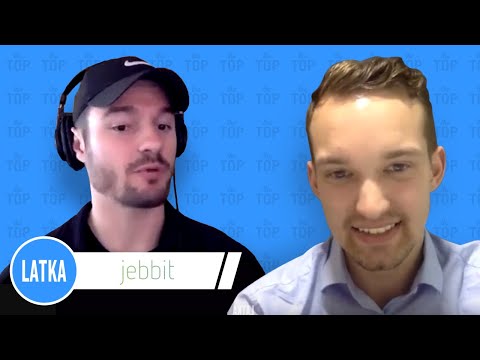
Key Takeaways
- 01Jebbit had just under 100 enterprise customers at the time of the interview in early 2019.
- 02Average contract value was over $100K per year; asked what the average customer pays, Jonathan said, "It's a 6 figure contract."
- 03The business tripled year over year in 2018, representing 200% growth.
- 04Jebbit had raised just over $10M in priced equity rounds as of the interview.
- 05The team was 54 full-time employees across Boston, Austin, and New York.
- 06Half the company was focused on sales, marketing, customer success, and partnerships; the other half on product and engineering.
- 07Jebbit had a five-person direct sales team supplemented by a three-person partnerships team.
- 08Key channel partners included Snapchat and Twitter, whose sales and customer success teams could also sell the Jebbit platform.
- 09Most customers doubled or tripled their spend within the first twelve months of using the platform.
- 10Early customer acquisition came from cold outreach on LinkedIn, networking at local marketing events, and customer referrals.
Company Metrics at Time of Interview
| Metric | Value | Source |
|---|---|---|
| Enterprise Customers (2019) | Just under 100 | Founder interview, Feb 2019 |
| Avg Contract Value (2019) | Over $100K | Founder interview, Feb 2019 |
| Year-over-Year Growth (2018) | 200% (tripled) | Founder interview, Feb 2019 |
| Total Funding Raised | Just over $10M (all priced equity) | Founder interview, Feb 2019 |
| Team Size (2019) | 54 full-time employees | Founder interview, Feb 2019 |
| Sales Team Size (2019) | 5 sales reps | Founder interview, Feb 2019 |
| SaaS Launch Year | 2015 | Founder interview, Feb 2019 |
| Enterprise Focus Launch Year | 2017 | Founder interview, Feb 2019 |
Growth Breakdown
Customers
At the time of the interview, Jebbit had just under 100 enterprise customers across retail and e-commerce, travel and hospitality, media and entertainment, sports, and consumer packaged goods. Most customers doubled or tripled their spend within the first twelve months, reflecting strong expansion revenue within accounts.
Team
Jebbit had 54 full-time employees across offices in Boston, Austin, and New York. Half the company was dedicated to sales, marketing, customer success, and partnerships, while the other half focused on product and engineering. Jonathan noted a roadmap to grow toward 80 to 90 employees by the end of 2019.
Funding
Jebbit had raised just over $10M in priced equity rounds as of the interview. The company was actively in a financing process at the time of the recording, with a strategy of continuing to invest in growth rather than optimizing for breakeven.
Profitability
Jebbit was burning capital at the time of the interview, with Jonathan describing a diminishing burn rate. The company's strategy had always been to invest in growth, and Jonathan said that with high retention rates and a partnership ecosystem, the growth rate rises much faster than the expense base over time.
Growth Strategy
Land and Expand with Enterprise Accounts
Jebbit's primary go-to-market motion was landing an initial enterprise contract and then expanding into new teams, divisions, and geographies within the same organization. Jonathan noted that customers in North America frequently referred Jebbit to their European or Asian counterparts, driving organic expansion.
Value-Added Reseller Partnerships
Jebbit built formal partnerships with Snapchat and Twitter, whose sales and customer success teams could sell the Jebbit platform directly to their own customers. Jonathan mentioned roughly a dozen additional partnerships in the works at the time of the interview.
Cold Outreach and Live Events
The first customers came through direct cold outreach on LinkedIn and attendance at niche marketing events such as local ad clubs and e-commerce summits in Boston. Jonathan advised other SaaS founders to target smaller, focused gatherings of a couple hundred people rather than large conferences like Dreamforce or South by Southwest.
Customer Referrals
Customer referrals were a meaningful source of new business, with Jonathan saying that much of Jebbit's growth came organically from customer referrals and internal expansion, and that the first customers, won through cold outreach, networking events and referrals, had turned out to be some of its largest customers.
Best Quotes
“Declared data is a type of consumer data where customers are actually declaring or sharing information with brands. So quite simply, it can be answering a question in a piece of content or it could be filling out some information, in a survey or a lead form.”
“It's a 6 figure contract. I mean, we're selling to, you know, working with the largest brands in the world. And at the end of the day, we're selling into product and marketing teams, primarily.”
“most of our customers are doubling or tripling their spend within the first twelve months, which I think is a really exciting metric that we keep track of because it directly correlates to value.”
“We tripled the business this past year and and we've had a lot of really interesting conversations about what what 2019 will be. We're at 55 employees now. The the road map has us, getting closer to to 80 or 90 by the end of the year.”
“Yeah. I mean, publicly, we talk about just under a 100 enterprise customers. Again, we've built a business in the retail and e commerce space, travel and hospitality, media, entertainment, sports, leagues, teams, consumer packaged goods.”
“Cold cold outreach on LinkedIn, showing up to networking events and and and introducing yourself, trying to get customer referrals. I think, yeah, all all three of those have have candidly turned out to be some of our largest customers as well.”
“instead of going to these big shows like South by Southwest and Dreamforce, find an audience of a couple 100 people talking about a really niche problem, either in a specific vertical category or type of buyer, and go and kinda network in the room and that's always worked really well for us.”
What Happened Next
At the time of this interview in February 2019, Jebbit was actively in a financing process and planning to grow its team toward 80 to 90 employees by the end of the year. Jonathan described a clear roadmap focused on expanding direct enterprise sales and deepening its channel partnerships. This page captures Jebbit as it stood in early 2019; visit the Jebbit company profile on GetLatka for further context on the company's trajectory.
View Jebbit’s current profile and metricsFull Transcript
Chapters
- 0:01Introduction and Guest Background
- 0:19What Is Declared Data?
- 0:36Facebook, Apple, and Consumer Data Privacy
- 1:51UBI and Consumer Data Ownership
- 2:32How Jebbit Works and Who It Sells To
- 4:04Pricing Model and Contract Structure
- 7:27Capitalization, Funding, and Team Size
- 8:24CAC, Payback Period, and Sales Team
- 12:13Customer Count and Revenue Discussion
- 14:14Burn Rate, Runway, and Financing Strategy
- 15:28Early Customer Acquisition Tactics
- 16:00Niche Events vs. Large Conferences
- 16:26Famous Five Rapid-Fire Questions
Introduction and Guest Background
Nathan Latka
00:01Hello, everyone. My guest today is Jonathan Lacoste. He is the co founder and president of Jebbit, an enterprise software company in the digital marketing and consumer data space. His focus is on helping the world's largest brands create a declared data strategy using explicitly consented data and their digital marketing channels. Jonathan, you ready to take us to the top?
Jonathan Lacoste
00:18Sounds good. Good to Yeah. Thanks for having me.
What Is Declared Data?
Nathan Latka
00:19So first off, give us some definitions here. What does declared data mean?
Jonathan Lacoste
00:23Declared data is a type of consumer data where customers are actually declaring or sharing information with brands. So quite simply, it can be answering a question in a piece of content or it could be filling out some information, in a survey or a lead form.
Facebook, Apple, and Consumer Data Privacy
Nathan Latka
00:36So let me ask you a question. Facebook right now, they were just shut down by Apple, a certain app that they had because they were paying consumers to essentially give them access to their data. I actually said, wow, this is great. At least Facebook's paying people for their data. Most people just collect it without even telling the consumer at all. However, the storyline that took off online was very much the opposite, which was, wow, Facebook is...
00:56They're breaking privacy laws. They're capturing all this data when really most companies do it anyway and never pay the consumer. So don't we wanna see more companies, Google, Apple, offering to pay consumers for their data?
Jonathan Lacoste
01:07Yeah. I think it's interesting. We always talk about a value based exchange where companies, if they're going to collect and use consumer data, there needs to be an enhancement to the experience. So a personalized recommendation or some type of value, maybe even monetary. Like, that's totally in the realm. Yeah. I think where Facebook overstepped here in particular is they used a protocol with Apple where it was only supposed to be an internal employee app, and they
01:28kind of kept it secret and used it as an external market research tool, breaking Apple's rules. And then there's always kind of the iffy line of it it monitors everything you did on your mobile device for people all the way as young as 13 and 14 years old. So I think it gets to kind of the ethical question of how much data is too much to share with these companies, and what should consumers be able to
01:49control, and when should they be able to give it?
UBI and Consumer Data Ownership
Nathan Latka
01:51Yeah. This is very interesting. For those people who really like the idea of universal basic income, for these big tech companies that love data so much, actually I could see potentially a way to fund UBI as being these tech companies paying every consumer in The US a grand a month, right, for access to the data, and it's essentially opt in by consumers because they value the data so much.
Jonathan Lacoste
02:07It's really interesting. I think what you're hitting on is we are moving quickly to a world where consumers will own their data and it could be treated as a fundamental human right. And companies have to respect that and treat that data a lot differently. Whether we ever get to the point to to your idea around monetizing it or like a basic income, totally totally open for discussion. But what certainly is true that consumers are gonna have
02:29a lot more control of their data moving forward than in the past.
How Jebbit Works and Who It Sells To
Nathan Latka
02:32Yeah. We'll see what happens. Okay. So how's Jebbit fit in the picture here? What do you guys do? Are you... I mean, it a SaaS company or what?
Jonathan Lacoste
02:37Yeah. It's a SaaS platform, and and enterprises all around the world right now are being faced with the challenge of how do we collect and use this data in a really transparent and simple way that not only drives business value, but is also respectful for everything that we just talked about with the consumer. And so, enterprise companies license our technology. The short answer is they build these immersive mobile experiences. They launch it as a part of
02:58their digital strategy with the whole goal of giving consumers the ability to share what they wanna share with enterprises, the preferences, motivations, so that enterprises can immediately alter the experience and give them a more personalized and relevant, you know, shopping experience or browsing experience as a part of their journey.
Nathan Latka
02:58Mhmm.
03:16Is this the kind of data that an Expedia might use to know it's a Mac user, not a PC user, and charge 10 times the airline prices because they assume the Mac user has more money?
Jonathan Lacoste
03:24That's inferred data. So a lot of the data that they're looking to get from, customers is really just understanding on a conversational level, like, why are you searching? So if Expedia sees you searching for a flight to Hong Kong, they may see your location and what device you're browsing and all of those things. But with Jebbit, they wanna understand the why behind the action. Why are you going? What motivations? You know, is it for, with a
03:47spouse or is it for a honeymoon or just a friend's weekend? When you arrive, what type of hobbies are you interested in? I think in an ideal world, consumer data sometimes is is treated too much as kind of this programmatic transactional exchange between consumer and brand, and we're trying to add a human element to it to make it a little bit more relevant to consumers.
Pricing Model and Contract Structure
Nathan Latka
04:04Interesting. Okay. And then help me understand kind of who you're selling to. The average customer is paying about how much per year for your technology?
Jonathan Lacoste
04:10It's a 6 figure contract. I mean, we're selling to, you know, working with the largest brands in the world. And at the end of the day, we're selling into product and marketing teams, primarily.
Nathan Latka
04:19So fair to say then, again, just before the average kind of ACV even in year one is above a $100,000?
Jonathan Lacoste
04:19Correct.
Nathan Latka
04:19And why would someone pay a $100,000 per year versus a million, right, per year? What what are the pricing axes you pricing against?
Jonathan Lacoste
04:30I think it's all about how much they're using the platform. So, you know, we're based here in Boston, and so we primarily focus on companies in North America. But pretty frequently when our customers in North America find success, they refer us to other divisions within their company or they refer us to their European or Asian counterparts. So I think as the platform continues to expand internally and they upgrade with certain features or the usage increases, that's
04:53when you start to
Nathan Latka
04:54Based off what though? Usage based off what? What's the metric?
Jonathan Lacoste
04:57Well, new teams are licensing it. Launching more experiences. More consumers are going through it and they're collecting more data. So a variety of factors.
Nathan Latka
05:04Okay. So just to be clear, you have an inside sales team that says, hey, you are moving from a team size of a 100 to a thousand, you should pay more or you're, you know, you should add this feature set across all your seats, you should pay more. Or, hey. You just passed a million consumers through your experience in one month. You should move to, like, the next level.
Jonathan Lacoste
05:19Yeah. We see a lot of, enterprises start based on where they're at in their declared data journey. Right? Like, we're we're building a category as a SaaS platform. And so a lot of customers are coming to us, and they don't know necessarily what technology they need to solve these problems. So to your point around pricing and packaging, a lot of the time what we do is we start someone on the basic platform, which gives them a
05:38certain number of experiences, a certain number of interactions. And then as they need more advanced capabilities, unique custom APIs, more integrations into their CRM and DMP, more experiences to launch in more regions, that's when you start moving up those price points.
Nathan Latka
05:51So on average, what do you see contract values increase from percentage wise from year one to year two? Are we talking doubling or 50% growth or 10% or what?
Jonathan Lacoste
05:58It totally depends, but most of our customers are doubling or tripling their spend within the first twelve months, which I think is a really exciting metric that we keep track of because it directly correlates to value.
Nathan Latka
06:08Now, obviously, the doubling can't keep going per account year over year. Otherwise, you'd be a multibillion dollar company at this point. Obviously people kind of flatten out. So when you look after kind of the rapid acceleration up to a certain price point over the first eighteen to twenty four months, I mean, do you see it kind of calm down where expansion year over year is maybe like whatever, 10, 20%?
Jonathan Lacoste
06:26We're not even at that point yet, be honest. Right? I mean, as a SaaS company that's three years into building the category, a lot of what our focus has been is just continuing to add customer value. And these enterprises we're dealing with are at such a scale that we keep finding new global teams to work with, new brands, new divisions. So we're still kind of at that point where we're still accelerating.
Nathan Latka
06:45When did you launch?
Jonathan Lacoste
06:47The company's been around seven years, but we formally announced declared data kind of at our customer conference at the beginning of twenty seventeen. So it's been over two years now of just kind of really focusing on building the category.
Nathan Latka
06:58Okay. But I mean, you have some history here though. It's not like you don't have any cohort data to analyze. So 2012 was launch date. You were always a SaaS company, right? Or were you like an on prem kind of thing and you morphed to a SaaS company?
Jonathan Lacoste
07:08Yeah. We've had a couple of different evolutions. We were a marketplace for a period of time, launched our SaaS offering in 2015
Nathan Latka
07:08Okay.
Jonathan Lacoste
07:08Focused specifically on mobile interactive content to the mid market. And then we shifted to an enterprise software solution focused on this larger declared data challenge at the beginning of twenty seventeen.
Capitalization, Funding, and Team Size
Nathan Latka
07:27And how have you driven this growth in terms of capitalization, bootstrapped or raised?
Jonathan Lacoste
07:31We've raised a couple rounds of VC. And, primarily, a lot of the growth has been from, again, land and expand, type go to market strategy with customers. We have a couple of really key partnerships we're excited about. So Snapchat and Twitter, are are partners of ours where we have a unique relationship where their sales and customer success teams can also sell the Jebbit platform, and so we find a lot of value in those partnerships.
Nathan Latka
07:53So raise to date about how much?
Jonathan Lacoste
07:55Just over 10,000,000.
Nathan Latka
07:56Okay. 10. And all that was priced equity or any debt or venture debt or anything?
Jonathan Lacoste
08:00No. All priced.
Nathan Latka
08:02All priced. Okay. Great. And then round up the team for me today. How many folks?
Jonathan Lacoste
08:0654 full time employees here in Boston, Austin, Texas, and in New York.
Nathan Latka
08:11Austin, very good. That's great. And okay, so 54 folks. And how many of them are focused on kind of onboarding sales marketing?
Jonathan Lacoste
08:18Half the company is sales, marketing, customer success and partnerships and the other half is product engineering.
CAC, Payback Period, and Sales Team
Nathan Latka
08:24Okay, the reason I ask, I'm curious, I mean, how aggressive are you being in terms of CAC? So if year one ACV is a $100,000, are you willing to spend that whole amount for a twelve month payback or how aggressive are you being with acquisition?
Jonathan Lacoste
08:33No. I mean, we've been pretty lean, if anything. I mean, I think because so much of our growth, and this is something that we talk a lot about when we think about SaaS unit economics, so much of our growth is coming organically from customer referrals internally expansion. We have unique partnerships, and so we're able to get lead generations of customers that are interested in what we're doing without putting a ton of paid dollars behind it. So
08:52a very early, and intent... Thoughtful part of our go to market strategy was really around what are the unfair advantages advantages we can have to keep that CAC low, and those were two of the areas we wanted to lean in on.
Nathan Latka
09:03Okay. But just to clear, when you look at fully weighted, it's not just drug paid spend you're looking at. If you have a sales team that's half your company, obviously, there's commission structures built in there, you know, their desk space, all kinds of their software, you pay per employee to use Yesware or whatever you're using. So when you look at fully weighted, I mean, what are you paying fully weighted to get a new dollar of ARR?
Jonathan Lacoste
09:17Still a very small percentage. We have a five person sales team. So again, a lot of this is is genuinely from our our three person partnerships team working with the partners to get an inbound lead or our customer success team working to get an introduction.
Nathan Latka
09:31Okay. So if the CAC number is a harder question to answer, let me ask it differently. Again, what kind of payback period are you happy with? Three months, twelve months, twenty four months?
Jonathan Lacoste
09:40I mean, we're we're happy in the three to six month range. The the SaaS VCs of the world, the the best ones will tell you anything sub 12 in enterprise software.
Nathan Latka
09:47Yeah. Yeah. Yeah. No. No. I don't care about them. I care about... I I wanna be about you. Right? So, like, you've optimized for it sounds like less than essentially a three month payback period.
Jonathan Lacoste
09:55Yeah.
Nathan Latka
09:55Okay. And and so why not be more aggressive, right, knowing that the standards are much higher than that? I mean, by the way, there's nothing wrong with a quick payback. I think it's wonderful. The best payback is like zero. Right? But, why not be more aggressive?
Jonathan Lacoste
10:07Aggressive in what sense? Hiring?
Nathan Latka
10:09Well, I I have no idea. Don't know your business. But have you identified ways to be more aggressive or is that the exact problem? You don't actually know how you'd be more aggressive if you tried?
Jonathan Lacoste
10:16No. I mean, I think we have a pretty clear roadmap. We tripled the business this past year and and we've had a lot of really interesting conversations about what what 2019 will be. We're at 55 employees now. The the road map has us, getting closer to to 80 or 90 by the end of the year. So there's a pretty clear plan for enterprise sales rep going direct to brand and and continuing to build the enterprise pipeline.
10:37One area we do wanna invest more in is partnerships. So I mentioned Snapchat and Twitter. There's about a dozen more that are in the works right now that we haven't announced. And so those are areas that we're definitely gonna lean in on, this year.
Nathan Latka
10:47What's the incentive you pay for those for those partners to come to the table? Is there some kinda kickback or rev share or value add? Why do they do it?
Jonathan Lacoste
10:53No. I mean, if anything, the incentive is that they get to bring a new solution to their customers that they feel a genuine pain point for. So because of regulation, GDPR in Europe, California has a state initiative that is gonna become law 01/01/2020, just eleven months from now. Everyone has to be evaluating how they collect and use consumer data. And in the marketing and the advertising world, the entire infrastructure infrastructure and ecosystem is built on collecting
11:16and using third party, first party inferred data without consent. And so everyone's being forced to think through different solutions that help them, and Jebbit's one of those solutions.
Nathan Latka
11:24Okay. But if this is gonna be so critical, right, to these companies, I mean, why on earth would they would they basically outsource this via you? Wouldn't they wanna be building this internally?
Jonathan Lacoste
11:33Well, there's a there's a there's a couple ways to think about this. So one is everyone's gonna build the infrastructure internally to a certain extent or on their owned properties. Everyone is already leveraging kind of the infrastructure from like a technology standpoint of their their pure marketing tech stack, their CRM, their DMP, etcetera. But this is exactly what we've been focused on solving for the past five years. And there's something to be said about kind of
11:54being really laser focused on one unique niche problem and pain point. And so we built the platform as opposed to in the marketing space, you hear a lot about CDPs, consumer data platforms that are trying to help you collect and combine a lot of the data. So a long way of saying we're pretty uniquely focused on this and no one else in the space is really focused on solving this problem as of today.
Customer Count and Revenue Discussion
Nathan Latka
12:13And how effective have you been? You mentioned you've been doing this for kind of five years. How many customers have you scaled to?
Jonathan Lacoste
12:17Yeah. I mean, publicly, we talk about just under a 100 enterprise customers. Again, we've built a business in the retail and e commerce space, travel and hospitality, media, entertainment, sports, leagues, teams, consumer packaged goods. I mean, are the big categories that we find, have the biggest need for first party declared data.
Nathan Latka
12:36Mhmm. So, Jonathan, mean, just south of a 100, let's just say you mean 90 by that. 90 times a 100,000 price point will put you at about $750,000 a month right now in revenue. And in terms of MRR, is that about right?
Jonathan Lacoste
12:45Yeah. We're not allowed to talk figures, but you can you can extrapolate off that.
Nathan Latka
12:49Well, yeah. And just to be clear, I'm... I don't wanna make anything up. These are numbers you gave me direct. These are direct quotes. You said less than 100 customers and you said $100,000 year one ACV.
Jonathan Lacoste
12:57Yep, both of those are true.
Nathan Latka
12:59Okay. So three x year over year growth, that means about a year ago, you'd be about, again, one third of seven fifty. So call it maybe two fifty, something like that.
Jonathan Lacoste
13:06Yeah, again, really not allowed to comment. We're going through a financing sequence right now. But yeah, those are those are the things we're allowed to talk about publicly.
Nathan Latka
13:14Yeah. Again, Jonathan, I'm not I'm not asking you to share anything you haven't already shared. I'm multiplying things you've already shared. So you said 3x year over year growth, you said less than 100 customers, I said 90. So you said $100,000 ACV, that would put you at $750,000 today, one third of that is $250,000. Is there anything that are any of the inputs you gave me leading me to wrong math?
Jonathan Lacoste
13:32Yeah, I think under 100 customers, I wouldn't pick 90 specifically, but yeah, we're really excited about the tripling of growth and I think we're gonna try and aim to 2.5 or three x the business again this year.
Nathan Latka
13:43Okay. Yeah. And look, the reason I ask this question is because a lot of times people will say, we a 100 x year over year or 10 x year over year, and it deceives my audience because it's easy to go from a dollar to $10 and call it 10x year over year growth. You see what I'm saying? And that's a very different, you learn something different than someone going from a million bucks a month to $2,000,000
14:00a month. So from what I'm hearing you say, and I won't push any harder than this, you're saying less than a 100, maybe not quite 90, but we look forward to getting there pretty soon. And part of the process of how we're gonna do that is raise some capital right now to fuel some growth.
Jonathan Lacoste
14:12Yep. Yeah, we're on the same page.
Burn Rate, Runway, and Financing Strategy
Nathan Latka
14:14Since you're in that those kinds of conversations right now, you struck me as a very intelligent guy. So you wanna make sure you have as much leverage as possible. Did you wait until you got the company back to breakeven from the 10.2 you've already raised before you start go out and raising now, or are you still burning a little bit?
Jonathan Lacoste
14:27No. Our strategy has always been to to to burn. We're not... We haven't taken the the other route.
Nathan Latka
14:34Okay. So you are still burning today. So you have a finite runway. You have to raise x by x amount. Otherwise, you can't do payroll next month.
Jonathan Lacoste
14:40I mean, theoretically, if we kept any SaaS startup that's burning at that rate, that... That's definitely how the economics will work out. But we have a diminishing burn rate, let's just put it that way.
Nathan Latka
14:49Got it. You can decrease it by cutting some variable expenses if you needed to.
Jonathan Lacoste
14:54One of my favorite things about the SaaS model and with high retention rates and with a partnership ecosystem is over time, as you know, as your expense base increases, your growth rate increases at a much faster rate. So we have been very fortunate to surround ourselves with some world class advisors. I mean, Bill Macaitis, the former CRO, CMO of Slack Technologies is one of our board observers. We we work with a lot of folks at Salesforce
15:20and Adobe as well. We've kind of really tried to architect us to be scalable to many many folds beyond what we're talking about today.
Early Customer Acquisition Tactics
Nathan Latka
15:28Yeah. No. That's great. And then last question last question here. First 10 customers you got, what were you doing to hustle to get those first guys or gals?
Jonathan Lacoste
15:35Oh, man. Cold cold outreach on LinkedIn, showing up to networking events and and and introducing yourself, trying to get customer referrals. I think, yeah, all all three of those have have candidly turned out to be some of our largest customers as well.
Nathan Latka
15:49And just quickly, the targeting on LinkedIn, what were the keywords?
Jonathan Lacoste
15:53No. Not even paid advertising. I'm saying going to like a marketing event and and just shaking hands and doing cold outreach, like physically messaging people on LinkedIn.
Niche Events vs. Large Conferences
Nathan Latka
16:00What was one of the first marketing kind of events you went to?
Jonathan Lacoste
16:03In Boston, we have a lot of these, like ad club or like MITX is an organization locally. They'll hold ecommerce summits. And so what we found to do and what I talked to a lot of other SaaS founders about is instead of going to these big shows like South by Southwest and Dreamforce, find an audience of a couple 100 people talking about a really niche problem, either in a specific vertical category or type of buyer,
16:23and go and kinda network in the room and that's always worked really well for us.
Famous Five Rapid-Fire Questions
Nathan Latka
16:26Yep. Very good. Alright. Let's wrap up here quickly. Famous Five one word answers. Number one, favorite business book?
Jonathan Lacoste
16:31Bad Blood.
Nathan Latka
16:32Number two. Have to. Number two, is there a CEO you're following or studying?
Jonathan Lacoste
16:38Benioff.
Nathan Latka
16:38Number three, what's your favorite... Or sorry, what billing tool do you guys use?
Jonathan Lacoste
16:43Billing tool. RYDOO.
Nathan Latka
16:46Spell it.
Jonathan Lacoste
16:47R Y D O O, I think. Expensify competitor.
Nathan Latka
16:51Okay. Yeah. Yeah. Number four, how many hours of sleep do get every night?
Jonathan Lacoste
16:51Six.
Nathan Latka
16:51And what's your situation? Married, single, kids?
Jonathan Lacoste
16:58Girlfriend.
Nathan Latka
16:59Okay. So not married, no kids yet. And how how old
Jonathan Lacoste
16:59Yeah.
Nathan Latka
16:59Are
Jonathan Lacoste
17:0325.
Nathan Latka
17:04Last question. What do wish your 20 year old self knew?
Jonathan Lacoste
17:07Be more patient and be more,
17:12thankful.
Nathan Latka
17:13Guys, be patient, be thankful. Launched in 2012. Again, Jebbit, really trying to help folks understand declared data, remove any ambiguity around who owns what data and really creating safety for brands and knowing that they can do whatever they want with data collected from consumers in this particular way. Less than 100 customers paying, call it, a $100,000 per year in terms of ACV, growing three x year over year. 10,200,000 raised so far. Team of 54 in Boston,
17:34Austin, and New York City. You know, CAC and payback periods, you know, three month payback periods, so healthy economics as they look to scale and potentially raise here shortly. Jonathan, thank you for taking us to the top.
Jonathan Lacoste
17:43Awesome. Thanks, Nathan.