Latka logo

Ocurate Revenue (2024)

Ocurate is a predictive analytics company that delivers individual-level lifetime value forecasts for business-to-consumer brands, helping them allocate marketing spend and forecast revenue more accurately. The company was spun out of Predictwise in June 2021, leveraging a privacy-first database that Predictwise spent five years building to map behavioral and attitudinal data on every adult American. Ocurate targets mid-sized direct-to-consumer brands generating between $10 million and $500 million in annual revenue, pricing its service at $6,000 to $10,000 per month based on database size.

As of December 2021, the company was approximately nine to ten months old, had closed four enterprise customers in less than six months, and was generating roughly $20,000 to $30,000 per month in revenue. The team consisted of five full-time employees, four of whom are engineers, supported by outsourced contractors for sales development, content marketing, and design. Ocurate was in the process of raising its first venture round targeting over $1 million in seed capital to fund growth toward a goal of 20 new customers in 2022.

Last updated

Ocurate Revenue

Ocurate was generating approximately $20,000 to $30,000 per month in revenue as of December 2021, a figure the host calculated based on four enterprise customers at roughly $6,000 per month each, and Richard Purcell confirmed it sounded about right. The company prices its service at $6,000 to $10,000 per month depending on the size of a client's database, measured by the number of leads, existing customers, and lapsed customers.

Ocurate Revenue GrowthReported revenue / ARR over time · latest figure estimated$0$1.3M$2.5M$3.8M$5M$6.3M2021202220232024$0$5MSource: GetLatka.com interview on Dec 8, 2021 with Richard Purcell
YearMilestoneSource
2024Ocurate Hit $5m revenue in June 2024Estimated
2021Launched with $0 revenue

Ocurate closed its first four enterprise customers in less than six months after officially launching, with most coming from the founding team's existing network and two sourced through outbound email campaigns. The company set a goal of closing 20 new customers in 2022, which Purcell indicated would push the business past a $1 million annual run rate. Profitability was not discussed in the interview.

Ocurate Valuation, Funding Rounds

Explore the complete funding history and valuation milestones for this company. Below you will find information about each funding round and key financial metrics that shaped the company's growth trajectory.

Ocurate Capital Raised & ValuationCumulative capital raised and post-money valuation by roundCapital raised (cum.)Valuation$0$0$0.2$0.2$0.4$0.4$0.6$0.6$0.8$0.8$1$12021Source: GetLatka.com interview on Dec 8, 2021 with Richard Purcell
YearRoundAmountValuation% SoldSource

Founder / CEO

Richard Purcell

CEO

Richard Purcell is one of three founding team members at Ocurate and leads all go-to-market activity. He is 35 years old. Purcell was clear in the interview that he is not the CEO: he directed questions about equity structure and cap table details to the company's co-founder and CEO, whose identity was not disclosed in the interview. All three founding members previously worked with Predictwise before spinning out to form Ocurate.

Purcell holds less than 10 percent equity in Ocurate. He noted that the co-founder title is typically associated with ownership above 10 percent, placing his role closer to a senior founding team member incentivized with equity. His background includes go-to-market strategy, and he described himself as the only non-engineer among the five full-time employees. Net worth was not discussed in the interview.

Predictwise, the parent company from which Ocurate was spun out, spent five years mapping behavioral and attitudinal data on every adult American, originally for use by progressive political campaigns. That database became the foundational asset Ocurate licensed or inherited as part of the spinout arrangement, which is the primary reason the founding team chose to spin out rather than start from scratch.

Customers

Ocurate had four enterprise customers as of December 2021, all closed within less than six months of the company's official launch. The majority came from the founding team's existing professional network, with two sourced through outbound email campaigns. One customer is a publicly traded company, with Ocurate predicting LTV at the individual level for one division and planning to expand to additional divisions.

Ocurate targets mid-sized direct-to-consumer brands with annual revenue between $10 million and $500 million. Pricing ranges from $6,000 to $10,000 per month, determined by the size of the client's database of leads, existing customers, and lapsed customers. The company reported the strongest early traction in mobile gaming and subscription-based brands. No free tier was mentioned.

Ocurate serves 4 customers.

Ocurate Business Model

Ocurate operates a subscription software model, charging B2C brands a monthly fee of $6,000 to $10,000 based on database size. Revenue scales as client databases grow, and the company also pursues expansion within existing accounts by adding divisions, as it is doing with one publicly traded customer.

The company's primary growth tactic as of December 2021 was cold outreach, executed through a combination of the founding team's existing network and outbound email campaigns managed in part through an outsourced SDR agency called leadgenerator.io. Ocurate engaged one full-time researcher through leadgenerator.io to support that effort, alongside two full-time SDRs. Additional contractors supported content marketing and design on a part-time basis.

Ocurate's stated total addressable market is all B2C organizations in the United States, with the serviceable obtainable market focused on mobile gaming and subscription brands. The company's upsell mechanism is database growth: as a client's customer base expands, the monthly fee increases. Gross margin, churn, LTV, CAC, burn rate, and runway were not discussed in the interview.

Point-in-time figures shared on the GetLatka podcast, each linked to the exact moment it was said on camera.

Customers (2021)

4

Richard Purcell: Since we launched Ocurate officially, we're able to close four enterprise customers in less than six months.

Watch

Ocurate Employees & Team Size

Ocurate had five full-time employees as of December 2021. Richard Purcell described himself as the only non-engineer on the team, placing the engineering headcount at four. The five full-time staff included Purcell and the two other co-founders.

The company supplemented its full-time team with outsourced contractors covering sales development through leadgenerator.io, content marketing through a separate agency, and part-time design support. Ocurate was actively hiring for its first full-time salespeople, additional engineers, and other roles at the time of the interview.

Ocurate employs approximately 5 people as of 2026. It serves 4 customers that rely on its solutions.

Ocurate Team GrowthReported headcount over time013456202155Source: GetLatka.com interview on Dec 8, 2021 with Richard Purcell
YearMilestoneSource
2021Reached 5 employees (December 2021)

Frequently Asked Questions about Ocurate

What is Ocurate's revenue?

As of 2024, Ocurate generated an estimated $5M in annual revenue.

Who founded Ocurate?

Ocurate was founded by Richard Purcell.

Who is the CEO of Ocurate?

The CEO of Ocurate is Richard Purcell.

How many employees does Ocurate have?

As of 2021, Ocurate had 5 employees.

Where is Ocurate headquartered?

Ocurate is headquartered in San Francisco, California, United States.

Compare Ocurate to the industry

Full Interview Transcripts

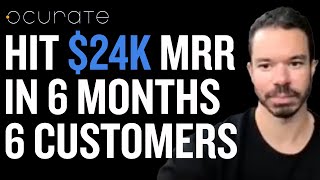
They Hit $24k MRR In 6 Months Helping Ecommerce Brands Model Customer LTVDec 8, 2021

[00:00] Hey folks, my guest today is Richard Purcell. He's building ocurate, that's ocurate.com, actionable LTV predictions. Richard, you ready to take us to the top? [00:08] >> Let's do it. [00:09] Alright, SaaS folks here, LTV. So is this a tool specifically built for SaaS founders? [00:14] >> So we're primarily working with B2C organizations, and the biggest problem that we're seeing is that leading brands want to be able to measure their business, their customers, and campaigns on LTV, because if they know exactly how much a customer is going to spend in the future, it'll inform their marketing investments, forecasting, and general health of the business. But the biggest problem is they don't have the data, and past purchase data alone does not predict the future, [00:42] >> and third party data has always been unreliable, and it will soon cease to exist with all the changes in rules and regulations. And so what ocurate does is we bring in external privacy first data on every adult American's in-depth behaviors and attitudes, And when we match this database with a brand's customer data, the outcome is a 90% plus accurate LTV prediction at the individual level, which helps brands make the right investments and the right customers throughout [01:09] >> all phases of the life cycle. [01:11] And so if brands are paying you for this technology, what are they paying you on average per month to use it? [01:16] >> Yeah, so we're primarily working with mid sized direct to consumer brands between $10,000,000 to $500,000,000 in revenue, And the way that we price is based on the size of the database and that's between 6,000 to $10,000 a month. [01:30] I see. Okay. Interesting. And size of the database measured by what? [01:34] >> By like number of leads, existing customers, and lapsed customers. [01:38] Okay, so is that your most powerful way to upsell, it's based off number of customers, the utility value? [01:44] >> Yeah, it's either number of customers in the database and we hope to grow as the companies grow, but also, you know, we're working with a publicly traded company where with one of their divisions, we're predicting their LTV at the individual level, and now we're gonna expand to other divisions as well. [02:02] I see. What's the backstory here? When did you launch the business? [02:05] >> Yeah, so the backstory is, the company was spun out of a previous company called Predictwise, and so Predictwise was mapping every adult American over the course of five years in a very privacy first way, and it was primarily used for progressive political campaigns, and ocurate was spun out to only target commercial enterprises, and so what we've been able to do over the last year or so is only work with these reps. [02:34] Spun it out just last year, 2020. [02:36] >> No. Well, ocurate was incorporated earlier this year. And so we're probably about, you know, nine months old, nine to ten months old. [02:44] Okay. Got it. So so okay. But when did the spinout happen? [02:48] >> The spinout happened around June of this year. [02:52] Okay. It was okay. Got it. So so sorry. What what were you referencing last year? [02:56] >> I'm I'm referencing the fact that we were starting to think about building a company only to target commercial enterprises around sometime last year, but we didn't actually do that until this year. [03:08] I see. I see. Okay. Got it. So you spun out. Now, does that mean the parent company is sitting on the cap table of ocurate right now? [03:15] >> That is correct. [03:16] Okay, so how do you structure that? Mean, why not just go out and start your own thing from scratch? Like what do you get from the parent company that it was worth giving up a bunch of equity for? [03:25] >> I think primarily what was the biggest value add was being able to leverage the database that ocurate built over the last five years. [03:35] Sorry, that ocurate built or the parent company built? [03:38] >> I'm sorry, that Predictwise built. Yes. [03:40] Got it. Sorry, it's called Predictwise. [03:42] >> Yes. Mhmm. [03:43] And and they were exclusively working with ecommerce brands as well? [03:46] >> No. PredictWise is only working with political campaigns. [03:50] Okay. Interesting. So what does that have to do with predicting LTV now for mid sized ecommerce brands? [03:56] >> Yeah, so if you think about the problem that political campaigns face and how that relates to e commerce is, you know, if you think about a political campaign, there are a lot of swing voters and you're not quite sure which swing voters actually target for different causes that they care about. And so by understanding someone's foundational personalities, behaviors, and attitudes, this would help figure out, okay, well, let's target this voter in a different way because of [04:23] >> what they care about the most. And so it's very similar to e commerce brands where you have a bunch of customers, but it's not clear which ones to focus on and why. And these e commerce brands are primarily using purchase data, but we know purchase data alone is not enough to predict future performance. So because we could bring in this external database to really understand who that customer is from a more holistic standpoint, that helps really [04:45] >> complete that view of who that customer is to inform when and how to intervene based on a combination of their LTV and their changes in behaviors. [04:54] Interesting. Okay. So got it. So you keep going about six, seven, eight, nine months ago, going up on your full year in business here. How many customers are you now working with today? [05:02] >> Yeah, so since we launched ocurate officially, we're able to close four enterprise customers in less than six months. And so today we have a handful of customers, but we plan to grow substantially next year. [05:17] And where those four come from? Was it did they come from PredictWise? [05:21] >> So all of our first customers aside from two of them came from our existing network, and we've been having a lot of success with outbound emailing campaigns to generate new customers. [05:32] Interesting. Okay. And so four customers times that, I think you said $6,000 a month is sort of a fair average. I mean, you guys are doing, like, $20,000 to $30,000 bucks a month right now in revenue? [05:41] >> Yeah. That sounds about right. [05:43] And bootstrapping or have you raised? [05:45] >> So to date, we've been revenue back, but we're in the process of raising our first venture round. [05:50] Okay. Got it. Oh oh, and when you say revenue back, has PredictWise put a bunch of money? [05:54] >> Yeah. That's like bootstrapped. So we were using revenue that we're getting from our customers to maintain the business. [06:00] Okay, so PredictWise, when you did the spin out, they didn't write you a big check to help fund early stage operations? No. So how did you fund yourself? How'd you pay your salary, like the first month or two? [06:10] >> Yeah, so that first came from a first customer that we were able to close. More details are probably best to ask our co founder and CEO, but I know that What we were are you? I'm on the founding team. So I'm leading all of our go to market. I was one of the three first co founders. [06:31] Okay. So how did you guys assemble that team? Did you just sort of say, Hey, we're all equal, at least do 30% or what? [06:38] >> Yeah, so that's probably detail that our CEO is best to share that with, but, you know, we started with these three that all started by working with PredictWise and decided to spin off into ocurate. [06:49] But you shy away from answering like bigger questions, which tells me like, would they view you as a third co founder? Do you have enough equity where they'd say, yeah, Richard's a third co founder? [06:59] >> I have enough equity in the company where it makes me feel like I have ownership as one of the first people to join. [07:05] Yeah. So they might call you like head of head of marketing or something who's incentivized with equity versus like being a true sort of ground level stage one co founder? [07:15] >> Yeah. I mean, I think usually the co founder title is when someone has over 10% equity. I have less than that. [07:23] Okay. Fair enough. Fair enough. Got it. Okay, cool. Talk to me about where you see future growth coming from. What's sort of go to market for the next twelve months? [07:29] >> Yeah, so I'm confident that our total addressable market is every single B2C organization in The United States. But when we think about our service obtainable market, like where we can land our first customers, we're seeing the strongest traction in mobile gaming and companies that sell a good or a service as a subscription. Specifically with subscription brands, you know, when people are purchasing at a similar purchase value, it's really hard to figure out who to focus on [07:57] >> and why. And these subscription brands are usually the ones that are optimizing their business on LTV today, and so we're seeing a lot of traction there as well. [08:06] Interesting. You mentioned you're thinking about raising now. How much are you targeting? [08:10] >> So we're gonna be raising, over 7 figures in revenue. The exact number on that and the valuation Sorry. [08:17] What do you what do mean 7 figures in revenue? [08:19] >> I'm sorry. 7 figures in in capital. [08:22] Got it. So you're raising more than a million dollars? [08:24] >> Yes. [08:24] Got it. And and so why is that the right amount? [08:28] >> It's right amount when we think about how much runway we need to get from our seed to our a and to close enough customers and grow the team in meantime. [08:37] How many customers you can close if you have another million bucks? [08:41] >> So our goal for next year is to close a total of 20 new customers. [08:46] Mhmm. So 24 total, which would, you know, obviously take you up past a million dollar run rate? [08:52] >> Yeah. That sounds about right. [08:54] Mhmm. What's the team size today? How many folks? [08:57] >> So we have about five full time employees. I'm the only non engineer on the team, and we are currently hiring more people for our first full time salespeople, engineers, and then we're also supported by a team of contractors that help us with sales, marketing, and engineering. [09:16] Just to be clear, so the five includes you and the two other co founders? [09:20] >> Yes. [09:21] You talked about contractors helping with sales. Are you working with a firm like AliOOP to outsource your SDR team or what does that mean? [09:28] >> Yeah, so we're working with an outsourced SDR team as an agency. We're working with another agency to help with content marketing, working with another part time designer. And so we find that working with these people part time helps us reduce costs as well as reduce risk. [09:46] Which firm did you choose to do the outsourced SDR work? [09:49] >> They're called leadgenerator.io. [09:52] Leadgenerator.io? [09:53] >> Yeah. [09:54] They've done well so far? [09:56] >> Really well. Yes. [09:57] Do they do they actually spin up a human like an SDR? Can you hire that human or no? [10:02] >> Yeah. So we have full time two full time SDRs and one full time researcher. [10:07] Very interesting. Okay. Cool. So so if you wanna check you out, again, you can go to ocurate.com. That's ocurate.com. Richard, anything else folks should know about before we wrap up with the famous five? [10:19] >> No. I think we covered a lot. [10:21] Alright, man. Here we go. Number one, favorite business book? [10:24] >> Favorite business book is zero to one. [10:26] Number two, is there a CEO you're following or studying? [10:29] >> I really like Manny Medina from Outreach. I really admire his compassion and the way he thinks about growing business. [10:35] Number three, what's your favorite online tool for building ocurate? [10:39] >> I would say it was a combination of LinkedIn Sales Navigator and Slack. [10:43] Okay. And number four, how many hours of sleep do get every night? [10:45] >> Seven or eight. [10:46] That's pretty good. Situation, married, single, kids? [10:49] >> I'm single, but I'm a proud uncle of an eight year old niece and a four year old nephew. [10:54] Very cool. Okay. So no kids. How old are you? 35. 35. Take us home here. Last question. Something you wish you knew when you were 20. [11:04] >> I think one would just be that everything is gonna be okay. And then the second would be spending more time understanding data. [11:11] Mhmm. Guys, there you have it. Ocurate.com spun out of a company called PredictWise. That company still sits on the cap table today, but they are bootstrapped looking to raise now north of 1,000,000 to continue fueling growth. They've closed four enterprise customers at $6,000 a pop per month over the past, call it six, twelve months. So nice growth. They're a team of five right now looking to continue to hire again, help midsize e commerce brands understand [11:29] potential lifetime value of new customers so they can back into what they could spend on CAC. Hot space, we'll see what happens. Richard, thanks for taking us to the top. [11:36] >> Thank you. [11:39] >> One more thing before you go. [11:40] We have a brand new show every Thursday at 1PM Central. It's called Shark Tank for SaaS. We call it deal or bust. One founder comes on, three hungry buyers, they try and do a deal live and the founder shares back end dashboards, their expenses, their revenue, ARPU CAC, LTV, you name it, they share it and the buyers try and make a deal live. It is fun to watch every Thursday 1PM Central. Additionally, remember these recorded founder [12:07] interviews go live. We release them here on YouTube every day at 2PM Central. To make sure you don't miss any of that, make sure you click the subscribe button below here on YouTube, the big red button, and then click the little bell notification to make sure you get notifications when we do go live. I wouldn't want you to miss breaking news in the SaaS world, whether it's an acquisition, a big fundraise, a big sale, a big [12:28] profitability statement or something else. I don't want you to miss it. Additionally, if you want to take this conversation deeper and further, we have by far the largest private Slack community for B2B SaaS founders. You want to get in there. We've probably talked about your tool if you're running a company or your firm if you're investing. You can go in there and quickly search and see what people are saying. Sign up for that at nathanlatka.com/slack. In [12:51] the meantime, I'm hanging out with you here on YouTube. I'll be in the comments for the next thirty minutes. Feel free to let me know what you thought about this episode. If you enjoyed it, click the thumbs up. We get a lot of haters that are mad at how aggressive I am on these shows, but I do it so that we can all learn. We have to counter those people. We got to push them away. Click [13:09] the thumbs up below to counter them and know that I appreciate your guys'support. Alright, I'll be in the comments. [13:14] >> See you.

Data and Sources

All figures on this page are taken directly from interviews or are estimates from public sources and proprietary models. Not financial advice. Read full disclaimer.

Claim this profile