

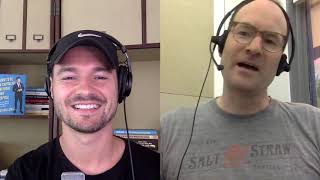
 Watch: Boardable interview
December 2019
Boardable interview
Read the transcript
hello everyone my guest today is jeb banner he's the founder and ceo of portable a non-profit board management software provider he's also the founder of two nonprofits the speakeasy and musical family tree as well as a board member of united way of central indiana and proact jeb is based again in indianapolis indiana where he's building this company jeb you're ready to take us to the top absolutely all right no one ever wants to work with non-profits because people just assume they have no budgets so so what gets you excited about building software in the space yeah they do have budgets there's 10 million 10 million worldwide 1.5 million in the u.s two-thirds are grassroots so that's under a million in revenue but even those still need help particularly managing the leadership side of the organization the board's a critical piece to any non-profit but most of these non-profits are not using anything they're using email dropbox google drive we call it digital duct tape so there's a lot of opportunity to solve problems and at this point we're in 25 countries and this is a this is a global growing market so again help me understand then generally speaking when when a nonprofit signs up to use your technology on average what are they going to pay you per year to use the tech our most popular package is 99 a month so around 1200 uh and so we're very much product led marketing driven uh self-service getting the product trial uh conversion stripe integration so that's that's the basic dna of the product okay and when you say board management solution is it like it sounds that mean you're literally helping them put together their board deck manage communication with investors things like that well remember there's no investors with non-profits yeah yeah yeah uh no they're they're yeah it's all about managing the board relationship so the board you know uh we have some customers with hundreds of board members uh across all their committees their sub boards uh it's not unusual for for there to be you know 20 40 60 board members in even smaller organizations so there's a lot of logistical scheduling meetings documents like you said agendas minutes voting uh so that's pretty much the board management piece and as we go forward we'll focus more on the board engagement piece which is really moving the needle on the behavior of the board member to drive the outcomes the organization needs interesting okay put this on a timeline for me when you launch officially february 2017 and when was the first line of code written uh this in 2016 so we built the product as a beta with a customer in town that had specked it out for us a little bit and then we gave it to a bunch of non-profits got feedback got good uh product market fit validation and we scrapped the whole thing and rebuilt it so our first customers our first customers were early 2017. okay so do you remember how much you spent in cash on that mvp before the first dollar revenue it's hard to say because it was being incubated out of another business so it the the uh the salaries were being paid for myself and my other co-founder and there was not a lot of like separation at that point um they were operating separately but the uh we haven't done the numbers on exactly what that was we began raising money in early 17 and uh and then by the end of 2017 early 18 uh i'd gone full time with boardable at that point and left my other business okay so how much total raised to date in the company uh 2.35 and were you able to get it were you able to so you know transitioning an incubated idea inside of a bigger corporation out in terms of cap your own capital management stuff can sometimes be tricky so is it truly an independent business now and how much if so how much of the current cap table is represented by the former company that incubated it well the former company was was to the co-founders myself and joe and and so that investment's reflected in our our cap table then there's four founders total so it actually was a side business that spun out a small box by other business so as a side business building product for companies and then we recognized that we had runway to go after our own product and that product became boardable but then we shuttered that business and created a whole new entity uh for portable okay this is your this is the very traditional model i see with a lot of successful assassins you essentially had an agency you saw a big need and you said oh my gosh we could build code around this the margins are better at scales more we can help more people let's go all in on the code yeah it had to be completely outside the agency like i've learned you can you can't serve two masters yeah no my point is though you learn via the agency and with those learnings you build the tech and you use the cash flow to support the early endings of the tech that's right yeah we were in the problem space because of the agency we and i and having started two non-profits i knew the problem as well yeah interesting okay what's team size today how many people 12 full-time okay now do you kind of break those down for me how many are engineers and do you have any quota carrying sales folks or no we've got uh let's see our team we have two full-time engineers we have four in the product team total we have two sales reps we we carry a team quota not an individual quota oh okay that's an interesting that's an interesting angle here how do you so incentive plans can be dangerous or if they're done wrong or very powerful if they're done correctly so why did you decide to go to the team quarter route versus individual quota route well because we're uh we're product led we're not sales led so a product led business we always want to be focused on having the um the product be the closer so that's been that's been our our key the whole way through so the sales team has to be collaborative with the product team and we don't want to incentivize too much short-term thinking and so we focus more on getting us to like a team bonus and there is some some local commit some individual commission as well yeah that's interesting okay good so uh that's that's working that's how sales are coming in now once sales come in obviously you want these non-profits to stick you gotta on board and make them sticky when you look at the past 12 months uh revenue churn where's that at and how do you drive that down yeah our net churn is very very low it's almost zero um when you look at gross it's in the one to two percent range okay um annually or monthly monthly monthly okay so 24 annually max right max net is more like 0.25 so you've got about 24 expansion as well it makes up the churnhole right right so expansion upgrades etc reactivations we see that people will come use it come back um that's not uncommon i imagine you maybe see that because board meetings or maybe once a year or once a quarter or once every six months how do you incentivize sticky behavior in between board meetings well that's a great question we do a lot of annual contracts so that sort of helps fill those gaps so they're not like activating and deactivating uh that's that's a good majority of our accounts um we have a customer success manager we just hired a director of customer success we do a lot of educational content webinars uh we really really focus on that administrative assistant staying engaged with us during those times because we want to make sure they're thinking ahead making sure they're getting other meetings in there but most nonprofits have committees that are meeting there's usually a meeting happening really at least once a month probably every other week i see it okay oh absolutely yeah yeah okay good uh the two essential gear is 2.3 to date when was the last raise we just did the high alpha round uh million from high alpha three months ago three months okay so you're very much in like in the mode now okay we said in the in the deck where we were raising we're gonna kind of scale burn to this to drive growth how do you how do you think about burn when you raise a million are you comfortable going up to 50 grand a month or 100 grand a month or where's your where's your breaking point there well yeah net income's really important to manage at this point so um it's it's it's part art and our part part science you get the right hires that come along that could be strategic for you they could open up doors you're willing to kind of lean out a little bit uh we were experimenting with multi-year deals right now that extends our runway that that decreases our burn uh more cash up front so we're playing with some of these variables right now and actually i have a i have board meetings this week uh meetings with a bunch of folks so i'm i am literally in prep mode of putting together my thinking around how we manage our cash reserves when we raise uh package pricing product roadmap so all this is very much in my mind and nothing is concrete at this point because i'm trying to get a lot of inputs before we make the call when you look at actually what you what you have done over the past you know one or two months what has burned been or are you basically break even no we're burning uh i can't share the specifics on it but um i will say that this past month our um our uh our revenue our built revenue equaled our uh total compensation for our team so we're getting where we're narrowing that um that that gap yeah and by the way when you raise um i mean you'd expect that to actually not be narrowed because you're going to invest in growth so i'm not saying it's a good or bad thing to do either way i'm just curious what i'm comfortable with right now it definitely definitely increased after that right yes um because we need to make some investments when you especially on the marketing side product side you know we gotta we gotta hit the gas in a couple different ways um also you know timing market timing of course yeah so you're doing testing in 2016 2017 you then learned a bunch of scrap thing you built it from scratch and you scale how many customers are now serving today um we're under a thousand so um we are we are growing at a pretty good clip about 10 to 15 month every month that's good when do you think you'll break a thousand customers uh next year next year okay like er like like like january or late in the year december uh projections show somewhere next year middle to next year and where will most that growth come from is it is expanding current channels or landing new channels all together um it is interesting so um we have a number of channels that are going on paid channels organic channels the one that we think has the biggest x factor is viral boards are all interconnected so many people that serve on one board serve on others we just landed a 35 board account in australia because someone using portable with a non-profit brought it to the school system and now we're in the school ecosystem so we're seeing that happen more and more as we grow and that's why we're so focused on creating a killer board member experience because we know a great board member experience pushes the viral side of the the product yep and jeb if your target is to get to up to a thousand call it mid next year what are you kind of building into your excel sheet in terms of what growth rate that would mean are you doubling your average or tripling year over year yeah we're looking to um triple double single if you will in the next few years um all right so if you're tripling if you're going to triple you're over a year to get up to a thousand that means you're what about 300 400 folks today customers uh yeah more than that but um so you know we're we see the opportunity to have tens of thousands of customers um you know this market is is massive and we are committed to serving the non-profit market on the global level so we don't see any reason why we can't have tens of thousands of customers yeah not listen i believe it it's a good market um so look if you're north of 400 customers but less than a thousand and each one pays about 100 bucks a month you're somewhere in between kind of 40 and 100 grand a month right now in terms of mrr is that accurate that's correct when do you think i mean is it a stretch goal to say that you guys could break a million run rate by the end of this year that'd be obviously a big champagne toasting moment yeah that's possible but is it but do you feel good about it or is it kind of like a little uncomfortable to stretch goal well you have to remember that uh we're about ready to go into a round of investment here so i have to be a little bit non-specific about certain numbers in the business well it's closed by the way right you're not like trying to raise it's already closed money's in the bank we'll be raising again here shortly most likely um why is that why not just you just finished around why didn't you raise more well because there's uh there's certain benchmarks as a sas company which i'm sure you know is as you hit a million you start to talk more of a series a round in terms of the conversations you're having so and we see the opportunity to greatly accelerate our growth because of the size of the market and the way we're positioned and we think we've got some things in the pipe in terms of our product roadmap that could be transformational yeah when you look at the past 12 months did you triple your over year or what was generally growth rate you tripled you tripled okay good so i'm still going back to i mean the biggest thing about fundraising at least again we've been about you know 3 000 founders and most people say the worst thing about fundraising is the time it takes your brain share your mind share right so most people are raising for like 18 to 24 months of burn yet you just finished three months ago and are saying we might be raising it again soon i'm just i'm still a little confused why you'd raise for such a short amount of time well it was an unusual situation we were going to do some convertible notes with some of the original investors to create a gap you know until we get to the series a and high alpha showed interest and we chat with them and they said they had interest in sticking with us uh going forward i've known two of the two of the co-founders two the four for quite a long time uh scott's kids and my kids go to school together there's just a lot of a lot of good synergies there uh one of the non-profits i did the speakeasy was with two of the co-founders so when they said they were interested and they wanted to go alone and they want to do the million uh so it was like okay it was it was relatively quick i mean we pitched the next day they said we want to invest so when you're in that situation we weren't we took maybe five meetings and we had four offers so it wasn't very time consuming the the time consuming science side is more than negotiation and paperwork but um this next round is more like what we were actually planning on doing as as more of our official round we were playing just being quiet and doing a convertible note yep nope that all makes good sense uh last question here before we wrap up with the famous five um how aggressive being up front to get a new 1200 a year customer or you have a 12 month payback will you spend up to that much well we look at payback across like kind of different variables direct we'll pay um generally speaking so we're looking about point you know seven months or so then when we add in staff then you get into more than one year payback and different people look at cac differently um i think it's important to look at both of it yeah there's like i think there's you're nailed it there's like four ways i see people look at cac fully weighted just take all your expenses rent everything each year divided by new customers the other is only look at direct right paid spend and sales commissions the other is you know take full salaries of everybody so it's fun it's fun to see you're measuring this across many things 700 bucks with direct and then above 12 month payback so above 1200 bucks for a new customer when you add in wages and salaries yep and we see that trending down and part of the reason is is our organic results are increasing and our viral numbers are increasing so we think we can get that number down as we go forward that's great all right jeb let's wrap up with the famous five number one what's your favorite business book wow that's a great question um famous favorite business book i would say the the one i come back to the most is probably the advantage by patrick lencioni i think it's got some of the the the fundamentals of what you need to run a business um there's a lot of creativity inc by ed catmull is great too i love that book as well number two is there a ceo you're following or studying yeah there's a lot of them um i think that locally i follow quite a few ceos that i think are running interesting businesses i'm hanging out with them later so i'll just mention max yoder who runs lessonly um and they've they've grown tremendously and have really um done it in a way that i think is is values based on a cultural level um you know nationally i follow all kinds of folks um but locally i i'm you know actually meeting with a lot of people and having coffees and conversations yeah and if you guys want to learn more from max we had him on actually back in september of 2017 when he shared they passed 450 customers and about 500 grand a month in terms of mrr so i'm sure they're much bigger than that now but a fun indiana story that are growing very very quick all right uh back to you jeb uh number three what's your favorite online tool for building your company oh boy favorite online tool i have to say it's just uh it's google sheets i use google sheets every single day i'm constantly modeling things out um i wouldn't i wouldn't have to do without it it's just it's so it's so important for collaboration and modeling good number four uh how old are you i'm 47. 47. and what's your situation married single kids married with uh three daughters wow busy man all right married three uh three kiddos uh how many are sleeping every night oh eight or nine oh good okay that's healthy last question what do you wish your 20 year old self knew uh to be more confident to be willing to put yourself out there uh to not worry so much about what i thought other people thought uh that that'd be the number one thing i would try to impart to that 20 year old self to go for it guys there you have it boardable nonprofit board engagement platform uh caught between 400 and a thousand customers today they pay on average 100 bucks a month hoping to get past a million here in terms of run rate here shortly before they do maybe another raise later this year or early next year they're based in indiana doing a raise about 2.3 million bucks so far to grow the company 12 folks on the team two hardcore engineers four on product two t at two sales reps on a team quota basis spending between caught seven and 12 months or 13 14 months in terms of payback uh on each customer as they look to scale jeb thanks for taking us to the top thank you nathan have a great day
 Flipcause