2026 Revenue
$53M
YOY
47.2%
Profits
$10M
Churn
96%
Lemlist revenue, CEO Charles Tenot, team size, customer count, churn, and more in 2026.
The company that owns lemlist.com is Lemlist SAS, a software as a service (SaaS) company based in Paris, France. Lemlist offers a platform for personalized email outreach and sales automation, which allows businesses to create and send highly targeted and engaging emails to their prospects and customers. The company was founded in 2017 by Guillaume Moubeche and has since grown to serve thousands of customers worldwide. Lemlist is known for its user-friendly interface, advanced personalization features, and excellent customer support.
Last updated
Lemlist Revenue
In 2026, Lemlist's revenue reached $53M. The company previously reported $36M in 2025. Since its launch, Lemlist has shown consistent revenue growth.
| Year | Milestone | Quote |
|---|---|---|
| 2026 | Lemlist Hit $53m revenue in May 2026Source | |
| 2025 | Lemlist Hit $36m revenue in December 2025 | 1:26[1] |
| 2025 | Lemlist Hit $35m revenue in September 2025Source | 1:26[1] |
| 2024 | Lemlist Hit $26m revenue in July 2024 | |
| 2023 | Lemlist Hit $23.2m revenue in March 2023 | |
| 2021 | Lemlist Hit $10m revenue in November 2021 | |
| 2021 | Lemlist Hit $10m revenue in October 2021 | |
| 2021 | Lemlist Hit $8m revenue in June 2021 | |
| 2021 | Lemlist Hit $6m revenue in April 2021 | |
| 2020 | Lemlist Hit $3.5m revenue in August 2020 | |
| 2020 | Lemlist Hit $2m revenue in July 2020 | |
| 2019 | Lemlist Hit $720k revenue in December 2019 | |
| 2019 | Lemlist Hit $252k revenue in April 2019 |
Lemlist Valuation, Funding Rounds
Lemlist has completed 1 disclosed funding round.
| Year | Round | Amount | Valuation | % Sold | Quote |
|---|---|---|---|---|---|
| 2021 | Secondary | $30M | $150M | 20% |
Founder / CEO
Q&A
| Question | Answer |
|---|---|
| What's your age? | - |
| Favorite online tool? | - |
| Favorite book? | - |
| Favorite CEO? | - |
| Advice for 20 year old self | - |
Customers
We do not have customer count information for Lemlist yet.
Lemlist Business Model
Point-in-time figures shared on the GetLatka podcast, each linked to the exact moment it was said on camera.
EBITDA margin (2025)
20%
“Charles Deno: Our threshold is we always want to be above 20% EBITDA while we always invest in growth. So we just adapt, if growth is slowing down we'll reduce hiring, and when growth is faster we'll accelerate hiring.”
Watch at 13:19Annual profit (2025)
$10M
“Charles Deno: We do around 10 million profit every year. We always want to invest in more growth and better product for our users.”
Watch at 4:31Lemlist Employees & Team Size
| Year | Milestone |
|---|---|
| 2026 | Reached 160 employees (May 2026) |
| 2025 | Reached 173 employees (October 2025) |
| 2024 | Reached 46 employees (June 2024) |
| 2023 | Reached 36 employees (November 2023) |
| 2023 | Reached 36 employees (September 2023) |
| 2023 | Reached 33 employees (January 2023) |
| 2022 | Reached 36 employees (November 2022) |
| 2022 | Reached 36 employees (January 2022) |
| 2021 | Reached 38 employees (November 2021) |
| 2021 | Reached 38 employees (October 2021) |
| 2021 | Reached 36 employees (August 2021) |
| 2021 | Reached 35 employees (April 2021) |
| 2020 | Reached 18 employees (December 2020) |
| 2020 | Reached 18 employees (November 2020) |
| 2020 | Reached 20 employees (August 2020) |
| 2020 | Reached 12 employees (July 2020) |
| 2019 | Reached 5 employees (April 2019) |
Frequently Asked Questions about Lemlist
What is Lemlist's revenue?
Lemlist generates $53M in revenue.
Who founded Lemlist?
Lemlist was founded by Guillaume Moubeche.
Who is the CEO of Lemlist?
The CEO of Lemlist is Charles Tenot.
How much funding does Lemlist have?
Lemlist raised -.
How many employees does Lemlist have?
Lemlist has - employees.
Where is Lemlist headquarters?
Lemlist is headquartered in Paris, France.
Compare Lemlist to the industry
Lemlist operates across multiple industries. Browse revenue, funding, and growth data for Lemlist in each sector below.
Full Interview Transcripts
Lemlist revenue hits $40mNov 5, 2025
(10) Lemlist Revenue Hits $40M, CEO Explains $25M Claap Acquisition Deal - YouTube
https
//www.youtube.com/watch?v=NmzvvissY-0
Transcript
(00:00) All right, guys. It's here Tuesday, October 21st. I just recorded with Charles yesterday. He just signed a $25 million deal at Lemlas to acquire a company called Flap. What I love about what he did is it wasn't your traditional deal structure. If you don't dig into the 25 million, you'll never know how creative you can get to buy other smaller companies to drive what's called your inorganic growth. (00:20) Lemlist is now doing over 40 million bucks of revenue. I bet you they break a 100 million by the end of 2028 with Charles's leadership and Gome the original part of co-founding crew and his product led growth is just founder stories on LinkedIn. But the way they did the deal is it was a basically 10 million bucks plus some convertible bonds for the founders at close of that you know 1015 million 5 million was cash 5 million was basically clap saying okay lem list we'll give you a $5 million loan you can pay us back over time at a (00:46) 3.5% interest rate but we'll defer for two years right so that's a cool way for the founders to get more money over time and then the second part of the of the $25 million deal structure the last 15 million is earnout for the clap founders if they stick with list and they grow it from 2 million bucks to 10 million bucks of ARR over the next three years. (01:03) So before December of 2028, it'll earn that extra 15 million to get that total deal headline rate of 25 million bucks. Really creative deal structure. This one's a really good episode. Let's jump in. >> All right, folks. Special guest today. I'm here with Charles Deno. He's the CEO of Lemlist and Lempire. (01:21) As you know, we've had the CE Guom, the founder and other product experience folks from Lemlist at our events and on the podcast. Uh Charles is leading the business into a new era. That's the post $40 million AR era and that starts with a big acquisition that they're doing today. We're recording this here Monday, October 20th. (01:37) I think the acquisition also happened today. Charles, tell us what's going on and maybe for those that don't know what Lemlist is. Tell us what the business is first and then why this acquisition made sense. >> Yeah, first of all, thanks a lot Nathan for having me. Uh it's a pleasure. Um and uh yeah so we we are having a very exciting journey at LM list uh because we are growing very fast and reached 40 million AR as you mentioned. (02:01) So Lamb list is a sales engagement platform. Basically we help sales people uh to um do outbound. So we help them like to find leads to find their phone numbers and u and and emails and then to engage on multi channel. So we support many different channels. So you cannot reach uh on email, you cannot reach on LinkedIn, through WhatsApp, um through phone. (02:23) So we we try to be the platform that has the most capabilities in terms of engagement. Um and uh yeah, List Hopefully it's not done with the AWS outage today. >> You're good. I already checked. We're good. >> But CLAP Clap is actually done. So that's that's for the fun part uh because uh because of AWS, I guess. Uh and uh and yeah, we we just acquired Clap uh which is a um call intelligence platform. (02:48) So uh Clap is basically very an AI product that allows every sales rep to record their call and to generate high quality transcript in any language. And the idea of this transcript uh is uh to do multiple things such as automatically get coaching and insight on the call. So help sales improve but it can help to autofill the CRM. So avoiding to u to manually fill the CRM. (03:10) It prepares the nodes that you can integrate in the serum or directly the different fields that you want to fit in. Uh and it helps um for of course yeah sales coaching, sales enablement um and many different use case that you can decide. Um so that's a very yeah very um let's say use case extensive product where you can have a lot of fun building like multi- use case around um around the transcripts and we're seeing like many people use it for that >> and and so this is just to be clear this is really officially moving lem list (03:40) from sort of maybe email marketing automation tool you're really moving into sort of the granola fathom you know call recording you know cluey whatever's left of cluey right space um is this how did you decide that clap was the company to go after. Did you use Lemmless say you know what we know we want to get into the space and then it was do we build it or buy here's a list of who we could acquire or was this something where like you're buddy buddy with the founder you go back 30 you know 20 years you're not that old and you say let's (04:05) just do a deal together. Yeah. So it's it's always a mix of things. Um the the general idea that so we were user of Clap uh and we love the product. We've been using many different products and uh one day I tried Clap and I really fell in love with the product and naturally all the team adopted Clap and the sales are using Clap every day. (04:24) And so that was kind of like let's say the the starting point where we started to realize that the product was very good. Um and uh beside this uh we're profit making at Lis. we we we do around 10 million uh profit every year. So we we always want to invest in more growth and better product for our users. (04:43) U so that was another driver and the last part is really that we saw very good combination um because clap is selling to exactly the same people as we target. So sales team from three to 50 reps um sometimes a bit more um and uh they have the same kind of ACV they have the same like champions which are rev revops business ops or or sales managers um and we saw a very strong potential in um what they get from the conversation so the conversation is like unused in many in many companies so it's a lost asset but if you use the conversation you find (05:18) lots of valuable thing for sales and one of the thing is what I called uh internal signal internal intent and at Lis we're really trying to make out outreach better and smarter and doing it to make it smarter you need to have good intent to reach out to the right person at the right time and in the conversation actually you have a lot of very interesting um insights that you can use to outreach I give you an example which I gave on my post but um at at my previous company I was CRO um and basically like my sales were calling (05:50) all day and they were not taking any notes So basically the serum was was empty and because the sales turnover is high. Um so you replace your sales rep all the time and because you have no notes 3 months after 6 months after when you give the account to another rep which happens when you are kind of mature uh the the rep calls with absolutely no information nothing on the account. (06:10) But if you have something like clap you have all the history of the of the discussion that you had with the account and you have intelligence and you can use this intelligence to prepare your next call. So instead of calling out of the blue with no idea on on the previous calls, you will call and for instance you will know that uh the the manager is called Eric that uh they have uh three point of sales and they are opening a fourth one and they have this type of seasonality and so you start the conversation with much more intelligence and if you start from nothing you know (06:37) and that's for me all of that this is just an example but in the conversation that are not used in most company you have a lot of intelligence that you can use to improve prospection and and outreach. Um, and this is the idea of combining Clap and and Lemist. >> Yeah, this makes tons of sense. So, start off as you guys are a power user. (06:54) It makes a lot of sense with your audience. You go out, you get the deal done. What was or what is Clap's revenue? >> It's roughly 2 million AR. >> Okay. Got it. And were they bootstrapped or have they raised a bunch? No, they raised the seed uh a few years ago uh initially to do async work uh and they they they were not able to build the category uh because it was like uh yeah doing clip video for async work uh and they they pivot to uh conversation intelligence uh year and a half ago um and they and they grew this this product (07:25) to 2 million and kind of very fast growing like recently about 10% month over months um and uh so they had they had raised the seed but now they were like almost break even. They were they were they were break even in terms of cash right now. >> And how many folks were on their team full-time? >> Seven. >> Okay, that's amazing. That's great. (07:44) And and >> yeah, >> if you tried the product, you'll >> Yeah, you'll be shocked if you tried the product. If you try the product, tell me and tell me honestly. But to be honest, everyone who has tried the product was shocked when they knew that it was only seven people. Uh and it's it's one of the reason why we bought we bought Clap is because they're have a very strong tech and product DNA. (08:03) uh and they lack a bit of distribution which we are good at at LNIST. Uh so for us it's a product that that was underdistributed in terms of potential. It's a product that is that is much better than the 2 million AR product. It's a it's certainly at the level of a 20 million era product and the idea is that we can catch up on that and and help and use like our LMI customer base and audience to grow clap and so we're very bullish. (08:26) >> Yeah. Yeah. And what? So I want to dive. So the distribution, by the way, looks like most of their traffic organic comes from the blog. You guys obviously run really good playbooks. We had uh we had Kevin actually from your team come teach us at one of our events. And obviously we go through, you know, h how you guys run uh your founder playbooks. (08:40) You obviously have your um uh all kinds of gold community courses. I mean, you guys name it, you guys do it. Product Hunt launches. Um you've also done a bunch of these deals before. You know, you build many free tools, right, as lead genen. Um can you tell me more about how the deal went done? When did you guys first reach out to the clap team to actually talk about, hey, we would love to buy you guys? >> Yeah, I reached out to Robin, the CEO, in May um just randomly and I I didn't know him. I just said, hey, I love your (09:06) product. I've been using it for for one year. Would you be open to sell? Uh he told me that it was not um on his plate. It was not a project right now, but he will think of it. And then we had a few follow-up meetings where um I explained to him like the vision of like building a worldass uh selfplatform um that is like very product and techdriven that we have the same DNA that it would be a lot of synergies by integrating their intelligence and the conversation insights in LNIST and so he he yeah slowly he he bought the vision I guess (09:36) and uh he wanted to do um a competitive deal so he he he tried to find other buyers to uh see what type of price he could get. Uh so we've been facing like two players including one leading AI platform in France like much bigger than us. Um and ultimately what made the difference it's not really the price because we we beat slightly less it's more the fit with the product uh and the team. (10:01) Uh so they were convinced that uh we have very good synergies and that we can build something great together. So uh that's that's my learning that M&A is more about uh uh relationship and people than than really strategy to be honest. >> And Charles, what did you guys end up bidding? Uh it's uh so the price is uh between 30 15 and 25 million but there are some components that are like earned part so it depends on future growth. (10:26) Uh but basically we paid around 15 million right now and with um add-on price if they reach a revenue target >> and the 15 million sort of deal value at close today. It's you're announcing this today basically. How much of that was like immediate cash versus an escrow for you know two years? Yeah, it's a it's a mix. It's 50/50, but it's not an escrow. (10:46) It's um vendor loan. So, it's basically like deferred cash. >> Yeah, it's just basically it's a debt, but instead of getting the debt from a financial institution, you get the debt from the vendor. So, basically, they get deferred cash, >> but they get they get they will get the cash >> effectively they're effectively they're effectively giving Lemless an an 8. (11:04) 5 million or a $7.5 million loan. Then you pay them back over time. >> Yeah. Exactly. >> Yep. Okay. So the all-in cash consideration for Lemless like here at close is basically around 78 million cash which is equal to three or 4x their current ARR. Is that accurate? >> Yeah, it's u it's it's slightly lower because there is a a small part that is in convertible bonds for the funders. (11:29) Um so the deal structure is slightly more complex because we wanted the funders to be incentivized in future empire value or lis value and so they have they have some part of the price which is like convertible bonds. So basically they have like bonds uh that gives a um um yeah fee uh and they can convert this bond into shares um into some yeah some scenarios. (11:50) >> Charles this is interesting. You know people don't get in the weeds and very few companies are build in public quite like you do. So thank you first for your transparency. It's educating like the entire audience. But let's like act like I was one of the co-founders of Clap just to understand here. (12:01) You're saying okay Nathan Handshake we've got a deal. It's 15 million. Seven and a half million will be on this sort of loan, right? We'll pay you back, you know, Lemm list. We'll pay clap that $7 half million dollar loan over time. And then additional Nathan founder, we really want you to stay at Lemlist and build together. Here's a bond. (12:17) What does that sound like? Does it say, Nathan, here's a $2 million bond with a 3% interest rate and you can convert it to Lemlist equity at a $200 million valuation whenever you want or how does it actually work? >> Yeah. So, so the precise number um I don't think that's always helpful, but it's like let's say let's give you an over idea. (12:35) It's like I give you 5 million in cash. Uh I give you 5 million. It's it's not the exact exact amount, but that's close to the exact amount. Okay? I give you I give you 5 million in vendor loans. So meaning I give you 5 million cash now that you can split between investors and and your team. Then I give you 5 million in loan, meaning that I will give you the 5 million for sure, but I will just give it through time. (12:55) Uh so it it gives me time to generate more cash myself to to pay you back. And then um I will give you uh convertible bonds. So that's uh worth like that's um let's say that 2 million of like uh worth of lampire share. So let's say uh anything happen any uh liquidity event happen you can buy 2 millions of share you can you will have 2 millions of share on this deal with a discount. (13:20) So the discount is like 20 to 30%. Um so let's say that you have 20% discount. So it mean that you will get the 2 million share but uh you will buy them at 20% discount. So if there is a sell or partial sell of the of the asset then you get an upside you get your 2 million plus 20% of upside naturally plus the eventual uh capital gain that there was from the time you you purchased to now. (13:44) Um and uh >> just to look at the capital gain though what are you setting the valuation at least today? We we don't set a valuation. Uh we don't need to set a valuation. We don't know to be honest. Like you don't need to set a valuation because you convert the bond at the time that there is an operation. (13:57) You know the the 2 million though >> it's 20%. >> Okay. Got it. So sorry I was not really clear. >> $500 million like a year from today for 500 million bucks. You're basically saying okay times 08 right? That's a 20% discount right? So that takes it down to 400 million and then they can basically buy 2 million worth of shares at that discount. (14:17) So the gain is basically the extra 100 million right on a pro router basis based off the shares they bought. >> Yeah, exactly. It's 20%. It's always 20%. >> I see. >> Or 25% or 30% depend. And and the last part that I didn't mention that can be helpful is is the earnout part. So the earnout structure is uh there is some earnout presence. (14:37) So you have to stay to uh to just be here uh in the company to to to touch that and it's it's a rather small amount and it's shared between the founders and you have performance or not that depends on AR milestone. Um for the last deal we combined with ABDR margin criteria in this case we didn't uh but uh yeah basically just you reach a milestone of AR you get some money and uh and the more and and it can go up to 10 million AR so times >> to get that full to get that full $25 million deal value. (15:06) What does Clap's revenue have to grow to inside of Lemlist? >> 10 million AR. >> Oh, I see. In what period of time? >> Uh, three years. >> Three years. Super. >> But we'll do we'll do in one. >> Interesting. Hey, this is really interesting. So, is there anything else I should ask you about how you guys are considering and and thinking about additional growth? We know the bootstrap story. We know the secondary with GM. (15:27) We know the book. We know you come in, you're now leading. Revenue has grown from I think when you took over, you took over right around like 20 million of revenue, right? So you've almost already doubled revenue, right? >> Yeah. Uh exactly. Yeah. I when I joined the LMIS was at 15 million precisely and now LMIS is at 36 and uh the other LMI products are at four. So almost five. (15:46) So we are around 40. Um yeah. So yeah, now we are exactly um that's accurate. We are at 40 million a bit more now. Um and uh and we are yeah we are profitable. we we try to remain around 25 to 35% of profit margin. Um just because we always try to invest in in the team. So we we hire more uh developers, product managers, uh sales to grow the company but we always try to uh remain highly profitable. (16:19) So our let's say threshold is like we always want to be above 20% ABDA uh while we always invest in growth. So we we we just adapt. So let's say that the growth is slowing down. So we'll we'll reduce hiring uh and when the growth is is faster we'll accelerate hiring. Um and we we keep managing the companies this way. (16:38) Uh so we do just a monthly check uh and uh and with the profit we generate the ids the cash we generate. Yeah. So basically uh as we try to remain above 20 to 30% ABD margin uh most of the time around 30% we have then a positive cash flow and with the positive cash flow we try to invest in in M&A deals um yeah because it's um it's it creates more value for our end users ultimately and uh we try to build the best platform. (17:06) >> Yep. No, this makes a ton of sense and I appreciate you taking time with us. I told you I'd be here for 15 minutes. So, we're at time today. But to summarize again, you guys are acquiring Clap, you know, allin deal value of 25 million bucks if they can grow the revenue from 2 million where to say 10 million over time over the next three years. (17:20) But cash consideration upfront. You've got 5 million sort of cash, 5 million vendor, right? So, you're basically they loaned you money. You pay it back to them over time. You have some convertible bonds at a 20% discount to whatever the valuation is. If a transaction happens that the founders are incentivized with to stick around longer and then you got that earnout chunk where if they grow the revenue, they get up 25 million bucks. (17:38) Lem list continues to grow past 40 million bucks of revenue. Charles, if people want to jump into the product experience and test you guys out with this new announcement, where where can they find more about you online? >> So, they can follow me on LinkedIn. Uh they can try Clap on Clap.io. So, unfortunately, the website is done. (17:52) Um people say it's because of AWS and I say it's because of the announcement that was so big that uh everything crashed at Webflow. Uh so the website is unfortunately done but we we have the stat and we already have an alltime high like maybe 50 times the normal uh creation of workspace. Uh so uh we already see a big boom in the creation of workspace creation of clap accounts. (18:14) So I hope that you guys can try it and and give me feedback. If you if you like it, tell me that you liked it. If you don't like it, tell me what we can improve. Always good to get feedback and and make a better product for you guys. >> All right, Charles, CEO of Lemas, thanks for taking us to the top, man. (18:27) Congratulations on the deal. Thanks so much for having me, Latin. Take care. >> I'm only telling you this because you watched until the end. Deal or bust is coming back. The first season got millions of views. I go into small towns in the US. I find the owners of SMBs. I ask about their revenue and I make an investment offer on the spot. (18:47) Episode one of season 2 launches next week here on YouTube. We've got 16 episodes coming out very quickly. Don't miss any of them. Click subscribe here on YouTube right now and click like on this video. But then leave a quick comment and just say deal or bust. That way I'll know you watched to the end and you'll be one of my insiders here as we do more episodes. (19:03) Maybe I'll ask you where we cast next, what kind of investment deals we'll do. Maybe we'll co-invest together one day, but excited to show you that next week. All right, see you guys.
CPO Shares Genius Product Strategy, $23,000,000 in Sales (ARR), No Outside FundingMar 28, 2024
quick context this was recorded March 28th and 29th so a couple weeks ago at my live event SAS open.com we had a thousand software CEOs there if you missed it we hope to see at the next one September 5th and 6th in New York City SAS open.com but for now let's jump into the recording so we're currently at $23 million in annual recing revenue with approximatively 10,000 free trials per month a bit over that with 0 in funding profitable since day one with five SAS products and about 80 employees and we do this with the five SAS products that you can see here so lless larm lcal Tapo and twe Hunter two of them were actually purchased but we'll see a bit of that later on and we do this with a strategy called the allbound so it's a mix of inbound and outbound and we believe it's one of the best ways for businesses to actually grow their business and eventually turn into big names so this is why we're creating and obsessing ourselves around how do we help customers build this allbound strategy for their business with a mix of inbound with the establishment of personal branding on LinkedIn on Twitter and then attracting leads with this personal Brand Plus Authority and credibility to then convert way more people down the line with outbound with lless and larm all of this with 50,000 customers worldwide focusing on smbs we're not going up markets and we're focusing on bringing as much value as possible as small businesses the growth up until today was mainly through plg purely with marketing motions and today I'm going to talk you through basically everything that we've done so far to get to this result and what we're planning on doing next to scale the business even more so we first started with lless which is our car product with a very simple strategy to build a memorable product focusing on one specific key differentiator which integrates really well inside of The Suite of products that our targets are using on a daily basis and we've done this through a deep Obsession on customers and also keeping an eye out on other Market OPP unities and so a lot of people would think of defocus or lack of focus and spreading efforts through U basically too many ways which we know is a risk but we took it anyways and we managed to make some cool stuff with it so hopefully this can help you with inspiration but also to grow your own business and learn from or learning so what does it actually look like to build a memorable product so those are a couple screen screenshots from many years ago and to illustrate this it goes a bit further than just a memorable product it's more a memorable brand at that time and it's still the case today the market is super saturated in sales engagements you have a ton of actors and a good way that we found to differentiate ourself is really to create a branding that was completely different from everything else that was existing over there where it was focusing too much on Enterprise or very boring in our eyes maybe uh marketing type so we went on marketing sides to focus on a branding that was way more cool and we integrated it inside of the product with very flashy colors maybe a bit too flashy at that time and emojis to make things way more fun and add a bit more spiciness and the goal behind all of that was pretty simple when people shared their screen or show their results on social media people would instantly um recognize LM list and that was basically the whole goal of having a product that was more memorable the key differentiator that we focused on very early on was Ultra personalization and the reason behind this is when you want to do sales it's really focusing on creating relationships with people rather than spamming people or just trying to convince people and so we found that having an ultra personalized approach was doing a lot of the basically results afterwards and so this is why we focus on Ultra personalization from the start with key features like uh custom images so this is actually a variable so it's a lead variable so it's the first name that just is overlapping on an image that is generated before and then we would also do the same thing for custom landing pages so that was the the key differentiator with the key branding differentiator also and then we only focused with lless on cold email at first so so it was only cold email so we had to think a bit more broadly about okay sales Founders um marketers what do they actually use or need to make an outbound successfully well that goes through Integrations and at that time we were focusing a lot on co-marketing efforts with drop contact and Phantom Buster and to sort of create a trio of the Ideal tool stack that you need to start with outbound and make success with outbound the next part was obsessing over customers so maybe it's something that every company tries to do or claims to do and a good example is actually what you see on the screen so we've made a lot of mistakes um growing the company one of them being the fact that overnight we change completely the uex of the product without asking for user feedback without asking for anybody's opinion really so we had a big of a backlash at that time but in the best and worst moments we learned to focus and to really be customer focusing um where we did our best and invested a lot of time on fixing mistakes fixing the relationship that we had with customers because at the end of the day that's the main focus that we have and you'll be able to see it afterwards the next part on keeping an eye out on business opportunities I have a couple of examples to you two right now and one at the end the first one is creating a whole product generating today $2 million in annual recurring Revenue just based on a community discussion that we had within our Facebook group within the community that we built and we actually created this product because we identified a lot of users in our community whether there were users of lless or not that were having issues with the spam folder if you hit the spam folder your prospects will not see your message and if they do they won't trust it so the goal here was how do we create the best products to ensure that people don't land in the spam folder and get more results with their outbound motion using lemus the second opportunity that we seized is less linked to the allbound strategy that I showed you at the beginning which was creating a pod for LinkedIn a lot of people were struggling to have engagement on LinkedIn and to basically succeed well at that time we saw this opportunity to create create a pod where it would fake and uh create artificial engagement with your post to get even more traction and more visibility for your business we sold that business when it was doing 600k in annual recording revenue and it was right before LinkedIn completely went against the pods and were very aggressive against them so I don't recommend using pods anymore even if lmod is still active uh from the company that purchased it but that is one sign one side sorry of the coin the other side was the marketing aspect it was a a very strong combo between the product and marketing side on the marketing side we focus from day one and it's still the focus today on how do we bring the most value as possible to our users even if we're not expert in the fields so a good example of that contrary to the previous speaker we focus on blog articles not because we were good at SEO we sucked at SEO but what we did is focus it focused sorry on how do we create the most actionable guides I'm going to scroll to the next slide afterwards so you don't get dizzy but how do we create the most actionable guides for people to success succeed sorry with cold Outreach so we made those they were not SEO optimized at all but got a ton of reshares because no one in the industry were actually giving that level of detail that people needed to start off with Outreach the second part was building a community we built a community of 20,000 salespeople all focusing on how do we help people on the individual level to succeed with their outbound motions and that was actually a very powerful lever to distribute assets new updates on the products but also new resources that we would create to bring even more value to our users and then eventually we decided to invest in courses and at that time that was when we were doing $5 million in AR and at that time we had a very strong focus and it's still the case on media we had a team of up to 10 people in the video team out of 100 out out of 80 to 100 people um and that was a significant investment compared to most of the SAS companies that you see even at the beginning of the company the I think it was the second or the third employee was someone in the video team we didn't hire a salesperson until 1 or $2 million in AR we ended up selling close to 200k worth of courses within 10 days so it was two launches of 5 days each this is a glams of the strategy that we use it's pretty simple funnel very inspired by the work of Russell Bronson where you attract a lot of people to a live webinar you give them value and then you promise them even more value in the course where we' bring an irresistible offer with a lot of bonuses and a lot of of course scar city with the price and then we make it we made it 100% free because at that time we sort of did we took a step back and we thought are we in the business of selling courses or are we in the business of selling software and providing amazing value completely for free for people so we of course shifted to how about we give everything for free so we gave all the courses for free this is one of the three courses that we have to date with about 20K plus students going through it product hunt launches you've probably already done them from your past promotions with your own SAS products at the time it was way more impactful and helped us a lot we did of course way more launches than the three that you have here on the screen but as we do more product hunt launches the impact unfortunately go is going down and it's not as effective as it was before but at the time it was a pretty nice source of distribution the template section differs also from what other companies are used to doing um what we did it was more of a template Community aspect where it was actual real templates sent via email or via LinkedIn messages to prospects with exactly the right stats that those campaigns had because we had access to the campaign so we didn't lie on that and this had a lot of traction also whether it was on LinkedIn or other platforms where we distributed this resource and speaking of LinkedIn a big part of our strategy which which is currently still the case is personal branding it started with our CEO and then it got duplicated for most of the people internally within the team so we have today between six and 10 accounts posting on a regular basis on LinkedIn getting a lot of views a lot of Engagement which means a lot of signups and a lot of visibility when we have a product update new resources that we want to showcase to our different Target audiences and then we leverage or personal branding all of our like the Community Personal branding the the sort of brand that we were able to create to interview over 70 plus industry leaders the goal here with it was really on a psychological aspect to really position ourselves right next to people who are already known in the industry already have a name for themselves and to basically be able to have this uh assimilation effect that people have naturally when they talk to people and see what's Happ happening on social media and this led to a lot of social media and media in general and podcasts uh interviews we did I put 300 but we're unsure about the number just this is a sign of how many we've done especially our founder we took all the time we needed to do a lot of interviews at the beginning it was a lot of us reaching out to podcasters to Media to get featured with what's in it for you why should you feature us and then bit by bit the snowball got started and we got invited to a lot of uh events uh this one is an example we were invited here we didn't try to come up here um but it's a pleasure to be here with you and then most recently we've been focusing on Mini tools so more engineering as marketing where we would give a glance of value in exchange for nothing except an email and then push people down the funnel to even more value using or core products and then we shift it we shift it more for scale with three big principles the first one is how do we make things crazy simple because as you know when you're starting a business you're scaling it you add new features you fail with features you learn new stuff and it just becomes everything just becomes more complex for people so it's a big Focus for us to go razor razor simple for people especially for beginners but also very simple and useful for advanced users so that advanced and power users would still fall in love with our products the second thing is adding more channels we've seen it with our own marketing campaigns that if you spread your eggs into multiple baskets you're going to get way more results especially with platforms that are very trendy like LinkedIn um and then the last part is the all-in-one which one of the speaker earlier was talking about is creating a platform instead of a niche is basically the next step into how do you enlarg in your revenue and how do you enlar lgin the usage of your product so what does it look like when in terms of simplifying something that I did is I copied growth. design I took their sort of identity and stuff and created this only for internal purposes to show developers to show designers the real business need be behind simplifying first experiences when coming to a new product so I really recommend this exercise if you're having issues with talking through your team to actually simplify your product showing the business impact of onboarding for example and so I put here a couple of examples they seem maybe simple but it makes a lot of difference like for example simplifying forms putting o oath adding way more social proof with testimonials here we had some ux depths where we had like different places to access settings which was very complex for people we just simplified it with a very cool inspiration you all know called notion with um user settings and then workspace settings and then we did a step further in terms of this is a good actually example of how do we create a simple design that also works for more advanced usage and so here we had before a fixed type of reporting where users didn't have any sort of Liberty into what their reporting looked like we shifted to and this is live already to a widget system the same way you would have on your iPhone you can drag and drop widgets resize them delete them and create custom dashboards the advantage of this is the widgets you cannot change the events behind the X and Y AIS and this was on the technical side of things way faster for us to ship and we want to add a new widget we just add a new widget to the collection of widgets and so Advanced users are super happy because they can create personalized dashboards for their clients and on the basic lever uh user type level it's super easy to use and then in terms of channels I mentioned it already we switch from email only to LinkedIn call calling we're working still on new channels to add to the Suites and then on the all-in-one platform it was a big investment in data where now you can find leads inside of LM list it's leads based on LinkedIn we just applied our own filters we cleaned all of the fake profiles and profiles who are not active and we also tested all of the tools on the market to find emails and find lead generation in general and to combine them together with a waterfall enrichments directly for users and so if you think of the flow of users they would need to First find leads find their contact information create the sequences send them AB tests learn with reports and then it just goes back to the beginning and so now we can finally cover the all-in-one aspect of a funnel when you want to do outbound perspective the last opportunity that we seized recently was also the most most expensive we bought a business um called Tapo and twe Hunter so it's two different products to do the inbound side of things of the allbound strategy and this company actually grew very fast recently it's I think doing close to $6 million in Revenue when we acquired it it was doing less than a million and two growth levers was first personal branding but this time paying influencers to do the in to do the personal branding instead of of us being ourself the influencer internally and the second thing was the mini tools that I was mentioning for lless they work a lot for Tapo and TW Hunter and it's the same sort of focuses that we have on lless now to scale the products on Tapo and TW Hunter is how do we simplify things to give you a quick example tapu is pro probably the go-to product that you should have in mind when you think of feature Factory because every new feature that was added is a new tab on the navigation which adds a lot of complexity to the product a necessary complexity so we're currently in the transition of how do we make things 10 times more simple for people and then the big Focus that we have still at the moment in still moving forward is how do we integrate this Suite of products think of it as a HubSpot with different uh types of products but instead of it's being all in under one branding and adding a lot of confusing for example in the pricing pages and Stu stuff it's individual products with different brands while the key here is how do we integrate all of that and focus more on cross selling and then all of that of course attracted a lot of investors attention where we had a $20 million investment proposal that we turned down before turning down a $30 million investment simply because we don't need the funds we're profitable since day one we have between 35 and 45 % of a bid margins and we don't need a board or investors to force us into a specific direction we're very tied to independency and doing what works the best for the markets and for the users and thank you I know that 20 minutes is a bit short but at least I open some topics if you want to talk about them feel free to have a chat afterwards and if you want to keep in touch you can scan the QR code to connect on LinkedIn um and with that being said if you want to talk about sales marketing or products I'm super interested in knowing what you guys have been doing in your companies and enjoy the rest of the events thank you so much awesome thanks so much Kevin awesome hey folks if we haven't met yet my name is Nathan ladka I launched and sold my first software company back in 2015 and went on to write a book about it which you guys made a Wall Street Journal bestseller purchasing over 30,000 copies thank you so much for that after the book I launched this show and went went on to create founder path.com I raised a large fund to do non-dilutive deals with B2B software Founders so far we've invested in over 400 software Founders totaling $150 million here in 2024 we're doing three to four New Deals per week so if you're looking for Capital and don't want to give up Equity go sign up at founder path.com for free to get your offer
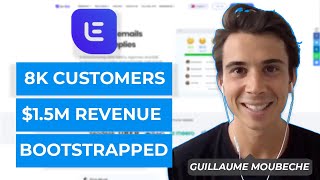
Lemlist interviewApr 19, 2019
hello everyone my guest today is guillaume mubash if you haven't heard of him or his company he's running a tool called lem list which is growing extremely quick he just broke two million bucks in ar maybe north of that uh it's a platform that helps sales teams book more meetings and close more deals with their prospects in less than two and a half years again they've grown that team to 8 000 plus customers without any funding totally bootstrapped he's also the founder of the sales automation family which he calls the coolest and biggest facebook community about sales automation guillaume ready to take you to the top of course i am nathan thanks for having me you do have a bit of a cool factor to you you stay very close to customers you record videos in that group every day you engage with them how do you have so much time to say so engage with 8 000 customers yeah i'm not alone first of all so i have a great team helping me out but i think for me it has always been important that our users are really successful so i invest all my time and energy in that specific purpose and i don't do anything else so i try to say no to many things that are irrelevant to to helping our customers and so my focus is very narrow what's like the number one thing that you get asked about that you have to just continue to decline over and over again um i guess like i keep helping i don't do that to all for all of our customers but i keep helping people if they are in need you know for advice on how to set up you know their outbound pipeline so that's something where i'm doing like kind of like free consulting sessions uh depending on on some customers where i could just like spend maybe like uh either 20 minutes recording a video for a customer like going through his cold email templates see how things are set up all these type of things and always trying to help but i think it's also part of the dna of the team so now i'm not the only one doing this and it's easier to scale i would say what does the team look like today how many folks so we were like uh 12 people when we reached 2 million in arr and in september 2020 we're gonna be 19 people okay so 12 right now how many engineers uh engineer team is my two co-founder plus uh two more people and three more people now so it's five total five total interesting and do you have any quota carrying sales reps or no they're just they just focus on helping helping your customers uh so we have like two person in the support that i'm gonna call like outreach experts uh we have one uh sales like sdr uh who's in charge of outbound prospecting and then the rest is more like growth and marketing so content and uh helping users to to basically find the best resources and be successful in their sales uh sales prospecting do any of them carry a quota or no uh what do you mean like the for the sale sales target yeah yeah of course yeah like uh rsdr like she has a quota of of deal that she's too close okay so there's one quota carrying person sort of on your team yeah and then it's more like we have objectives and goals but based on the growth like monthly growth so everyone is basically like incentivized on the same goal which is mrr how do you incentivize that it's not easy to get these incentive structures right yeah so we do that uh per quarter so we have like we do that exactly the same as way like we incentivize like sales team so it's uh for example because i know a lot of people you know they're trying to put bonuses on number of qualified leads marketing qualified leads says qualify leads but i think this is a bit i think it's too complicated and i think people tend to always optimize things based on so for example if i tell you you need to reach that that amount of marketing qualified leads what you're going to try to do is book let's say as many meetings you can for your sales team however the quality of the lead is not going to be that great however if everyone is focused on growing the mrr and then we set up like the mrr goal at the beginning of each quarter now everyone is focused on one thing which is revenue and revenue for us equals profit so it's like everyone goes to the same direction and i think it's like it's a better way to incentivize so we have like different levels and each level you reach you will get a bonus and then you have like a higher level than higher bonuses can you walk us through this a bit more so june uh ended the second quarter you guys it sounds like broke that two million run rate right around there that's an easy number to talk to so your team meeting at the end of q2 and you're setting goals for q3 what is the new mri target for q3 q4 yeah so i our goal essentially was to do like a 5x from december 2019 up to like uh december 2020. so the the monthly goal is i think it's around like uh 14 to 60 each month month-over-month growth rate so i think it's 16 to reach like 5x more or less and basically like this is the goal for the year so we don't really adapt anything uh so the growth for example if it's faster and then we cut it per quarter so for example if the growth was like faster in let's say i don't know like uh april and march or like in q2 if the growth is faster than 16 then you know like the the goal at the end of uh of q3 it would still be the same as i decided at the beginning of the year i see so what what was revenue in december of 2019 so in december 2019 we were around a bit less than a million yeah so i think it was like a 600k or something like that yeah yeah so so it's six times yeah well it's something like uh yeah 600k arr or something yeah because so you came on in in march of last year and you were at about 250 000 in an mrr so through last year you you three x or maybe more than three x what you're saying is between december of last year when you're at 600 in ar and two or three months from now and december of this year that's crazy by the way we're like three months four months left in the year but end of this year you want to be up in the like you know 2.53 million ar range yeah exactly yeah yeah yeah what's the reward how do you incent the team so let's say they hit everyone hits the goal what's the reward uh they get like a bonus on their salary and a big smile i like the smile part but there are people that are going to listen to this and they're going to want to aren't going to want to copy you because they're going to like the model they're going to agree with you that like mql you know things are like to incentivize these things so let's say let's not talk about any one of your individual employees but let's say i was one of your employees and my base was 50 000 a year just hypothetically and we hit this goal what would i make on top of the 50k uh so the goal the goal is basically uh let me say it's like 25 so it's it's uh every quarter you can get 25 of your salary of your monthly salary every quarter i can get yeah so what is that what would that mean let's make my salary easier let's say it's a hundred grand the numbers are just easier so what would it actually mean so it would mean that uh you can so if it's a hundred grand it means let's say let's say 120 so it's 10k each month yeah uh it would essentially mean that per year if you reach your goal you can get like a bonus a bit higher than 10 percent at the end of the year if you reach your goal each quarter the total would be a bit more than 10 so a bit more than 10k i see i see i see so if i help the team hit our 15 to 16 monthly growth goal or 5x year over year goal i will make an extra maybe 12 grand on my 120k salary yeah exactly exactly and the only reason i would uh readjust the goal uh is if the first two quarter we wouldn't eat the the target so for example because i know like q1 is really strong q2 is also really strong for us i know q3 is uh sometimes a bit like less strong because you have july and august where those are the months where we see like we sometimes see like uh small companies especially like cheap french bastards that usually decide to churn and come back in september so it's uh it's uh it's usually like a bit less gross in july august more people on holiday but then i know like uh september is strong and then again december is a bit less strong but i know october and november are really strong as well interesting okay so how many customers are you now serving today so regarding our customers so we we launched you know on hapswimo so essentially like that was kind of like our let's say a bootstrap round of funding and and at that time we had uh so i would say like eight thousand something customers and basically now uh you would add so those were not recurring if we're mainly like a lifetime user in recurring we have like more than three thousand companies paying on a on a monthly basis and total customer is more than ten thousand got it yeah so three thousand recurring and then you have five six seven eight thousand or so from that absolute lifetime yeah exactly yeah i see did you uncover any strategy that was particularly effective and converting the appsumo one-timers to true recurring plans a lot of people that go through absolutely the ones that love it are the ones that convert them to recurring well the ones that hate it are the ones that don't end up converting them well yeah i think it's very tough to convert a lifetime deal user into a paying customers the only way to do that would be like to frustrate most of them and say like try to upsell them on specif on specific feature for us we're really like uh very honest in what we served when we decided to make that lifetime deal so we said you're gonna get all the upgrades because that's why you know we decided like we launched with you guys you helped us have the foundation of our community and we're okay with that we could be like very sneaky and try to say like yeah if you want to get that type of feature you have to become like you're paying customers and i'm sure we could convert some of them but i wouldn't feel like fair so i prefer having them are really like strong advocate advocates and just keep focusing on getting like more people because the market is like so huge we don't really need to to go after those customers i think and remind everyone so when you did launch on appsumo what was the lifetime plan do you remember how much yes it was like uh they were paying like 49 uh to get like the the lifetime at that time we were not charging any of our customers so it was actually like the best way for us to launch and start making money getting users get feedback and within two weeks we made something around like 170 000 which was like really good you know like to start a sas company it's uh it's quite nice that was net to you after the absolute fee right no no no so that was like a revenue and appsumo took around like 70 of that but then we did another round with optimal and uh we made like uh we made another like two hundred and thousand two hundred thousand dollar sales and i think so total total with appsumo essentially we made i think uh 150k yeah yeah i was going to say doing the math you take 49 bucks for that lifetime deal times 8 000 customers is basically 400 000 in total sales yeah absolutely keeping about 70 percent you would make somewhere in the 100 150k from that yeah yeah exactly yeah yeah secondary was a bit different uh percentage but yeah around that uh yeah no good good way to a good way to do it if you can make the make the numbers work so okay so 3 000 recurring customers now today and what are they paying on average per month uh so right now they're around like um yeah something in dollars it would be maybe like 60 or something okay and what do they get so we haven't actually talked about what lemlis does what does lemons do what are they paying for so lemnis basically allows you to automate your multi-channel outreach strategy so you can start sending emails sending like messages on linkedin uh create tasks you know for your sales team so they can do calls as well that's like the the latest version of lemnist which is called lemnis 3.0 where we're basically like we have onboarded about like 200 companies on that on that latest version uh and it's not live for everyone yet because initially as you know we were just focusing on cold emails and now we're expanding towards like the entire like sales automation because as you can guess we're going a bit of market on the on the customers uh so yeah and any uh you you're still bootstrapped right yeah still bootstrap so basically like um right now we're making you know like each month uh we're making a bit more than a hundred thousand dollar profits yeah uh so because like our fixed costs are very small like we spend only money on the servers we don't spend any money on paid ads or paid acquisition or anything else and our employees are contractors so essentially it's like are the the biggest chunk of the fixed cost is basically the the founder salary yeah the rest is profit and in the bank so we're pretty like happy with cash what do you so what do you as a founder that i assume you and your two other co-founders you guys own 100 company basically right yeah we all have like a third of the company yeah so when you guys get together and go hey guys we have an extra 100 grand in the bank now there's like 700 grand sitting in the bank that's obviously not a good use of cash let it just sit there outside of making you feel comfortable which there is value to that but what do you do with it do you give it out as dividends do you reinvest it what do you do with it yeah so we we take we take the cash for ourself and uh and make like uh so first thing is uh we try to make ourselves very comfortable because as you said i think like being in the being in comfort with your company i think it's quite nice because you make like smarter decision uh second is give ourselves dividends and do like some of our personal investments so buying houses etc and then obviously it's a it's a big part right now especially with a new strategy and it's to invest in hiring more people so that's why you know we go like from 12 to like 19 in in the next months it's basically to start growing hiring and building like better processes to grow to keep the same growth rate essentially what would you value the company at today if you were going to value it i think to be honest like uh it's basically like let's say we're at i mean we're in north of 2 million er but i think it's like seven million seven to eight million um if i have to be very like uh reasonable i would say because um it would be like something if you if you're like super reasonable on our market and based on our growth i would say like three to four x arr is uh something that's like the would say low end 5x would be ins so yeah so someone listening right now there's a lot of private every folks that listen came and offered seven million all cash up front so it's a clean deal no burnout i mean would you have to think seriously about that with your co-founders uh no no no it's uh it's just because like our strategy is uh is really like long term and uh there is so many things that needs to be changed in the especially in the sales automation space where i i really feel like um a lot of people have said so much about the entire you know like uh sales field overall it's um i think there's a lot of wrong things you know like a lot of people think that to be a good salesman you need to be like a man you need to be strong you need to play sports etc etc but actually when you look at you know like all the studies you see that best salespeople are introvert best salespeople are usually women and you are like it's for me it's like just a fake image of what sales is about lots of people think that sales you know it's like abc always be closing actually it's the opposite you know you should always be helping people try to provide as much value as possible etc and i think like we have so many like so much more to do in that space that we want to stay and grow the company for at least like three to five years and later on when i would feel like we've done a great job and things are changing maybe you know i'll consider like an exit can you correlate your belief that the current knowledge out there about sales is not accurate with real product decisions you made in the past four months at lemlis can you talk about one of them yeah definitely so if for example if you look like at uh at most companies what they're saying and their tagline is like put yourselves on autopilot first of all like that's that's what they focused on we focus on the relationship and an implementation was our key differentiator so from day one we implemented dynamic photos and videos that you could implement straight into your emails just to make the email more human and we started you know from the from the ground up in the product building our product around that helping people you know like a build warmer relationship giving them tips within the product right now we're also gonna start like putting some gamification within the task people have to do and because i think like sales is amazing for gamification because the the better you do actions and spend time on researching your prospect the higher your booking rate is going to be and hence your bonus will be higher as well so i think it's like literally the best place to have fun while doing something you know like and care about people and uh and that's basically all the things we we're implementing so small things within the platforms that makes it more human like little comments whenever you're doing specific actions etc etc just so so people feel more comfortable and uh happier in their job also our customers sticking once they start paying what's your revenue trend look like on a gross basis so like for me i don't think it's a question we can answer like straight to the point just because like it's um i prefer answering in terms of persona and churn so basically sales team that are with more than salespeople more than five sales people so from five to let's say 30 or 50 that's kind of our sweet spot and those people are not churning like we have negative net mr churn so something around like minus five minutes six percent uh however if you look at also a big chunk of our business which are a smaller um smaller like uh business so i would say like startup less than 10 people etc the churn is around like maybe 10 but the net mrr churn is basically around like maybe three to four percent because we see those people for example as i said they're gonna say hey guys we love the product uh we're churning because it's august but no worries we're coming back in september and they come back in september you know and sometimes it's like oh yeah we finished our campaigns we're gonna come back in one or two months and you see them come back so every time i look at the so we have like a questionnaire when someone turns and every time i see like someone leaving it's usually because they're gonna come back and they're just short on cash or just you know like watching their standings but for the customers we're really targeting and where we're really focusing they don't leave what are you paying fully weighted to get a new 80 dollar month customer would you would you say uh so our cac it's difficult because as i said like we don't spend anything on ads so our cache is more linked to let's say like the the time we spent and based on our salaries so i don't i don't really put a number on it to be honest i could say you know based on the based on you know like uh how many community managers you have or something yeah exactly so i know for example our sales rep for example she's gonna bring like uh yeah she's gonna bring so i would say like yeah it depends again on the size of the customers but she can bring maybe like 40 to 250 like new seats uh every every month uh so it's like uh something around like 2k divided by 50 you see so it's like 40 bucks something like that obviously that those make a lot of sense um last question i want to talk to you about before we wrap up you there's a lot of b2b sas brands that are trying to create communities some just flop and it's horrendous others do extremely well i put you in the extremely well category just watching you build community what's sort of been there is no secret i mean it's hard work and it takes a little it's clear it takes a lot of your time but where should a founder want to do what you do in terms of community building where should they spend the majority of their time to be honest i think it's really like uh first it's spending time with your users and understanding what their need is and then is keep providing value and don't get discouraged because like right now when people like go to our community they see like almost 10 000 people they see the videos that i post get like thousands of you a lot of engagements are like oh yeah it's a great community if you scroll down to the very very bottom of the videos i was posting videos with like 10 views uh one card i remember i remember those and i'm like i'm gonna watch it carefully and see if he stays consistent and that's gonna be the leading indicator of if two years from now these are gonna be getting 10k views yeah so you see like it's it's really i think about consistency and again like for me community has never been something where i wanted to measure like the roi i just know within like me that it's gonna bring something long-term and if i keep providing value to our users because you know like i see a lot of people and a lot of companies that want to be like super data driven and i like it but i think in some cases it's not possible hey for example if you just say like okay what's what's the benefit of someone in the community you could measure people in the community that became customers fine that's a good indicator but do you measure all the people from the community that are talking to other people about your brand so it's like you're going to put that in word of mouth when actually it comes from the community yeah so it's um for me it's a bit complex and i think it's uh at some point you know as a business owner when you think you're doing the right thing you just go with it and and and stick to it tactical question here where in your onboarding process do you let people know about the facebook community encourage them to join it's uh around the second email i think yeah okay so which is how many days usually after they start to try out two days two days yeah two days interesting yeah to the community do you know off top of your head if you send 100 of those emails in a day how many will go join the community i think it's uh yeah around like 10 we have 10 click rates so it's it's around that number that's healthy and why facebook versus a slack group or comsar or one of these other platforms linkedin groups so linkedin groups are terrible uh linkedin are they are like so bad with it like the reach is is just very very sad i think facebook is great because you can do live stream in facebook and you get also like the all the basically live streaming in facebook is very easy because you have people asking questions you also keep the video on facebook so you have the like the social proofs etc uh that's something i don't see in slack it's basically the social proof which i think sometimes is lacking and for example i know that everyone goes on facebook and on messenger whereas i wouldn't go unfair on slack just you know to chill and be in a very friendly way like i have some slack communities that i visit but my life is more on facebook if i want to see like updates from friends instagram as well but still you know oh good you guys got to check out this guy's instagram he's going to make you feel like he's telling that he makes me feel fat and tired and sleepy with all the running and canoeing and basketballing and all this stuff all right guillaume let's wrap up with the famous five number one what's your favorite business book uh actually like i read the lost and thunder from renfishkin really enjoyed it so i highly recommend it number two is there a ceo you're following or studying besides rand i like to follow you nice and to be honest i'm all kinds of crazy be careful no no really because in terms of content creation and also how you manage your uh schedule and everything i think it's it's quite impressive thank you it's nice of you number three besides lemlis what's your favorite online tool for building the company uh notion notion is really like the best tool like for the team building processes et cetera it's uh our go-to tool yeah how many hours of sleep do you eat every night uh eight a good eight yeah that's good and situation married single kids uh single okay uh any no kids running around no kids that i know of and how old are you i'm 29 29 la all right last question what's something you wish you knew nine years ago when you were 20 uh start your own company sooner just go out there fail fail and then one day eventually you you get you get there guys lemlis is helping sales team do sales the right way you don't have to be extroverted you don't have to be crazy you don't have to always be closing you can just add value he's building a product with that in mind they were doing about six hundred thousand dollars in terms of ar back in december of 2019 now just call it eight nine months later they're already up to about two million in ar with eyes on 2.5 or 3 million in ar by the end of this year they've done this all boots drop profiting almost 100 grand per month going to the bottom line team of 12 people five engineers uh one quota carrying sales rep plans to expand the team here to introduce some new product lines but recently lemons 3.0 just came out encourage you guys to check it out guillaume thanks for taking us to the top thanks a lot nathan one more thing before you go we have a brand new show every thursday at 1 pm central it's called shark tank for sas we call it deal or bust one founder comes on three hungry buyers they try and do a deal live and the founder shares back end dashboards their expenses their revenue arpu cac ltv you name it they share it and the buyers try and make a deal live it is fun to watch every thursday 1 pm central additionally remember these recorded founder interviews go live we release them here on youtube every day at 2 p.m central to make sure you don't miss any of that make sure you click the subscribe button below here on youtube the big red button and then click the little bell notification to make sure you get notifications when we do go live i wouldn't want you to miss breaking news in the sas world whether it's an acquisition a big fundraise a big sale a big profitability statement or something else i don't want you to miss it additionally if you want to take this conversation deeper and further we have by far the largest private slack community for b2b sas founders you want to get in there we've probably talked about your tool if you're running a company or your firm if you're investing you can go in there and quickly search and see what people are saying sign up for that at nathan laca dot com forward slash slack in the meantime i'm hanging out with you here on youtube i'll be in the comments for the next 30 minutes feel free to let me know what you thought about this episode if you enjoyed it click the thumbs up we get a lot of haters that are mad at how aggressive i am on these shows but i do it so that we can all learn we have to counter those people we got to push them away click the thumbs up below to counter them and know that i appreciate your guys's support all right i'll be in the comments see ya
Read More About Lemlist
Data and Sources
All figures on this page are taken directly from interviews or are estimates from public sources and proprietary models. Not financial advice. Read full disclaimer.
Claim this profilePeople Also Viewed

Jala University
At Jala University, we work directly with leading companies in the tech industry that support emerging talent through full scholarships. We have been providing training programs for professionals and engineering students for over 20 years, aiming to align their skills with High-Tech industry.

relaypro.com
Relay is a cloud-based communication platform that offers team communications, operational insights, and workers safety for the leaders, transforming frontline operations with innovative communication and safety solutions.

CloudHQ
CloudHQ is an online service offering email productivity workflow solutions and cloud sync and backup solutions. It also designs, builds, and operates mission-critical data centers.

Rival
Rival is a leading provider of human capital management solutions that enable organizations to simplify talent acquisition, modernize HR workflows and accelerate workforce productivity.

XIUS
XIUS is a global leader in Mobile Infrastructure and Mobile Banking & Payment solutions and services, adding value to service provider networks, while strengthening customer relationships. XIUS brings together premium technology and outstanding value-added solutions with support for business intelligence. Our 25 years of expertise is proven by more than 200 network deployments and customers that include global tier one mobile operators. The company’s belief in innovation reflects in the filing of 120 patent applications, with 35 awarded to date. XIUS Mobile Infrastructure Solutions and Services dramatically enhance the way service providers across an array of industries deliver and capitalize upon next-generation mobile services. (a) XIUS Mobile Services Platform offers a complete suite of cost-competitive and reliable infrastructure options that enable real-time rating and billing. (b) XIUS is best positioned to enable service providers navigate an increasingly complex mobile ecosystem by allowing to launch branded mobile services. (c) MSP provides end-to-end infrastructure for 3G/4G Mobile Operators, MVNE/MVNOs, Converged Broadband 4G/LTE Service Providers, Mobile Operator Wholesale Departments, and M2M Service Providers. XIUS Mobile Banking and Payments Solutions enable value-based relationships for financial institutions, government agencies, mobile operators and their customers that directly lead to improved customer loyalty and increased revenues. (a) Payment Manager gives operators the power to conveniently recharge mobile prepaid accounts, provide international recharge capabilities, and manage their distribution network. (b) Mobile Wallet allows operators, government agencies and other institutions to deliver secure and cost-effective methods of payment, while introducing cost savings and new recurring revenue streams. (c) Mobile Banking platform gives financial institutions the power to provide state-of-the-art mobile banking services.

CareSkore
Developer of a predictive and prescriptive population health management platform intended to transform the way providers help patients across the continuum of care. The company's platform offers patient management services, cost optimization services, workflow management and automated patient outreach services by aggregating and normalizing data through machine learning, enabling clients to manage population with real time assessments.