
Founder Interview
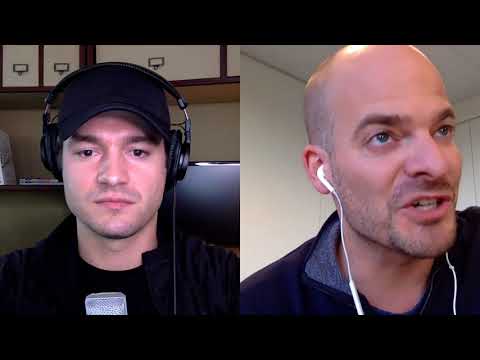
How Showpad Crossed $30M ARR Growing 70 to 75% a Year (2018 Interview with Co-Founder and CEO Pieterjan Bouten)
- Interview Date
- February 21, 2018
- Interviewee
- Pieterjan BoutenCo-Founder and CEO
Company Metrics at Interview Time
ARR (2017)
$30M
Net Revenue Retention (2017)
130%
Total Funding Raised
About $90M
Avg Contract Value (2018)
$30K
Historical Snapshot
These numbers were reported by Pieterjan Bouten during the interview recorded in February 2018 and are a historical snapshot, not current figures. See Showpad’s current numbers.
Key Takeaways
- 01Year-over-year growth was 70 to 75% at the time of the interview
- 02Net revenue retention was 130% in 2017, driven by aggressive upselling of the existing customer base
- 03Gross revenue churn was in the single digits annually
- 04Average contract value was $30,000 per year on annual contracts paid upfront
- 05Three customers were paying over $1M a year, and a couple more were in the $500K to $600K range
- 06CAC payback period was close to 2 years, in the one and a half to two year range
- 07Showpad had raised a total of approximately $90M, including a $25M round closed just weeks before the interview
- 08The company bootstrapped to $400K in ARR before raising its first round of €1.5M in 2013
Company Metrics at Time of Interview
| Metric | Value | Source |
|---|---|---|
| ARR (2017) | $30M | Founder interview, Feb 2018 |
| YoY Growth (2017) | 70% to 75% | Founder interview, Feb 2018 |
| Net Revenue Retention (2017) | 130% | Founder interview, Feb 2018 |
| Gross Revenue Churn (2017) | Single digit annually | Founder interview, Feb 2018 |
| Average Contract Value (2018) | $30K | Founder interview, Feb 2018 |
| Biggest Customer Annual Contract (2018) | $1M | Founder interview, Feb 2018 |
| LTV to CAC Ratio (2018) | 4x | Founder interview, Feb 2018 |
| CAC Payback Period (2018) | Close to 2 years (one and a half to two years) | Founder interview, Feb 2018 |
| Total Funding Raised | About $90M | Founder interview, Feb 2018 |
| Most Recent Funding Round (2018) | $25M | Founder interview, Feb 2018 |
| Prior Funding Round (2016) | $50M | Founder interview, Feb 2018 |
| First Funding Round (2013) | €1.5M | Founder interview, Feb 2018 |
| ARR at First Raise (2013) | $400K | Founder interview, Feb 2018 |
| Year Founded | 2011 | Founder interview, Feb 2018 |
| Quota Carrying Sales Reps (2018) | 35 | Founder interview, Feb 2018 |
| Enterprise Sales Quota (at full ramp) (2018) | $1M new ARR per year | Founder interview, Feb 2018 |
| Mid-Market Sales Quota (at full ramp) (2018) | $600K new ARR per year | Founder interview, Feb 2018 |
| Team Size (2018) | North of 250 | Founder interview, Feb 2018 |
Growth Breakdown
Revenue
Showpad crossed $30M in ARR at the end of 2017, growing at 70 to 75% year over year. The company bootstrapped to $400K in ARR before raising outside capital in 2013, and had scaled steadily through a combination of direct sales and strong net revenue retention of 130%.
Customers
Showpad had a thousand paying customers in about 50 countries at the time of the interview, with an average contract value of about $30K a year on annual contracts paid upfront. Three customers were paying over $1M a year, a couple were in the $500K to $600K range, and smaller mid-sized companies paid $10,000 to $20,000 a year.
Team
The team was north of 250 people at the time of the interview, spread across offices in Ghent (150 people), San Francisco (50 people), Portland (about 30 people), Chicago (about 20 people), and London (20 to 30 people). The sales organization included 35 quota-carrying account executives and approximately 30 SDRs and BDRs across both continents.
Funding
Showpad had raised approximately $90M in total by the time of the interview. The most recent round was $25M, closed just weeks before the recording, following a $50M round in 2016. The company's existing investor participated in the latest round, which Pieterjan said came at double the valuation the company got the year before.
Growth Strategy
Direct Sales as the Primary Channel
Showpad relied entirely on direct sales with no resellers or channel partners. The go-to-market motion was split between mid-market (companies with up to 2,000 employees) and enterprise (2,000 and above), with a small global enterprise account team focused on named accounts.
Inbound Nurturing and Webinars
Rather than cold outbound email, Showpad shifted to nurturing inbound leads based on activity levels, then reaching out proactively by phone or inviting prospects to webinars and events.
Integrations Where Reps Already Work
Showpad had integrations with Salesforce and plugins for Gmail and Outlook, so reps who worked behind a laptop or inside the CRM could use it there. It was in the Salesforce AppExchange and the Box ecosystem and integrated with many content management solutions, but Pieterjan said the AppExchange was not about acquisition: direct sales was the main channel. A Marketo integration was launching soon, with a move into marketing automation to follow.
Aggressive Upselling of Existing Customers
Net revenue retention of 130% in 2017 reflected a deliberate focus on expanding existing accounts through product innovation and improved upsell motions. Pieterjan described this as a combination of new product capabilities and getting better at selling them to current customers.
Early Mobile Focus as a Beachhead
Showpad differentiated early by building an enterprise-grade, fully branded mobile experience at a time when competitors had not yet done so. This focus on stability, speed, and a clean interface on mobile devices attracted larger enterprise customers from the start, and Pieterjan called it a very big difference.
Best Quotes
“Showpad, we're a sales enablement platform. We're focused on first of all making sure marketing understands how to influence the sales cycle, so it's about making sure that they can equip sales with the latest materials, make sure salespeople can deliver great presentations, have more value added conversations, and that they understand how that's driving revenue.”
“Our ACV right now is about 30 ks. $30,000 a year. We work with annual contracts, it's paid upfront.”
“Our biggest customer is at 1,000,000. We have now three customers who are over 1,000,000 per year. We have a couple of customers in the 500 ks, 600 ks range per year.”
“Yep, 30,000,000 in ARR. We crossed that mark end of the year.”
“We've grown the business about 70, 75% year over year.”
“And net retention is 130%, or was 130% in that last year. So basically means we're upselling our existing customer base like crazy, and that's a combination of product innovation, and then obviously getting better at selling it.”
“Our LTV is actually now around the 200 ks mark.”
“Yeah. We look at it. I mean now it's, you know, it's depending on the... I mean average across Showpad it's about... It's close to 2 years, so it's in the one and a half to two year range.”
“We raised 50,000,000 in 2016, which is a pretty big round, and then about the end of last year we got a lot of interest from several VCs who were not in the company. They were putting out term sheets, we actually didn't need the money, but we then decided, hey, you know what, if there's interest and we can raise money at good terms, our existing investor was willing to put in additional cash.”
“First round was 2013. So the first two years, we bootstrapped the business. We got to 400 k ... in ARR before we raised our first round.”
What Happened Next
At the time of this interview in February 2018, Showpad had just closed a $25M funding round and was reporting $30M in ARR with strong year-over-year growth. Pieterjan Bouten described a company focused on scaling its direct sales motion across mid-market and enterprise segments in both North America and Europe. Visit the Showpad company profile on GetLatka for its funding history and current figures.
View Showpad’s current profile and metricsFull Transcript
Chapters
- 0:00Introduction and Guest Background
- 0:24What Showpad Does and How It Makes Money
- 2:36Pricing and Average Contract Value
- 3:04Customer Size and Deal Range
- 3:35ARR and Revenue Milestone
- 3:44Year-Over-Year Growth Rate
- 4:02Founding Story and Origin of Showpad
- 5:33Growth Drivers and Product Differentiation
- 8:38Sales Team Structure and Outbound Motion
- 12:43CAC Payback Period and Unit Economics
- 15:34Funding History and Total Capital Raised
- 16:01Most Recent Round and Valuation Signal
- 16:55Famous Five Rapid-Fire Questions
Introduction and Guest Background
Nathan Latka
00:00Hello, everybody. My guest today is PJ Bouten. He's... Is the CEO and founder of a company called Showpad. It's the second company he's founded. In 2010, he cofounded the mobile development agency In The Pocket and still serves on its board. Prior to In The Pocket, he held senior roles at Netlog and Accenture and holds master's degrees in both communication sciences and international business. PJ, are you ready to take us to the top?
Pieterjan Bouten
00:22Yes, let's go for it.
What Showpad Does and How It Makes Money
Nathan Latka
00:24All right, good. Tell us about Showpad. What's it do and how do you make money?
Pieterjan Bouten
00:28Showpad, we're a sales enablement platform. We're focused on first of all making sure marketing understands how to influence the sales cycle, so it's about making sure that they can equip sales with the latest materials, make sure salespeople can deliver great presentations, have more value added conversations, and that they understand how that's driving revenue. Then for salespeople, we're making sales teams more productive. So it's reducing admin time, increasing selling time, making them more relevant, make sure that
01:02they can actually deliver the very best buyer experience. We're focused on B2B, a thousand customers in about 50 countries.
Nathan Latka
01:11Okay, those are paying, right, not free?
Pieterjan Bouten
01:14Paying customers, Got it.
Nathan Latka
01:16Just to be clear, should think about this like, we all have this problem. We have 10,000 PowerPoints created over two, three years in the beginning of a company, and we never know where we store them or what worked in terms of closing a sale or whatnot. When we need them today, don't know where to find them. That's like one big use case for your platform, right?
Pieterjan Bouten
01:35That's a big use case. I mean, from SMBs to big enterprise companies, the same is happening everywhere. Salespeople are downloading content, they're changing slides, they store it on their hard drives, you have Box, you have SharePoint, you have other shared drives, it's just a big big mess. At Showpad, we want to be the single source of truth for salespeople, making it easier for marketing to create what we call buyer experiences. So think about from simple folder
02:05file structures in a branded environment to easily find the content, to really guided selling, highly interactive ways of presenting materials, sharing materials, asking questions to the customer, and then getting to that right piece of content. We want to do that wherever a salesperson needs to get the job done. We have customers who have big inside sales teams, and who mainly do their work behind the laptop, or in Salesforce, or in the CRM system. So we have
02:32integrations with Salesforce, and Gmail plugins and Outlook plugins.
Pricing and Average Contract Value
Nathan Latka
02:36So PJ, give me...
02:37I want to get
02:37more of your backstory here because you have some history, which is great. Give me just a quick sense. The average customer is paying you what per month?
Pieterjan Bouten
02:45Our ACV right now is about 30 ks. $30,000 a year. We work with annual contracts, it's paid upfront.
Nathan Latka
02:52So that's about $2,500 a month?
Pieterjan Bouten
02:55Yes,
Nathan Latka
02:57And something like how are you getting that number? Because on your pricing page it's 35 per user per month, 45, are you selling just big seat deals to enterprises?
Customer Size and Deal Range
Pieterjan Bouten
03:04Big seat deals to enterprise. Our biggest customer is at 1,000,000. We have now three customers who are over 1,000,000 per year. We have a couple of customers in the 500 ks, 600 ks range per year.
03:19Then we have smaller mid sized companies with maybe, you know, who pay us $10,000 to $20,000 a year.
Nathan Latka
03:25Yeah, yeah. I mean with a thousand people at the average ACV you just told me, I mean you're well north of, call it, well you're doing about $2,500,000 a month and about 30,000,000 in ARR, correct?
ARR and Revenue Milestone
Pieterjan Bouten
03:35Yep, 30,000,000 in ARR. We crossed that mark end of the year.
Nathan Latka
03:38Congratulations, that's exciting. What does growth look like? If you go back thirteen months, what were you at?
Year-Over-Year Growth Rate
Pieterjan Bouten
03:44We've grown the business about 70, 75% year over year.
Nathan Latka
03:48Okay. So you were about 20,000,000 thirteen months ago, ARR run rate.
Pieterjan Bouten
03:53Yeah, something like that. Maybe even, yeah, yeah, something like that.
Nathan Latka
03:56That's good. Okay, well that's great. Let's dig into kind of how you've driven the success. So take us back to year one. When did you launch the company?
Founding Story and Origin of Showpad
Pieterjan Bouten
04:02We launched the company 2011 on the back of the first company I founded, it was called In The Pocket, you mentioned it in your introduction, service business. I founded a company together with Louis, my co founder, and we had an app developer service business. We had companies coming to us with various requests. At that time, again it's 2010, iPhone was just I think three years out, something like that. iPad was just launched or about to launch,
04:33and so a lot of companies came to us like hey, we want to get our content on mobile devices, or we want to have products and services optimized for these devices, or please develop as an application. So we had a company come to us say, hey, we have a sales team, we have a big trade show, we want to stop using paper, can you develop us an application to make them present materials on a booth and
04:54easily share it with the customer? As we started looking into that problem and how that company used content and what the challenges were, we actually discovered like, hey, it's not just a problem for this company. There's many companies that create a ton of content that are struggling with equipping reps with relevant piece Yeah, of
Nathan Latka
05:16P. J, that makes total sense, but I want to tell me more about the growth though. There's a lot of companies in this space. One that comes to my head immediately that we had on recently is Slidebean, but they're nowhere near your size. From all the people I've interviewed where they give me ARR numbers, you're way ahead of these guys. Why? Is it just who you're selling to?
Growth Drivers and Product Differentiation
Pieterjan Bouten
05:33No, it starts with a great product first of all, so I think we've delivered something that time to value is clear.
05:42We solve a true problem for both marketing and sales, so it's not only sales focused or marketing focused. It makes it a bit harder to sell, but your deal sizes from the start, from the first week we had bigger customers approach us
Nathan Latka
05:54Can you be specific though, give me like name one feature that these bigger customers appreciate that other competitors haven't developed?
Pieterjan Bouten
06:01I mean,
06:03think the very first feature back in the day, I'm now talking seven years ago, was the fact that Showpad was a fully branded environment. You could basically create your own application. At that time if you wanted to have your own app on your mobile device or iPad, you had to go to the app store and the whole submission, and companies were creating their own apps, Showpad you could through an interface, a web interface, marketing could create
06:32their own buyer experience at that time already, backgrounds, own logo, create this really interactive environment for sellers to sell, and it was something at that time it sounds simple, but nobody had it, and it was quite hard back in the day. Remember the first applications would constantly crash on your phone and on your iPad, and we're talking here B2B enterprise. We're selling to bigger companies. They don't want to equip their sales team with something, and at
07:01that time we were mobile focused. Now today we're a bigger platform and we do more, but at that time the fact that we had an enterprise grade application which was super stable, super snappy, simple interface, it had all the content, branded environment. It wasn't like that we had one magic feature that really triggered those customers to buy it. Was the fact that
Nathan Latka
07:23Yeah, mean PJ, just be clear, there's never a silver bullet, but you made incremental changes, 2% changes over time that have added up. I'm trying to identify some of those early 2% changes. What I'm hearing is your hyper focus on mobile early on was a big differentiator Yep. And that was really the start.
Pieterjan Bouten
07:39Yep. Yeah. For sure. Was definitely a a very big difference here.
Nathan Latka
07:42Today, in terms of getting new customers, if I asked you, like, what distribution channel are you dominating? Are you in any kind of Salesforce app exchanges or any kind of channels where you're really killing it?
Pieterjan Bouten
07:53We're in the AppExchange. I mean it's not from an acquisition point of view, it's not our main focus. Our biggest channel is just direct sales. We do all of our sales directly. Don't have resellers, we don't have We are in the Salesforce ecosystem. We are in the Box ecosystem. We integrate with a ton of content management solutions. We integrate with Salesforce on the CRM side. We're launching our Marketo integration soon, and also going to go
08:22into marketing automation.
Nathan Latka
08:23But these aren't driving you new customers, you're just doing it integration Marketing,
Pieterjan Bouten
08:29yeah, we're doing it for integration sales, and our main channel is just direct marketing, and you know acquiring customers to our own marketing and own outbound efforts.
Sales Team Structure and Outbound Motion
Nathan Latka
08:38So tell me more about the outbound, let's break down the team today and how many of them are focused on outbound?
Pieterjan Bouten
08:43Have, so Showpad has an
08:47office in Ghent, 150 people here, then we have an office in Ghent.
Nathan Latka
08:51Country is that? Ghent?
Pieterjan Bouten
08:53Ghent, Belgium, sorry. Ghent, Belgium, that's where I'm actually calling you from today. So Showpad was founded here, Ghent, Belgium, 150 people here. We have 50 people in San Francisco, about 30 people in Portland, 20 people in Chicago that's growing, and then twenty-thirty people in London.
Nathan Latka
09:10So it's two eighty total, something like that?
Pieterjan Bouten
09:13Yeah, something like that, north of two fifty, growing quite fast. And then, so on the outbound side we have here in Ghent, have about 15 SDRs, or BDRs, business development reps, people who do outbound efforts. Their main focus is on bigger enterprise companies, so Showpad has a we go to market in a mid market and enterprise way, and so our BDRs here in Ghent target enterprise companies in the EMEA region. Have
Nathan Latka
09:43Where are you getting the leads from by the way? Are they inbound leads, or they're cold emailing?
Pieterjan Bouten
09:47It's called... We typically don't do cold emailing anymore. We've done it in the past. We've seen it's not highly effective. So it's a lot of inbound that we nurture, and then based on certain activity levels, we're going to have a more proactive approach in terms of getting in touch with them over the phone, or trying to get them to one of our webinars or events for So
Nathan Latka
10:12of the two eighty people, how many are dedicated to sales?
Pieterjan Bouten
10:17So we have about 35 AEs, or from upsell to new business, to quota carrying people, and then we're gonna have about 30,
10:31probably 30 SDRs or BDRs across both continents.
Nathan Latka
10:36Real quick diving into a lot of folks that are in the 15 to 20,000,000 range that are listening to the show are starting to really scale their sales. It sounds like you've come up with a formula, you kind of understand how it works because you have 35 quota carrying reps. First off, are they on the same quota or is it different depending on how long they've been there?
Pieterjan Bouten
10:53Obviously there's a ramp and the ramp will be different from mid market to enterprise, and for us the ramp for a typical mid market person will be, it will be close to six months before mid market is fully productive. For an enterprise, it will be closer to a year before you're on full quota.
Nathan Latka
11:11What is full quota for both those segments?
Pieterjan Bouten
11:14Full quota for Showpad and enterprise will be around 1,000,000 for enterprise sales, and will be around 600 k for mid So
Nathan Latka
11:21just to be clear, an enterprise salesperson at Showpad is expected at quota after a year to be hitting about a million new bucks in ARR and they're closing that over the course of twelve months?
Pieterjan Bouten
11:30Yes. Exactly.
Nathan Latka
11:31That's great. Did you, did you kind of nail that right off the spot or did it take you some editing to figure out ramp up periods and how many leads to give them and how many SDRs per
Pieterjan Bouten
11:41I would say it took a lot of going back and forth, and actually to be honest, you're still in many ways, I think as a sales organization, you're always going you're not making massive changes, but I think you always need to be focused on fine tuning the engine, and seeing what works and what doesn't work. For example, we've made some changes in terms of what is the cutoff point for mid market and enterprise. In the past,
12:06Showpad has mid market, so that's zero to 2,000 employees, then enterprise is 2,000 and beyond, but then we also have a global enterprise account team, and those are like four people focused on the really yeah, those are named accounts. Between the four of them, they have about a, I would say about a 100, probably you know, a 100 accounts that we're focused on either Got it. Closing or expanding. And so depending on obviously, and that then
12:39trickles down to how you market, how the BDRs work.
CAC Payback Period and Unit Economics
Nathan Latka
12:43When you look at like your fully weighted CAC, I know you have probably different cohort CACs, but on average, I mean, are you spending on CAC on these guys?
Pieterjan Bouten
12:52Our ratio, I don't know the exact numbers in terms of spend in the segments, I don't have them here, but our
13:03LTV over CAC is about four, ratio And what do you
Nathan Latka
13:06assume lifetime value is?
Pieterjan Bouten
13:09Our lifetime value, we calculate it based upon our gross retention, which is in the single digit churn.
Nathan Latka
13:16That's single digit annually and is it revenue or logo?
Pieterjan Bouten
13:19It's single digit annually and that's revenue.
Nathan Latka
13:22Okay, that's good.
Pieterjan Bouten
13:24And net retention is 130%, or was 130% in that last year. So basically means we're upselling our existing customer base like crazy, and that's a combination of product innovation, and then obviously getting better at selling it.
Nathan Latka
13:41Yeah. So just to be clear, if you're low single digits in terms of revenue churn annually, you know, let's call it your churn and 5% of your revenue annually. What you're saying is you're expanding revenue almost 35%. 5% makes up the loss, and then there's 30% on top of that to get your net revenue growth.
Pieterjan Bouten
13:57Yep.
Nathan Latka
13:57Yeah. Fascinating. Interesting. Okay. So your CAC LTV, you have a nice ratio there of four. With that kind of revenue churn, I mean, you must assume that these guys are worth at least four years of revenue to you, Call it like at least 120?
Pieterjan Bouten
14:12Yeah, our LTV is actually now around the 200 ks mark. So
Nathan Latka
14:18with a four ratio there, you're willing to spend up to $50,000 to acquire these guys fully weighted.
Pieterjan Bouten
14:22Yeah, for sure.
Nathan Latka
14:24And then how do you... Do you look at payback period a lot in terms of how quickly you get your money back or not?
Pieterjan Bouten
14:29Yeah. We look at it. I mean now it's, you know, it's depending on the... I mean average across Showpad it's about... It's close to 2 years, so it's in the one and a half to two year range. I think if you would break it down, you would see differences. Obviously, I think with enterprise, you can just afford a longer payback because churn is even lower in that segment, and lifetime value is way bigger. And so we're
14:53now I feel around the maturity that Showpad is right now, if you would talk to my marketing leader, sales leader, or for example Jason or COO, we're starting to like really be more focused on those metrics. I feel we've looked at them over the last years, but I feel at this stage is the first time that you can you know, since I think 2016 and '17 were the first two years that we... You to build up
15:21the data. Need to have enough revenue have enough customers
Nathan Latka
15:24to You have afford plenty of time though. I know people that have only been around two or three years that are raising huge amounts of money on two years of data. You've got seven years of So... Yeah. Okay. And and are you bootstrapped or have you raised capital?
Funding History and Total Capital Raised
Pieterjan Bouten
15:34We raised capital. How much? About $90,000,000.
Nathan Latka
15:39Okay. And when was the first round?
Pieterjan Bouten
15:41First round was 2013. So the first two years, we bootstrapped the business. We got to 400 k, $405,100 k in ARR before we raised our first round.
Nathan Latka
15:52Which was for how much?
Pieterjan Bouten
15:54Which was we raised €1,500,000.
Nathan Latka
15:57You went to the dark side PJ.
Pieterjan Bouten
15:59Yes, yes.
Most Recent Round and Valuation Signal
Nathan Latka
16:01And when was the last round, and what was the size?
Pieterjan Bouten
16:04Last round we did a $25,000,000 round just a couple of weeks ago.
Nathan Latka
16:09Oh, couple of weeks, congratulations.
Pieterjan Bouten
16:10Yep,
16:11Very good. So was kind of, let's see it as a, we raised 50,000,000 in 2016, which is a pretty big round, and then about the end of last year we got a lot of interest from several VCs who were not in the company. They were putting out term sheets, we actually didn't need the money, but we then decided, hey, you know what, if there's interest and we can raise money at good terms, our existing investor was
16:37willing to put in additional cash
Nathan Latka
16:39Sometimes people assume a round where you raise less than the previous round is a negative thing. They assume it's a negative signal. What you're saying is no, wasn't negative. We just had extra interest.
16:48That was not a down round, right? Was a higher valuation than the 50 It
Pieterjan Bouten
16:52was double the valuation that we got the year before.
Famous Five Rapid-Fire Questions
Nathan Latka
16:55That's great. That's awesome. Okay, good stuff. Let's wrap up here with the famous five number one. PJ, what's the last business book you read?
Pieterjan Bouten
17:02Last business book I've read is, was it Give Less Fucks?
Nathan Latka
17:07Mark Manson?
Pieterjan Bouten
17:08Mark Manson, yeah.
Nathan Latka
17:09Yeah, the subtle art of not giving a fuck, basically.
Pieterjan Bouten
17:12The subtle art of not giving a fuck. I liked it. So it was chunkable and sizable.
Nathan Latka
17:17Number two, is there a CEO that you follow or study?
Pieterjan Bouten
17:21Aaron Levy. I like what he's doing.
Nathan Latka
17:25Three, besides your own, is there a favorite online tool you have for building a business?
Pieterjan Bouten
17:30My favorite, I mean my favorite actually tool for growing the business is WhatsApp. I'm constantly on WhatsApp, just on my computer and on my phone.
Nathan Latka
17:38Number four, how many hours of sleep are you getting every night?
Pieterjan Bouten
17:41I get about seven.
Nathan Latka
17:43Seven, okay that's good. What's your situation, married, single, you have kids?
Pieterjan Bouten
17:46I'm married and I have two young kids.
Nathan Latka
17:48Oh, great. And how old are you PJ?
Pieterjan Bouten
17:51I'm 36.
Nathan Latka
17:5236.
17:53Last question. Take us back to your 20 year old self. What do wish he knew?
Pieterjan Bouten
17:58That, yeah, sometimes you need a bit more patience in life.
Nathan Latka
18:02There you guys have it from PJ. Be More Patient. He had a lot of successes, decided to go out on his own in 2011, went to about $400,000 in ARR before going out and doing their first $1,500,000 round, again helping enterprises manage their sales content, their sales communications, really starting on mobile, which gave them a great beachhead in the space. He since scaled a thousand customers paying an average 30,000 ACVs, so doing about 30,000,000 in ARR
18:27right now. That's up from about 20,000,000 in ARR just thirteen months ago. So healthy growth there, 70% year over year growth. 130% net revenue retention year over year, about five to 6% gross revenue churn. So healthy expansion there. CAC to LTV, super healthy ratio of four getting paid back in less than two years. Scale and fast. PJ, thanks for taking us to the top.
Pieterjan Bouten
18:45All right. You're welcome.