Latka logo

2024 Revenue

$1.8M

Funding

$0

YOY

50.3%

Team

12

Founded

1982

How Software Pricing Partners CEO Chris Mele grew Software Pricing Partners to $1.8M revenue with a 12 person team in 2024.

Out-price and out-perform your competitors

If you're in a B2B software business, pricing is the single most powerful variable under management control for driving growth, taking market share and maximizing value creation.

But many software companies are under-exploiting it. Thinking about pricing too late in product development cycles. Launching new pricing without fully activating other aspects of monetization-licensing, offering and salesforce engagement that amplify positive results.

Software Pricing Partners can help you power-up your pricing now. We'll show you how to develop innovative pricing strategies that delight customers (and derange competitors) while minimizing risk at every stage of the pricing process.

Visit our website for industry-leading resources and guidance to support your business growth., software pricing

Last updated

Software Pricing Partners Revenue

In 2024, Software Pricing Partners's revenue reached $1.8M. The company previously reported $1.2M in 2023. Since its launch in 1982, Software Pricing Partners has shown consistent revenue growth.

Software Pricing Partners Revenue GrowthReported revenue / ARR by year$0$400K$800K$1M$2M$2M1982198419861988199019921994199619982000200220042006200820102012201420162018202020222024$0$2MSource: GetLatka.com interview on Jul 26, 2022 with Software Pricing Partners CEO Chris Mele
YearMilestoneQuote
2024Software Pricing Partners Hit $1.8m revenue in October 2024
2023Software Pricing Partners Hit $1.2m revenue in December 2023
2021Software Pricing Partners Hit $840k revenue in April 2021
1982Launched with $0 revenue

Software Pricing Partners Valuation, Funding Rounds

Software Pricing Partners is a bootstrapped Consulting & Advisory startup. Founded in 1982, Software Pricing Partners has grown to $1.8M in revenue without raising any venture capital or outside funding.

As a self-funded Consulting & Advisory SaaS company, Software Pricing Partners has built its business with no outside investment.

Software Pricing Partners Capital Raised & ValuationCumulative capital raised and post-money valuation by roundCapital raised (cum.)Valuation$0$119821982 cumulative: $0 • 1982 Founded: $01982 Founded: $0 valuationSource: GetLatka.com interview on Jul 26, 2022 with Software Pricing Partners CEO Chris Mele
YearRoundAmountValuation% SoldQuote

Founder / CEO

Q&A

QuestionAnswer
What's your age?-
Favorite online tool?-
Favorite book?-
Favorite CEO?-
Advice for 20 year old self-

Customers

We do not have customer count information for Software Pricing Partners yet.

Software Pricing Partners Employees & Team Size

Software Pricing Partners employs approximately 12 people as of 2026, including 1 sales reps that carry a quota.

Software Pricing Partners Team GrowthReported headcount over time036912151982198419861988199019921994199619982000200220042006200820102012201420162018202020222024001212Source: GetLatka.com interview on Jul 26, 2022 with Software Pricing Partners CEO Chris Mele
YearMilestone
2024Reached 12 employees (October 2024)
2023Reached 12 employees (December 2023)
2022Reached 12 employees (December 2022)
2021Reached 10 employees (December 2021)
2021Reached 10 employees (April 2021)

Frequently Asked Questions about Software Pricing Partners

What is Software Pricing Partners's revenue?

Software Pricing Partners generates $1.8M in revenue.

Who founded Software Pricing Partners?

Software Pricing Partners was founded by Chris Mele.

Who is the CEO of Software Pricing Partners?

The CEO of Software Pricing Partners is Chris Mele.

How much funding does Software Pricing Partners have?

Software Pricing Partners raised $0.

How many employees does Software Pricing Partners have?

Software Pricing Partners has 12 employees.

Where is Software Pricing Partners headquarters?

Software Pricing Partners is headquartered in Cornelius, North Carolina, United States.

Full Interview Transcripts

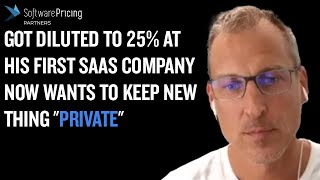
He got diluted to 25% at his first SaaS company, now wants to keep new thing "private"Jul 26, 2022

hey folks my guest today is chris mealy's the managing partner for spp that software pricing partners founded in 1982 they do exactly what it sounds like help you with pricing but he doesn't just do this as a consultant or in theory he had his own software company before which is where he cut his teeth on this chris already takes the top i am thank you for having me all right let's talk about your first ask company and sort of the pricing panes you went through and realized this was a big need what was that software company called uh it was called companion cabinet so that that was not always sas so that started in the late 90s mostly on premise and then an 08 when amazon just started showing its creds in the cloud is when we actually converted over the market crash of 2009 and that's how we ultimately became a sas company but during that journey we hired software pricing partners that's how i find out about them and that's ultimately how i ended up here and and companion cabinet this was like a business management sort of erp solution right for a specific niche industry yeah it was interior and exterior products and then mostly in the us and europe found that i believe in sort of 2002 i believe you bootstrapped until you decided to raise angel funding did you raise a bunch more after the angel round yeah so so well we raised a lot a lot of angel funding money as well so that was maybe not typical to our charlotte market but that um uh that time of bootstrapping i had really long hair nathan i actually could put it in my mouth and my parents were getting worried that i was maybe not eating properly but i went three years with no pay i sold everything from my ernst young career houseboat everything used that to start the business and actually had to supplement with some commercial acting here and there to to make it work that's wild no stranger to generic cereal yeah so when you say like a ton of angel funding i mean i were you talking like 10 20 million in angel funding or something okay and what was that back then i mean was that all like convertible nodes or what well actually it was a mix so it would it would start so remember during the so so when we first started it was that dot com bust now we made it through the 08 market crash and so one of the challenges in angel funding is it's not always professional funding so everybody kind of has a different opinion on the vehicle so i think we used just about every vehicle you know preferred stock convertible debentures we did straight rounds we did full rounds we did partial rounds and as we progressed through the the market crash the rounds would become more rapid and sort of more or smaller i guess and then they would sort of expand again as we got out of the market crash and so that effect and what i often tell everybody is careful when you start raising money because it can really become your full-time job i mean it was really there was probably about 15 or so folks in total you had large investors small investors some that had some professional backgrounds some that didn't but that formed the basic of the angel group and the way in which we finally attracted that so remember three years no money and i'm asking questions like well where does the money come from and at that point i had gotten a hold of a sales coach at the center for entrepreneurial services here in charlotte we hired them you would later climb through every single one of my sales calls for the next five years recording them all tagging them telling me all of the wonderful mistakes that i made and in that process of doing that his comment was look just spend all your time selling once you sell i promise the investors will be lined up and we were lucky enough to have that happen oh what's going on there youtube good to see you guys now imagine this you love watching these interviews with sas founders but imagine if we took all of the valuation data out from over 2807 interviews i've done manually saves you a lot of time well we've done this we've built it into the beautiful interface inside of founder path check this out i'll show you how you can access this in a second but you log in you connect your stripe account you see your valuation real time you can see what it changed over the past 88 days and even set goals for valuation this year now the secret evaluation is there's many different ways to value a sas business so the reason you're going to see three or four different valuations inside of your frowner path dashboard this is all free by the way is because depending on who's doing the buying of your sas company you're gonna get a different valuation a vc is gonna pay a different valuation private equity firm is different if you're gonna do a minority sale that's different and if you sell the whole business that's a different valuation you can see all those when i hover over here right so the teal is what a vc would pay yellow is what private equity and red is if you sold the whole thing outright now what's cool about this is this is not built off random data again you guys hear these interviews on youtube all these datas are built from real-time valuation data points founders share with us on the show so traction 1.2 million seed round 3.7 raised they sold 22 to their business go in here and filter by the event maybe you only want to see companies that have sold the whole business well here are a bunch that have been acquired the valuation and the multiple maybe you're going out right now and you're raising your seed round well go in here and look at all these recent seed deals that went down what they raised what valuation they raised at and what percent that they sold there's never been a larger data set of sas valuations than what you can get now inside of founderpath and we're thrilled to bring it to you all right we're going to go back to the youtube video here in a second but if you want to check this tool out if you want to jump in and sign up you can check it out for free to get your valuation at this link this link founderpath.com forward slash products forward slash evaluations or if you go to founderpath.com and hover over products click on get your valuation here and go ahead and sign up to give it a whirl again all that valuation data live right inside the platform i hope to see you there all right let's jump back into the interview so someone i don't get into the weeds about every single angel check but sum all this up your capital story up for us at companion cabinet between and 13 how much total capital did you raise it's about 15 million one five or five oh fifteen one five one five one five and what did that mean for you in terms of dilution how much did you own when all was said and done personally probably around 25 percent okay so would you do anything different now today you work with a lot of sas founders now today yeah i mean i think a lot of people chase the capital a little too early i mean i think if you can get the early access program underway notice i didn't say beta with software and you can get a range of deals and you can kind of uncover early on is this a ten a hundred a thousand ten thousand hundred thousand dollar kind of transaction and then remember we were going through a deployment shift there so we were taking half a million dollars of software and kind of converting it over into a cloud model that's why we sought out software pricing partners to understand what the pricing would look like would i do it again yeah so we had a really magic uh ingredient in our operating agreement and so if you raise capital when you need it uh it doesn't it turns out that you're not going to get a really good deal if you have a large sales backlog and an exciting story which we had then we could kind of set the terms in our operating agreement and one of the terms that i learned from a lawyer friend of mine here in charlotte was this idea of the required holders and the required holders in the operating agreement was written in with my name on it and so every investor and member manager position regardless of dilution required my name and i think in an llc it affords you a lot of flexibility and so because you were an llc not a c corp that's right and so because we were able to dissect units from ownership and control i mean there's economic interest and then there's sort of governance decision making investor and member manager decisions we were able to divest the two now i don't know if you could do that in today's market but in the angel network space we were able to do that and we had a track record that everybody we were telling people no people were kind of coming back and saying i want in our rounds were oversubscribed and we were kind of saying look here's kind of the terms of the deal and we we got what we asked for for that story and that raising up the capital at that point where you get the sales and you've you've rung out the sales and marketing risk on the business model that's a little bit different in the story because that story says i'm just coming in for the operationalizing of the business and the fun ride and so that term would work to our advantage later because i think some of the folks probably assumed that it just worked a standard way with the percentage and who gets what vote but it turned out that we got all the vote on everything understood and chris we're talking about pricing obviously what was the average customer paying companion cabinet for your software at the time it was probably about say an average transaction was probably 250 to 300 grand on-prem and then in the cloud yeah in the cloud it would have converted over a three-year horizon for the equivalent of you know call it 75 grand a year or something like that but at the company's peak how many customers were you working with um so this would have been it was probably about 60 to 70 smb mid-market and then we were strategic advisors and had a customer with lowe's and some of the bigger pro build and home building supply companies so 300 000 acv times 60 customers i think that's like what an 18 million dollar run rate is that about right revenue wise no well not quite and i can't go into the details of that but remember there's a mix right so smb mid market those are global averages applied to you know transaction sizes are different in the smb that they are in mid-market and then you can have you know multi-million dollar deals and enterprise of course but my question was what was the average customer paying and you said 300 000. so you remember using a higher you're maybe using like your enterprise average not your total customer average well um so this might be a little pricing a little side so you you we take outliers like your enterprise deals who who buy in very large quantities and we stick them on the side and the averages that we look at are probably for eighty percent of the core of the business but we had a few wild cards on the side that gave us good really large chunks of revenue okay so you you're saying you were north of 18 million in revenue not less no we were closer to about 10. oh 10 okay got it fair enough um and then let's close that story out before talking purely about the new business and pricing what did you do the business in 2013 what did i do with the business as in my access story yeah you left yeah yeah so well my access story was a lot of fun so i got a wife out of it i ended up being our vp of marketing so uh when you exit it turns out you can take more than cash with you uh but it was mutual um so uh the company was actually taken back private the infrastructure that we built um but you were trading publicly no no no no no um when i say taken back private i mean my partner my co-founder wanted to own the business ultimately as a lifestyle so it was taken back during the market crash in a private scenario that he now owns that business and takes it forward under a new name that he rebranded under well most people when they say take private i mean it was public and someone took it private that he was just buying your shares basically he bought it he just bought up the investors and me that's right okay all right so you move on now you referenced a couple times that you reached out to software pricing partners when you're building companion but i thought you were the founder of this thing so help me get my head around that yeah so i was a founder and my friend from ernst young he and i founded the business and the thing with software is you spend all your time building a great product back then you could kind of build it and they would come and then later agile came around and then we would do mvps and things like that for new features and new modules but um you know you you don't really talk a lot about pricing you just sort of like build the product start selling it and eventually somebody starts to scratch their head and say you know we probably need some standard list prices and modules and how are we going to package this and are we going to count users are we going to count the number of purchase orders that was a model that we piloted for a while we take a percent of the purchase order cost we were in erp sales shipping receiving and purchasing and so as you play around with those different models and then you go up through a deployment model shift you realize that the economics of the business are going to change dramatically and at that time we didn't understand what that would look like we didn't understand how to think about that and i thought it was like a study that we would do i thought we'd you know do this survey and some other stuff and it ended up being really the next five years of me becoming very close with the founding team at software pricing partners of understanding hey monetization actually intersects with product management it's actually part of the business model there's a way to make this dynamic and when we're in agile and we're sort of saying well this is kind of what we're going to produce next month and this is what the revenue implications might be that connects directly to pricing and we were able to kind of segue all that together and i realized holy cow this is it's kind of like a missing whole piece to the business model so of course we've got about we didn't have that so so a lot of what i want to try to sneak in here um how many software founders are you working with today on pricing oh um well i don't know the number nathan but hundreds at least and then we have okay so you're might just be clear you're running an agency right now doing pricing for hundreds of sessions at once you must have hundreds of employees at least a one-to-one ratio per customer right well there's okay so hold on a second some of our customers are governments which take for example a government has 1400 of their fortune companies that are in there that are in our purview we work with them in a broad variety of ways we don't have a time and materials consultancy we have a software product that sits under the hood we do dynamic pricing our engine sticks under the hood of those software companies and becomes kind of the brains behind how they generate their net prices how they operate how they optimize all of that so it's not oh i see it it's very different well it's like kind of like a hybrid it's a managed services plus a product play i see i see so how many i guess a good way to answer this how many folks are on the team today and of those how many are engineers uh well so i i appreciate the the questions nathan but some of this stuff we're just not going to release into the marketplace but it's a sizable sorry chris why is that an issue if you say you're a software company the quickest way to cut through any noise is to go do you have engineers on your team you obviously can't have software of course we do well i think a lot of competitors want to know about how we do and what we do what we do and we have a competitive intelligence team and we understand how that information gets out and we've chosen to keep a lot of that private we're not interested in debuting a lot of that on the public front we're not really gonna expose that kind of information i'm sorry okay well just your press team reached out asked for you to come on the show the show has done 3000 episodes with the top founders in the world what do you want to talk about the company nathan i understand that um did you listen to any episodes before you came on yeah i think this kind of went in a very different direction of what you're trying to get on the podcast but you know we're not you you just take it from there you you did listen to one episode before coming on uh i did not i didn't nathan and so i think that's maybe there's a big difference well there's a challenge here right because when you exit a company and pieces of the technology at companion cabinet were taken private there were agreements that were made of things that i can talk about and things that i can't some of that technology went deep into large lumber yards and i hope this part isn't going to go live nathan this whole episode goes on recording yeah absolutely you we can stop you on and you want me to end yeah let's let's stop and let's chris thanks for taking us to the top appreciate it one more thing before you go we have a brand new show every thursday at 1 pm central it's called shark tank for sas we call it deal or bust one founder comes on three hungry buyers they try and do a deal live and the founder shares back end dashboards their expenses their revenue arpu cac ltv you name it they share it and the buyers try and make a deal live it is fun to watch every thursday 1 pm central additionally remember these recorded founder interviews go live we release them here on youtube every day at 2 p.m central to make sure you don't miss any of that make sure you click the subscribe button below here on youtube the big red button and then click the little bell notification to make sure you get notifications when we do go live i wouldn't want you to miss breaking news in the sas world whether it's an acquisition a big fundraise a big sale a big profitability statement or something else i don't want you to miss it additionally if you want to take this conversation deeper and further we have by far the largest private slack community for b2b sas founders you want to get in there we've probably talked about your tool if you're running a company or your firm if you're investing you can go in there and quickly search and see what people are saying sign up for that at nathanlacka.com forward slash slack in the meantime i'm hanging out with you here on youtube i'll be in the comments for the next 30 minutes feel free to let me know what you thought about this episode and if you enjoyed it click the thumbs up we get a lot of haters that are mad at how aggressive i am on these shows but i do it so that we can all learn we have to counter those people we got to push them away click the thumbs up below to counter them and know that i appreciate your guys's support all right i'll be in the comments see ya

Data and Sources

All figures on this page are taken directly from interviews or are estimates from public sources and proprietary models. Not financial advice. Read full disclaimer.

Claim this profile

People Also Viewed

MishiPay logo

MishiPay

Developer of a mobile self-checkout technology designed to make online payments. The company's technology allows shoppers to pick up a product they wish to buy, scan the barcode and automatically pay with their phone, enabling shoppers to make secure cashless payments via a virtual mobile payment platform and save time by not waiting in queues.

DocLens.ai logo

DocLens.ai

Agentic AI Workflow for Complex Claims and Legal

Treiner logo

Treiner

TREINER (treiner.com.au) is an Australian & New Zealand based holistic football coach booking marketplace offering a vast range of coaches in different fields & specialisations at locations, budget and experience to suit football players of all ages and abilities, whether you are a young player starting out, a youth player looking to move to the next level or a professional player looking for some specialist unbiased and objective training and feedback away from a club environment to help you gain your next contract.

Apex Loyalty logo

Apex Loyalty

Loyalty isn’t about points. It’s about impact. Apex Loyalty is the Loyalty-Driven Growth Platform, designed to help brands influence every buying decision by engineering behavior through smart, measurable incentives. We don’t build programs. We build systems that drive the right actions and reward them meaningfully, with revenue growth as the outcome. 🧠 Three key layers we focus on: 1. Outcome: Drive incremental sales, reduce missed opportunities, and strengthen engagement where it matters most. 2. Enabler: Use incentive automation, behavioral targeting, and gamified campaigns to guide decision-making across every audience. 3. Impact: Achieve real behavior change — from point-of-sale reps to end-users, from sales teams to distributors. ⚡️ And the impact is fast. Apex Loyalty delivers measurable ROI in weeks. Brands have seen up to 40% uplift in sales by creating customer-level business targets, time-limited campaigns, and tailored reward mechanics! When incentives are designed right, revenue becomes repeatable. And loyalty becomes the signal that it’s working. 💡 Solutions • Channel Loyalty Platform: Motivate trade partners and sales points with performance-based incentives. • Consumer Loyalty Platform: Boost repeat purchases and LTV with personalized reward journeys. • Loyalty as a Platform: Drive internal performance through smart incentives for your sales, ops, or field teams. • Loyalty-Driven eB2B Ordering: Embed incentives into the digital ordering flow to increase adoption and order frequency. Built on Salesforce. Delivered your way. Full stack or Headless. Apex Loyalty adapts you. 🌍 Trusted by: PepsiCo, Haleon, Suntory Global Spirits, Daikin, BAT, Bridgestone, Royal Canin, SAB Miller, and more. 🐾 Inspired by Saint Bernards We walk alongside our clients. Loyal, resilient, purpose-driven, and equipped for any challenge. Apex Loyalty is built to help brands reach their growth summit, and stay there.

Myko AI logo

Myko AI

Myko helps sellers get data in and out of their CRM from anywhere. An intelligent AI agent for your sales org.

Konnectinsights logo

Konnectinsights

Best Social Media Tools - Konnect Insights, a 4 in 1 social media tool that effectively manage social listening, analytics, CRM & ORM management for brands.

Software Pricing Partners Revenue 2024: $1.8M ARR