Valuation · 2023
$20M
2024 Revenue
$3.2M(Est.)
Customers · 2023
800
Funding
$5.3M
Team
37
Founded
2017
WordLift Revenue, Valuation & Funding (2024)
WordLift generated an estimated $3.2M in annual revenue in 2024. Source: GetLatka estimate
WordLift is a Rome-based B2B SaaS company that builds knowledge graphs to automate search engine optimization for businesses ranging from small publishers to large enterprises. Founded and led by CEO Andrea Volpini, the company charges customers on a per-URL, per-year subscription model and counts Coca-Cola and Ray-Ban among its named clients.
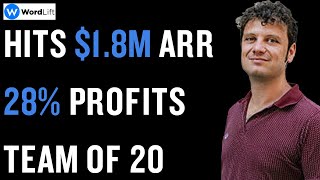
As of mid-2022, WordLift reported 1,166 active subscribers and approximately $1.2 million in annual revenue, having grown roughly 100 percent year over year. The company is profitable, with an EBITDA margin of 28 percent in the second quarter of 2022, and carries a customer acquisition cost of approximately 180 to 200 euros against a payback period of just 1.5 months.
In early 2022, WordLift closed an 800,000 euro seed round led by Primo Ventures at a valuation of approximately 5.5 million euros, selling roughly 15 percent of the company. Volpini and his co-founder retained more than 80 percent of equity. The company operated a team of 20 people at the time of the interview, split across engineering, customer success, sales, and marketing.
Last updated
WordLift Revenue
WordLift crossed the $1 million annual revenue run rate in approximately early 2021, a milestone Volpini confirmed during a prior appearance on the show. By the time of the August 2022 interview, the company was generating approximately $155,000 per month, equivalent to roughly $1.2 million in annualized revenue for 2022, up from about $87,000 per month a year earlier. Volpini confirmed 100 percent year-over-year growth.
| Year | Milestone | Source |
|---|---|---|
| 2024 | WordLift Hit $3.2m revenue in October 2024 | Estimated |
| 2021 | WordLift Hit $1.1m revenue in May 2021 | Not recorded |
| 2018 | WordLift Hit $180k revenue in June 2018 | Not recorded |
| 2017 | WordLift Hit $24k revenue in June 2017 | Not recorded |
| 2017 | Launched with $0 revenue |
At the time of the seed raise in early 2022, the company was running at approximately $1.5 million to $1.6 million in annualized revenue, as noted by the host and not disputed by Volpini. The Step 1 extraction list also records a forward figure of $1.6 million for 2023, reflecting continued growth from the 2022 base.
Growth has been driven primarily by inbound SEO and live events. Volpini cited a partnership with The Next Web as a source of customer generation and noted that the company was beginning to explore paid advertising as an additional acquisition channel. WordLift added approximately 400 new customers over the 16 months preceding the August 2022 interview.
WordLift Valuation, Funding Rounds
Founder / CEO
Andrea Volpini
CEO
Andrea Volpini is the CEO and founder of WordLift. He was 45 years old at the time of the August 2022 interview, with a birthday on March 10. He is based in Rome, Italy, is married, and has two children.
Before founding WordLift, Volpini ran a digital agency that reached approximately 5 million euros in annual revenue. The agency carried roughly 2 million euros in bank debt, an experience Volpini described as formative in shaping his aversion to debt financing. He has described himself as a serial bootstrapper across multiple businesses.
Volpini and his co-founder together held more than 80 percent of WordLift's equity as of the August 2022 interview, even after the seed round. Net worth was not discussed in the interview, and no estimate can be responsibly derived beyond noting that an 80-plus percent stake in a company valued at approximately 5.5 million euros implies a combined founder stake of at least 4.4 million euros at the 2022 seed valuation, though this is a GetLatka floor estimate based solely on the stated valuation and ownership percentage and does not account for any liquidation preferences or dilution terms.
Q&A
| Question | Answer |
|---|---|
| What's your age? | 46 |
Customers
WordLift had 1,166 active subscribers as of August 2022, up from approximately 705 customers roughly 18 months earlier. The company added approximately 400 new customers over that 16-month period. Named enterprise customers include Coca-Cola and Ray-Ban.
The largest single customer was paying approximately 300,000 euros per year as of the interview, with Volpini noting the figure could be higher by year-end. Pricing is based on the number of URLs processed and the number of content types covered, with a typical entry-level customer managing between three and ten websites. The average customer was paying roughly 130 dollars per month at the time of the interview, implying an annualized average revenue per user of approximately 1,560 dollars. The extraction list records an ARPU of 5,300 euros for 2023, reflecting a shift toward larger enterprise accounts.
By 2023, the active customer count had declined to approximately 800, consistent with a strategic move upmarket toward higher-value enterprise contracts, as reflected in the rising ARPU figure.
WordLift serves 800 customers.
WordLift Business Model
WordLift sells subscriptions priced on a per-URL, per-year basis, scaling by the number of websites and content types a customer needs to cover. The model generates both a long tail of smaller self-serve accounts and a concentrated enterprise segment that Volpini said accounts for approximately 70 percent of total revenues.
The customer acquisition cost for the average self-serve subscriber is approximately 180 to 200 euros. The average customer lifetime value is approximately 1,300 to 1,400 euros, and the average customer remains on the platform for 25 to 26 months. The CAC payback period is approximately 1.5 months, reflecting the low acquisition cost relative to the monthly subscription price.
WordLift was profitable as of the second quarter of 2022, with an EBITDA margin of 28 percent. Volpini confirmed the company remained profitable into 2023, with the EBITDA margin expanding to 38 percent. Profitability was achieved while growing 100 percent year over year, and the company had not drawn down most of its seed capital at the time of the interview. The 2023 ARPU of 5,300 euros, combined with approximately 800 customers, implies annualized revenue of roughly 4.24 million euros at that customer count and ARPU, though the extraction list records 2023 revenue at $1.6 million, suggesting the ARPU and customer figures may reflect different measurement periods or customer segments and should be verified before publishing.
Point-in-time figures shared on the GetLatka podcast, each linked to the exact moment it was said on camera.
Customers (2023)
800
“Nathan Latka: It sounds like you have less now, but they're paying more. How many customers today? Andrea Volpini: So we are around 800 clients.”
WatchAverage revenue per user (2023)
€5,300
“Andrea Volpini: Today, wordlift is an enterprise SEO platform, and so we have a reduced number of clients and a higher ticket. Our average enterprise client would have €5,300 average monthly subscription with us.”
WatchCustomer acquisition cost (2022)
€180(self-serve)
“Andy Volpini: If we look at the cohort of the average user getting a subscription for us, we're talking about one hundred eighty, two hundred euro for acquisition. But then if you look at the enterprise client that runs 70% of our revenues, then the cost per acquisition is higher.”
WatchEBITDA margin (2023)
38%
“Andrea Volpini: We are profitable. We have a good profit. If I look at August, I think we are around 38 profit margin.”
WatchWordLift Employees & Team Size
WordLift employed approximately 20 people as of August 2022, comprising 13 core full-time employees and seven to eight full-time freelancers distributed across functions. The team broke down as seven engineers, six customer success staff, five salespeople (with two additional sales hires planned), and two marketing staff. By 2023, the team had grown to 24 people, with customer success expanding to nine staff while the engineering and sales headcounts held at seven and five respectively.
WordLift employs approximately 37 people as of 2026, up from 24 in 2023, including 1 sales reps that carry a quota. It serves 800 customers that rely on its solutions.
| Year | Milestone | Source |
|---|---|---|
| 2024 | Reached 37 employees (October 2024) | Not recorded |
| 2023 | Reached 24 employees (September 2023) | Estimated |
| 2022 | Reached 20 employees (August 2022) | Not recorded |
| 2021 | Reached 15 employees (November 2021) | Not recorded |
| 2021 | Reached 15 employees (May 2021) | Not recorded |
| 2021 | Reached 19 employees (January 2021) | Not recorded |
| 2018 | Reached 3 employees (June 2018) | Not recorded |
Frequently Asked Questions about WordLift
What is WordLift's revenue?
As of 2024, WordLift generated an estimated $3.2M in annual revenue.
Who founded WordLift?
WordLift was founded by Andrea Volpini.
Who is the CEO of WordLift?
The CEO of WordLift is Andrea Volpini.
How much funding does WordLift have?
WordLift raised $5.3M across 2 rounds.
How many employees does WordLift have?
As of 2024, WordLift had 37 employees.
Where is WordLift headquartered?
WordLift is headquartered in Rome, Lazio, Italy.
Compare WordLift to the industry
WordLift operates across multiple industries. Browse revenue, funding, and growth data for WordLift in each sector below.
Full Interview Transcripts
AI Tool Profited $70k Last Month on $195k of Revenue. Plans to hit $3m ARR By December then Raise $5m.Sep 15, 2023
[00:00] Guys, wordlift.io today does $195,000 a month in revenue up from $103,000 a month just a year ago. They helped large brands like Ray Ban quickly use AI to write meta descriptions for all their thousands of skews on all their sunglasses. They do that same thing across other brands using their knowledge graph, enabling you to build a real AI strategy and increase human productivity, launching all these descriptions within your own company's voice based off the data you [00:28] feed wordlift.io. He's got 800 paying customers. He profited $70,000 last month. So really healthy profit margins. Last raise was $800,000 at 5.5 post. And we'll be looking to do his next round in Q4 this year, Q1 next year, targeting 4 to 5,000,000 at somewhere around a 20,000,000 valuation. Again, scaling nicely with a team of 27 engineers, five on the sales side. Hey folks, my guest today is Andrea Volpini. He's a serial entrepreneur and an expert in [00:57] the semantic web technologies and artificial intelligence space. He's the co founder and CEO of wordlift, a company that specializes in AI driven SEO solutions. His experience and focus is on leveraging artificial intelligence to improve web content and enhance SEO and user experience. Andrea, are you ready to take us to top? Totally. [01:16] >> All right. [01:17] Well, I'm thrilled to have you back on. You know, we had you on about a year ago. For those that have not heard of wordlift before, maybe describe how a customer is using you today and then we'll jump into more of the story. [01:27] >> Right. So we build knowledge graphs and these knowledge graph are designed to optimize content so that search engine can understand what this content is about, get more uses. And then we're starting to use this knowledge graph to use generative AI alongside with it. And that's, that's the exciting part. [01:46] And so what does that mean? Can you maybe actually share a customer name that's using you and tell us how they're using this specifically? [01:52] >> Right. I mean, let's take Rayburn. Okay. They, they, they, they have product description and, they've been using for over a year now, wordlift to build a knowledge graph and then, fine tune a model that can create a product description for every single variant, not just the main model, but every single variant with the exact tone of voice that Ray Ban has. And, by doing that, they're getting significant amount of profit, and that means an increase of [02:20] >> the revenue of around 25%. [02:22] Are they specifically using new Ray Ban to update all the SKU data for all the different sun classes in terms of, like, the metadata description for each each frame? [02:30] >> That's correct. That's correct. And and we build an ontology to describe how does a sunglasses is made of, what is the purpose, and using this ontology, can we create better content. So better data equal better content. And we'd be fusing the knowledge graph alongside with the language model in order to provide better quality, better accuracy, better validation, prevent hallucination. And this has changed the business this year. [02:55] Very cool. Now, you still last time you came on was about a year ago and you said you were charging on average $130 per month. Is that still about the average? [03:02] >> No, really. I mean, we have refocused heavily on on the enterprise clients. I mean, today, wordlift is a is a enterprise SEO platform, and so we have a reduced number of clients and a and a higher ticket. Our average enterprise client, would have €5,300 average monthly subscription with us. [03:28] Okay. So I guess how many last time you came on, you told me you had about eleven fifty paying customers. It sounds like you have less now, but they're paying more. How many customers today? [03:39] >> So we are around 800 clients. And, you know, just to give you a few numbers, last year, 2022, we closed at 1,200,000 Euro, you know, the the the final number. And, in June this year, we've done, 1.352. So we we we went beyond a 100% growth, in the first semesters, and now, you know, the numbers is kind of slightly going down, but we were targeting 2.3, 2,500,000 Euro by the end of the year. [04:12] Okay. So $1,400,000 run rate is about 120,000 per month divided by 800 paying customers would mean each one's paying on average about $140 per month. [04:24] >> Yeah. Yeah. Yeah. But I mean, there is a, there is a slight difference between, you know, the, the enterprise batch and, everyone else. And we have onboarded clients of the size of Coca Cola, for example. And so we are working on multiple markets, multiple languages. Mhmm. And so, you know, the the the the way in which we're selling the subscription to the enterprise is that we sell by website, per market, per language. And so at the [04:51] >> end of the day, you buy wordlift on a URL basis. And, you know, starting point can be something like €2 per URL per year. [05:01] Okay. Got it. So it's you sell per URL per language per year? [05:05] >> Kind of. And then we add on top, you know, smart content services, like the content generation, like the module for generating q and a. So we are effectively becoming a generative AI platform focusing on enterprises doing SEO, starting from the creation of a knowledge graph. [05:23] Oh, what's going on there, YouTube? Good to see you guys. Now imagine this. You love watching these interviews with SaaS founders, but imagine if we took all of the valuation data out from over 2,807 interviews I've done manually. Saves you a lot of time. Well, we've done this. We've built it into the beautiful interface inside of Founderpath. Check this out. I'll show you how you can access this in a second, but you log in, you connect [05:46] your Stripe account, you see your valuation real time. You can see what it changed over the past eighty eight days and even set goals for valuation this year. Now the secret evaluation is there's many different ways to value a SaaS business. So the reason you're gonna see three or four different valuations inside of your Founderpath dashboard, this is all free by the way, is because depending on who's doing the buying of your SaaS company, you're gonna [06:11] get a different valuation. A VC is gonna pay a different valuation. Private equity firm is different. If you're gonna do a minority sale, that's different. And if you sell the whole business, that's a different valuation. You can see all those when I hover over here. Right? So the teal is what a VC would pay. Yellow is what private equity And red is if you sold the whole thing outright. Now what's cool about this is this is [06:32] not built off random data. Again, you guys hear these interviews on YouTube. All these datas are built from real time valuation data points founder share with us on the show. So traction 1,200,000 seed round 3.7 raise. They sold 22% of their business. Go in here and filter by the event. Maybe you only wanna see companies that have sold the whole business. Well, here are a bunch that have been acquired the valuation and the multiple. Maybe you're [06:58] going out right now and you're raising your seed round. We'll go in here and look at all this recent seed deals that went down, what they raised, what valuation they raised at and what percent that they sold. There's never been a larger dataset of SaaS valuations than what you can get now inside of Founderpath. And we're thrilled to bring it to you. All right, we're gonna go back to the YouTube video here in a second. But [07:20] if you wanna check this tool out, if you wanna jump in and sign up, you can check it out for free to get your valuation at this link. This link, founderpath.com/products/valuations. Or if you go to founderpath.com and hover over products, click on get your valuation here, and go ahead and sign up to give it a whirl. Again, all that valuation data live right inside the platform. I hope to see you there. Alright. Let's jump back into [07:46] the interview. So 1,350,000 run rate today up from you told me a year ago. Again, you're about 1,200,000. So a little bit of growth. Now that'd be okay if you'd bootstrapped the company because when you bootstrapping and grow on your own terms, but you've raised a pre seed round in 2022. I think you raised 800 ks at 5,500,000 post money. How are those investors responding to, you know, what I would say is maybe slower growth, you [08:12] know, relative to what their expectations were when they invested? [08:15] >> I mean, you called the 100% growth, a slow growth. [08:21] I'm sorry. You told me that a year ago, I mean, you came on in 2021 as well, and you told me you had seven zero five paying customers at 123 a month, which would be 1,100,000 run rate. You told me then you grew that to a year ago to 1,200,000 run rate. And you then said this year, you're at $1,300,000 run rate. [08:40] >> In June. [08:43] >> That would be 2.5 in December. [08:48] >> Does it make sense? [08:50] How much how much monthly recurring revenue did you do last month? [08:53] >> Yeah. So 195. [08:59] I see. I see. Okay. Got it. So a year ago, you were at you were doing about [09:02] >> $1,103. Yeah, around the 100. So we [09:06] I see, I see. So comparing September to September, you've gone from 103,000 per month to 195 per month. I see. Okay. And where did where did most of that growth come from? You know, you know, doing a lower ARPU high volume approach relative to landing a Coca Cola. It's a very different sales motion. [09:23] >> Yeah. Yeah. So so the and and the growth is coming primarily from, you know, helping this company generate content with high accuracy by leveraging on the knowledge graph. So the knowledge graph is the foundation. And then on top of that, we start generating content and validating content. And that has been, you know, kind of the pivot that we've done last year. I've been investing on transformers for for many years now. And the combination with with knowledge [09:49] >> graph, it's it's it's bringing a lot of value. [09:52] But Andrea, isn't the isn't the knowledge graph only as powerful as the dataset that you feed it in the sample size of that dataset? And isn't that directly I mean, if if if the customer that signs up for your tool doesn't have a large dataset to feed it, your knowledge graph is going to be really poor for that customer. [10:06] >> Right. I mean, of course we have built a lot of tooling for enriching this graph and improving whatever data you start from. I mean, for example, we now have the ability to ingest the Google Merchant feed directly into the Knowledge Graph, and then we can start enhancing, you know, this merchant feed and making it better because we upscale the images or we add additional metadata to the products, or we start to categorize product with a different [10:30] >> taxonomy. So there is a lot of value that gets into the creation of the data inside the graph. I mean, it's not just the graph. Of course, the data that you bring in, it's the first asset, but we have to improve it because otherwise there's no SEO value. But once we improve it, then there's not just SEO value. You have something way more valuable, which is you're going to build your AI stack on top of it. [10:52] I understand. How many folks are full time on the team today? [10:57] >> So we have around 24 people between, you know, the the kind of the the resident one and and the people working remotely. [11:09] >> We have around seven people in the tech. [11:14] >> We have five sales. We have nine in the support integration team. And then we have, yeah, two two marketing and me. [11:26] And so with that headcount expense, obviously, you know, you pay that out of your monthly recurring revenue. Is the company profitable today? Are you burning that money? [11:33] >> Yeah. No. We are profitable. We we have a good profit. We have around I mean, if we if I look at August, I think we are around 38 profit margin. [11:48] 38% or 38 thousand? [11:50] >> 38%. [11:52] Okay. So 38% on 200 ks of MRR would mean you profited something like $70,000 in August. [11:58] >> Yeah. Yeah. It's true that of course we are keeping, I'm keeping my salary low, the other, you know, management. I mean, we're, we're, we're still kind of in a bootstrap mode. I mean, I haven't, I want to keep the company profitable so that I don't have to, you know, deal with the issues with investors. I mean, I want to keep things as healthy as possible and I, I want a company that is profitable. We've always been [12:18] >> profitable since, you know, the, after the first year now. And I want to keep it that way. [12:22] So does that mean you still have the full 800,000 pre seed from last year in your bank? [12:27] >> Pretty much. We have a, at the moment, I think, yeah, $7.80. I mean, it's been fluctuating. We're investing on it. On Monday, we have a new general manager starting up. I mean, so we were investing on technology and team as we should, but we are not overspending. We're not like rocking crazy with the money that we got. [12:44] And you mentioned your own salary. A lot of founders are not quite sure what pay themselves. So when you say you pay yourself quote a low salary, can I ask what that is and how'd you come up with the number? [12:55] >> No, you're gonna ask. No, but I mean, let's say that if I would go and work on a corporate, I would possibly earn double of what I'm making. Kind of. I mean [13:11] Yeah. But you own obviously, you I mean, are you sole founder? Do you own a 100% of the equity? [13:16] >> No, I mean, I have, I have another co founders when we're, we have a team. So, but of course I have capital, you know, I, I invest in my company. I'm happy. I'm not complaining about my salary. I mean, it's a balance that I'm choosing because I want to invest in the company. I want to see the value grow and I want to keep the value for investing in innovation. [13:35] Yep. Did you split fifty fifty at the start? [13:37] >> Yeah, pretty much. [13:39] Okay. Okay. And how, what, what employee stock option pool did you set up on the seat around? Do they own 20%? [13:46] >> So, so we have around 10% at the moment for that. And I'm planning, you know, if we do a new round, I'm planning to review this number and increase it and, you know, kind of make it more participation from, from everyone on it. [13:59] Okay. So investors put an 800 at 5.5 post last year, which would be about 15% of the company. Employees own something like 10% and the rest, which is 75%, you and your co founder kind of split fiftyfifty. [14:12] >> With some other small shareholders that [14:15] I see. You mentioned adding more to the ESOP pool. If you do another round, are you planning to raise additional capital in the next twelve months? [14:22] >> Yes. So we see that generative AI, it's it's a great opportunity. So we saw that we could, you know, double on major clients. And and and there is a significant opportunity because we are at this specific point in time where we have learned that the quality of the data is as important as the language model. Mhmm. And so the more we can focus on strengthening, the tooling that creates and qualifies the data that we ingest from [14:49] >> client, the better the content will get. And so we wanna double on that. And I wanna increase the speed. I wanna open an office in The US, and I wanna have a, you know, a larger product team. And so [15:01] How much are you looking to raise, Andrea? [15:04] >> We are looking at between 4 and €5,000,000. [15:07] Okay. And how much equity do you think you have to sell to get that deal done? [15:11] >> Max 20%, no more. [15:13] Interesting. Something like a 15 to 20,000,000, you know, pre post money valuation. [15:17] >> $20.20 millions would be a fair would would be a fair number, you know, considering Europe, the evaluation are slightly lower. If we would be in San Francisco, that would be maybe a 35, but, but, we're in Rome. [15:29] When do you plan when do you plan to kick that process off? [15:33] >> So ideally, end of the year, beginning of q one next year, we have to, you know, have a solid plan. I don't wanna make, you know, get money if I don't have exactly, you know, the idea of how to spend it. I'm still conservative. So as you could see from my existing numbers, I'm overspending. I don't see value in adding marketing, you know, expenses. If I don't see that, at least I get a three x return. [15:56] >> So everything is very much calculated at this point. But yeah, we need a little bit more flexibility. [16:02] Would you ever consider, you know, keeping your equity instead of selling a bunch and around? Would you consider using something like non dilutive capital? [16:09] >> Why not? I mean, we discussed it in the past. I'm always looking at growth first. You know, my target is to have a healthy company that is sustainable enough that, you know, it doesn't, overspend. It remains profitable. But at the same time, we have to kill it on innovation side and killing on on our, you know, in the innovation side, when you deal with very large corporation, you have to work on a technology stack, which is [16:33] >> so volatile, like the AI stack these days. You know, we we we need resources, but, yeah, maybe a mix between the two. Yep. [16:41] Well, good. On that note, Andrea, let's wrap here with the famous five. Number one, your favorite book. [16:46] >> I'm starting to read again The Society of the Mind by Marvin Mysky. This is kind of a [16:54] >> major study on how the brain works. And I was passionate when it came out. I mean, think I read it in the nineties, but now I'm rereading again and it's so beautiful. [17:05] Number two, is there a CEO you're following or studying? [17:09] >> I follow several CEO. Yeah. Of course, I have to follow people like, like Mask because I use X or X Twitter. But [17:21] >> I have a good relationship with the with the founder of Yoast that we're gonna meet next week, and and and we have a, you know, I think a great relationship. I can learn a lot from him because he sold the company already. Great. [17:34] Number three, what's your favorite online tool for building wordlift? [17:40] >> Personally, I like a lot the work that we do with Zapierre. I think, you know, kind of connecting dots and automating marketing, it's it's good. But, yeah, [17:51] I think [17:51] >> second second answer is wordlift, of course. [17:54] Number three, what's your sorry. How many hours of sleep do get every night? [17:59] >> I mean, I should do better. I mean, I think we have, you know, six six and a half, I mean, depending on the period of time now, it's very low. [18:08] And what's your situation? Married, single, kids? [18:10] >> I'm married, two kids, very happy. [18:12] And I think you had a birthday, right? You're 46 now? [18:16] >> Yeah. In March. [18:18] Very good. The last question, something you wish you knew when you were 20. [18:26] >> Oh boy, when I was 20 that I could already focus on kind of my dream idea rather than, you know, kind of learning from from from the bottom up. You know, I could I could focus in the beginning on things that I loved. Yes. I mean, not that I didn't not that I did things that I didn't love, but I could be more crazy, even more crazy than I was already. [18:49] Guys, wordlift.io today does $195,000 a month in revenue, up from $103,000 a month just a year ago. They help large brands like Ray Ban quickly use AI to write meta descriptions for all their thousands of skews on all their sunglasses. They do that same thing across other brands using their knowledge graph, enabling you to build a real AI strategy and increase human productivity, launching all these descriptions within your own company's voice based off the data you [19:17] feed wordlift.io. He's got 800 paying customers. He profited $70,000 last month. So really healthy profit margins. Last raise was $800,000 at 5.5 post. And we'll be looking to do his next round in Q4 this year, Q1 next year, targeting 4 to 5,000,000 at somewhere around a 20,000,000 valuation. Again, scaling nicely with a team of 27 engineers, five on the sales side. Andrea, thanks for taking us to the top. One more thing before you go. We have [19:47] a brand new show every Thursday at 1PM Central. It's called Shark Tank for SaaS. We call it deal or bust. One founder comes on, three hungry buyers, they try and do a deal live and the founder shares back end dashboards, their expenses, their revenue, ARPU, CAC, LTV, you name it, they share it and the buyers try and make a deal live. It is fun to watch every Thursday 1PM Central. Additionally, remember these recorded founder interviews go [20:13] live. We release them here on YouTube every day at 2PM Central. To make sure you don't miss any of that, make sure you click the subscribe button below here on YouTube, the big red button and then click the little bell notification to make sure you get notifications when we do go live. I wouldn't want you to miss breaking news in the SaaS world, whether it's an acquisition, a big fundraise, a big sale, a big profitability statement [20:35] or something else. I don't want you to miss it. Additionally, if you want to take this conversation deeper and further, we have by far the largest private Slack community for B2B SaaS founders. You want to get in there. We've probably talked about your tool if you're running a company or your firm if you're investing. You can go in there and quickly search and see what people are saying. Sign up for that at nathanlatka.com/slack. In the meantime, [20:58] I'm hanging out with you here on YouTube. I'll be in the comments for the next thirty minutes. Feel free to let me know what you thought about this episode and if you enjoyed it, click the thumbs up. We get a lot of haters that are mad at how aggressive I am on these shows, but I do it so that we can all learn. We have to counter those people. We got to push them away. Click the [21:15] thumbs up below to counter them and know that I appreciate your guys'support. Alright, I'll be in the comments. See you.
Bootstrapped SEO SaaS Hits $1.8m ARR, 28% Profits!Aug 18, 2022
[00:00] Hey guys, recording this here on what is it? Friday the nineteenth. Maybe you're seeing this on Monday at the latest, but wanna let you know we are almost sold out for Foundercomp Sorry, Founder500 in Austin, Texas here in about a week. It's gonna be an amazing event. 500 B2B SaaS founders. I'm looking at the attendee list. There's almost 60 founders with more than $67,000,000 in ARR. It's an incredible group of group. There's over a hundred and fifty [00:27] with more than 1,000,000, more than a million revenue. It's an incredible group. You don't wanna miss it. Grab your hotel, grab your flight, grab a ticket right now. I'll put the link in the bio, in the description here on YouTube. And I think there's only about three tickets left. Okay, about three tickets left. I'd love to see you guys there. Don't be bashful. Grab your ticket now. Hey, folks. My guest today is Andy Volpini. He is [00:48] the CEO and founder of wordlift.io, which is helping everyone with automating their SEO. Andy, ready to take us to the top? [00:57] >> Totally. Great. [00:58] Alright. So there this is a very competitive space, you know, SaaS tools to help with SEO. What's your unique spin? What do customers pay you for? [01:06] >> We build knowledge graphs. That's that's the reason people come to us. And and then using this knowledge graph, we can automate SEO at various level. And that's pretty unique. I mean, we help you create your own knowledge graph much like Google does, and these interacts with Google at some point so that you will enter into Google knowledge graph more easily and also reuse the knowledge graph for other, you know, SEO or digital marketing task. [01:32] Why is the knowledge graph important? And can you give me an example of what that might look like for a company? [01:37] >> So so when you build a knowledge graph, you have these flexible data structure that that Google can read. And and by using these these data structure, you can also build other services like, I don't know, generating your product description or generating, you know, the description for the startup that that you work with within the SaaS space. So knowledge graph is kind of a starting point for your AI strategy, but it's also important for Google because it [02:03] >> represents a new site map in terms of, you know, what are the concepts that matter for the business? How do we index them? What is the data, you know, behind the website? And that's way more important as we progress from, you know, traditional SEO into modern SEO. [02:19] And what I love about you guys, you came on the show back in April of last year. You had just brought I don't if you remember this. You had just broken a million dollar run rate. Do you remember that? [02:27] >> That's correct. That's correct. [02:28] And most importantly, you told me you and your partner still owned more than 80% of the business, which is great. Right? [02:35] >> We're still doing. We're still doing. [02:36] That's amazing. And you told me not only that, you're in control. You passed 1,000,000 in revenue. You guys are also very profitable. You told me on 85,000 a month in revenue, you took about 20,000 that month, about a year and half ago to the bottom line. Right? [02:49] >> Yeah. I mean, we we have around 28% profit this in this quarter, if I look at, you know, q two. That's incredible. Yeah. But we raised money in in between. [03:03] Oh, you did. Okay. So tell me. So tell so tell me about tell me about that. How much did you decide? Because you told me you also told me that you declined an M and A offer for 5,000,000. Right. Did you end up raising? [03:15] >> So so we we decided to raise a little bit of capital, and we closed the deal beginning of this year, €800,000, and we still have more than 80% of of the share. So we still are pretty much where we were, but we kind of rearranged the cap table, and we have more money to invest for, you know, growing the sales and the marketing team and and also the technology. [03:40] And and what I mean, are you talking like a 10,000,000 valuation, or what valuation did you raise that at? [03:45] >> No. No. A lot less than that. I mean, it was, you know, a little bit more than 5. [03:50] Okay. Yeah. So basically the same as the m and a offer that you got? [03:55] >> Yeah. I mean, it was pretty much the same, but, you know, I keep the control and I can grow the company and, you know, kind of bring the numbers up. Yep. And yeah. [04:04] So raising 800 against 5,500,000 valuation, you guys decide to sell about 15% of the of the cap table, you know, the equity to the investor? [04:12] >> Pretty much. Yeah. [04:13] And and why do that? You were so profitable and you were growing so quick. [04:17] >> Because because you need to have more more, you know, cash available and and and and, you know, in order to to to grow because, of course, the the customer acquisition cost is still quite low compared to the to the lifetime value. And so we we need to invest more in in acquiring client and also acquiring acquiring talent because, as you say, it's a very competitive space, but we need to have resources where, you know, kind of [04:43] >> getting the best team that we want. [04:45] Yep. Oh, what's going on there, YouTube? Good to see you guys. Now imagine this. You love watching these interviews with SaaS founders, but imagine if we took all of the valuation data out from over 2,807 interviews I've done manually. Saves you a lot of time. Well, we've done this. We've built it into the beautiful interface inside of Founderpath. Check this out. I'll show you how you can access this in a second, but you log in, you [05:09] connect your Stripe account, you see your valuation real time. You can see what it changed over the past eighty eight days and even set goals for valuation this year. Now the secret evaluation is there's many different ways to value a SaaS business. So the reason you're gonna see three or four different valuations inside of your Founderpath dashboard, this is all free by the way, is because depending on who's doing the buying of your SaaS company, you're [05:34] gonna get a different valuation. A VC is gonna pay a different valuation. Private equity firm is different. If you're gonna do a minority sale, that's different. And if you sell the whole business, that's a different valuation. You can see all those when I hover over here. Right? So the teal is what a VC would pay. Yellow is what private equity And red is if you sold the whole thing outright. Now what's cool about this is this [05:55] is not built off random data. Again, you guys hear these interviews on YouTube. All these datas are built from real time valuation data points founder share with us on the show. So traction 1,200,000 seed round 3.7 raise. They sold 22% of their business. Go in here and filter by the event. Maybe you only wanna see companies that have sold the whole business. Well, here are a bunch that have been acquired the valuation and the multiple. Maybe [06:21] you're going out right now and you're raising your seed round. We'll go in here and look at all this recent seed deals that went down, what they raised, what valuation they raised at and what percent that they sold. There's never been a larger dataset of SaaS valuations than what you can get now inside of Founderpath. And we're thrilled to bring it to you. All right. We're gonna go back to the YouTube video here in a second. [06:43] But if you wanna check this tool out, if you wanna jump in and sign up, you can check it out for free to get your valuation at this link, this link, founderpath.com/products/valuations. Or if you go to founderpath.com and hover over products, click on get your valuation here, and go ahead and sign up to give it a whirl. Again, all that valuation data live right inside the platform. I hope to see you there. Alright. Let's jump back [07:09] into the interview. What is your CAC today? [07:14] >> I mean, if we look at the the cohort of the of the, you know, average user getting a subscription for us, we're talking about one hundred eighty, two hundred euro for for acquisition. But then if you look at, you know, the enterprise client that runs, you know, 70% of our revenues, then the cost per acquisition is higher. And, you know, in that case, it's also high touch. We need the resources. [07:40] Well, what's your range? Don't name the customer, obviously, but what does your biggest customer pay you per year today? [07:47] >> Oh, boy. I think in the range, I mean, it's it's it's it's like Or monthly. Yeah. I mean, if if we look at, you know, yearly, the biggest client would would probably give us, I don't know, maybe maybe maybe €300,000 per year. Could be more this year, but that's kind of, you know, the the [08:09] the And why is it so much? Is it because they're tracking, like, so many keywords? Or what's the utility base? Like, what's the metric No. [08:14] >> The utility base is really the number of URLs. So so number of, sites, per URLs. And, you know, we we have to build, basically a dataset on on all these URLs, and then we have to annotate the URLs and bring, you know, business value that it's at least, I don't know, five times what they spend with us. And that's what we're looking at. [08:33] Yep. That makes a lot of sense. So that's your biggest customer. But what does your average customer pay you per month, would you say? [08:39] >> So the lifetime value, it's around €1,300. And, you know, this is, you know, the payback period would be something between twenty five and twenty six months. [08:55] Twenty five. On on a $180 spend? [08:59] >> On CAC? On a no. No. I mean, on a on a lifetime value that it's around 1,300, €1,400 lifetime. [09:11] Yeah. And then you said your payback was twenty five months? [09:15] >> Yeah. I mean, the the time the time that that that stays with us on average. [09:19] Oh, not the payback period. Just the total lifetime. [09:22] >> Yeah. Sorry. Sorry. The total lifetime period. [09:24] Yeah. Okay. Yeah. The payback [09:26] >> no. The payback, it's, I mean, a few months. Basically, one one point five months on average. [09:32] Yeah. Yeah. So your average customers are paying something like a $130 a month. You spend $200 to get them, so they pay back in one and a half months. [09:41] >> Yeah. Something like that. [09:42] Interesting. And what is what is that plan? If someone signs up to you today for a $130, how many sites are they probably tracking and using you for? [09:50] >> They can they can build a graph for, you know, between three to 10 website depending on the number of, you know, content types that they need to cover. So we we scale also by content type. So by looking at, the site, you know, if you just have to deal with products, it's one thing. If you have to deal with products and podcasts, then it's, of course, more more expensive. But let's say between three and ten websites. [10:13] I see. I see. And when you came on about a year and a half ago, this was about eighteen months ago, you said you had just passed, I think, 705 customers. How many customers do you have today? [10:21] >> Right. So we have more than a thousand clients at the moment. And today, with the active subscription are 1,166. [10:30] Wow. 1,000. Okay. So so talk to us about that growth. How did you sign up 400 new customers over the past sixteen months? [10:37] >> Yeah. It's really a combination of of activities. Inbound is working terrifically well, of course. I mean, everything that comes from from SEO and, you know, any initiatives that we do on on the inbound marketing is is working very well, as usual. We've done, participating at, The Next Web. We are partnered with The Next Web, so we usually also get some, some, you know, good generation from from events. So I would say inbound and events, and we're [11:06] >> starting to kind of look at how we can increase the advertising to get more clients. [11:12] Well, this is incredible growth. Right? You're doing 88,000 a month a year ago. Now you're doing almost double that. So a 100% year over year growth, very capital efficient. You've raised way less than what your total ARR is, right, to $1,800,000 run rate. Of course. [11:24] >> Yeah. You you would judge that negatively. I know. But, you know, for us, it was like I [11:30] don't think it's negative. Andy, no. No. I don't think it's negative. I only think it's negative if the ratio between ARR and what you've raised is out of whack. If you raised $10,000,000 and spent it all to build a million dollar a month a year business, that's terrible. [11:42] >> Of course. [11:42] >> Of course. [11:43] Didn't do that. [11:44] >> Yeah. But I'm also I mean, we were growing the business quite fast, so I'm I'm quite happy about that. Of course, we are not, you know, leveraging on the capital that we raised at the moment as much as we we should because, of course, the hiring process, it's it's strategic and it's slow. [11:59] And that's kind So you still have, like, $700, 800,000 in the bank, something like that? [12:04] >> Something like that. [12:05] Yeah. Yeah. What is your team size today? How many people full time? [12:08] >> So so we have basically around 20 people. 13 are kind of the the the the core employees. And then we have other seven, eight freelancer that that work with us full time. [12:24] What do they do? [12:26] >> So we we basically have, you know, seven in tech. And then, you know, we have six that are, you know, looking at client success, meaning that, you know, kind of assist the client and help them grow and, you know, do some some some activities on top of the license. And then and then we have, of course, you know, five sales Should be should be seven already, but we still have five. And then we have a couple [12:51] >> doing marketing. [12:53] Okay. So you have more well, that's your whole team then. You just gave me the breakdown of the full 20 team? [12:58] >> Yeah. [12:59] Sorry. The seven to eight freelancers, what do they do? [13:01] >> I mean, pretty much, know, distributed among these these different functions. I mean, it's not that we are kind of consolidating. It depends on on also, you know, we're we're globally based and, you know, the the team is remote in most cases. So depending on the skills. [13:19] Yep. Very interesting. Okay. So good. That's five new hires since last time we chatted, which is great. [13:24] >> Yeah. [13:25] Let me ask you a question. Where are you based right now? [13:29] >> Now I'm on the beach, but but I'm I'm [13:34] >> so but I'm usually in Rome. I'm usually in Rome. [13:36] In Rome. So let me ask you a question. You guys were doing, when you raised 800,000 recently, about 1.5, you know, 1,600,000 run run run rate revenue. Yeah. Why didn't you you know, to save that 15% equity that you sold, why didn't you guys consider debt? [13:53] >> Because it's it you know, it's not it's a combination of factor. I mean, that can can we can easily get that at the moment. You know, if I go to a bank, can get a good deal. And and banks actually are looking for us because we we bring money in the bank. So but, it's not just about, as you know, it's not just about the cash. It's also about, you know, the network, and kind of structuring [14:16] >> things. So, I mean, there is more than just, you know, the cash. If if it's just cash, you go to the bank, you get a good deal. If you're profitable, you you will not spend much. In any case, you know, the cost of money hasn't been high. Now it's just, of course, rising back, but hasn't been high. So, I mean, that is is, of course, an option, but I always used that in the past. But but [14:37] >> I think it's also about system. [14:39] Yeah. So who was that? It sounds like it a very strategic investor. Who was it? [14:44] >> It's it's Primo Ventures. They're quite well known in the Italian landscape and, you know, kind of they they they can bring us forward, I think, along our journey well while we are here. [14:59] Yeah. And what's the top thing you think they can help you with? [15:04] >> Good question. [15:06] >> Connections structure because, of course, in order to scale a I mean, I've been bootstrapping most of my businesses, so I know how how to do it. But if I have to create a company that it's worth, you know, 10 or maybe hundreds of million dollars, you know, what is the strategy there? And, you know, I need a little advice on that. And and and how how should I shape the structure? Because I'm always, you know, looking [15:32] >> at high profitability, but but I might lose, you know, the focus on, you know, what is the overall business value. And and I need help for that, to be honest. [15:42] So when you say help with business structure, do you mean literally your org chart or just the structure of the business? How much to burn? How much to invest? [15:49] >> I think it's a combination of both. I mean, the org chart is a is an important aspect. For instance, I would, you know, I I rather try to do everything myself and control everything because that's the typical founder, the typical bootstrapper. But then in reality, that doesn't scale. I mean, if you have to to move from a thousand client to 10,000 clients, what do you need? You know? Yep. And, and you need that kind of help, [16:10] >> I think. [16:10] Yep. No. That makes a ton of sense. I'm I'm asking these questions because I just I love learning from founders like you. I think it's great what you've built. [16:17] >> Oh, that's that's the work that you do. I mean, depending on the fact that, you know, you know, you you you you don't just lend the money, you know, to the to the company. I assume that you, you know, the advantage is that you can also help me grow. And that's that's what I value a lot out of, you know, your your approach. [16:33] I mean, we we're at a so I'm struggling with this a little bit at Founderpath because I think we add way more value than most VCs. Right? So like, for example, for you, like coming on and I'm not trying to like sell you right now. I'm just using as an example. Right? [16:46] >> But No. No. But work in a company. [16:47] Yeah. Yeah. But if we use, like, if we let's say we gave you a million bucks in debt and so instead of 800,000, you keep 15% equity. The next thing that I would do is I would sign up personally for Founderpath as a customer for WordLift. I would use it. I would record myself using it. I would then email it out to my list of 80,000 SaaS guys and say, I love WordLift, and you'll get sign [17:08] ups and customers. Now I know that's like a very tactical direct ROI driven thing, but I just think that's more value than what even most VCs add. [17:15] >> Right. That's why it took me a while to to find the right VC because, you know, I want something, you know, someone that was on the field. And we we set up the first contract with the business with the biggest insurance in Italy because of them, because they have, you know, more tactical approach, which is not common in the VC world. So I don't know if that's a good point. [17:35] Yeah. No. All VCs aren't bad. [17:36] >> Have a debt or do I wanna have less equity? You know, if I have control, I don't know if I wanna have debt Because personally, I'm kind of against that. Even though I know that the business is solid and I [17:46] Wait. Tell me why. I wanna know why. [17:49] >> Ma, it's it's just a mentality. It's just a mentality. You know? I don't wanna have to deal with debts. I just wanna you know, I'd rather prefer to to to leave something on the table than than than dealing with debt. But it's a mentality issue. It's it's a limit if you want because, I mean [18:03] But but try and dictate so when you say don't deal so, like, when you say don't deal with debt, it sounds like you've had an experience in the past that was a bad one with debt. So what do you mean by deal with? [18:11] >> Yeah. I mean, give you an example. When I was running an agency many years ago and, you know, the company was doing well and, you know, we're doing, I don't know, maybe 5,000,000 revenues at that point. But we still had, you know, maybe 2,000,000 debts with banks because, you know, they were you know, money were coming in. We were getting them, and payment terms were kind of different from a SaaS because in an agency, you do [18:35] >> consultancy. You do the project, maybe the client is not happy, maybe we'll pay you today, maybe tomorrow, maybe we'll not. And so so we, you know, as we were growing, we kind of had these, you know, kind of growing and and and that was kind of a bad experience for me in the past that kind of, made a made a big different because it it it it's at at a point, I decided not to take any [18:58] >> debts and and and to you know? And and and that's yeah. But it's a limited personal experience. [19:05] Yeah. Yeah. No. I think that's really helpful to learn from. I mean, look, I think you're gonna go build a $100,000,000 plus company. The 15% know, I think bigger than that maybe. So the 15% equity you sold, you know, is gonna be worth more than $15,000,000, I think, very quickly. And so, like, we're always trying to think at Founderpath, how do we just, like, make it easy to deal with? So, like, no board, no covenants, no [19:23] warrants, get money overnight. So I'll win you. You give me twelve months, Andy. I'll win you over. I promise. Okay? [19:30] >> I love that. I love that. I like that too. I know that, I mean, in order to to make also kind of, you know, moving from from Europe to The US, we'll we'll definitely need, you know, some some different kind of help. [19:42] Yeah. That's the number that's a huge use case. People don't know this. You know, we we just raised a 145,000,000. We've already deployed 60,000,000. And of the 60,000,000 deployed, yeah, 60% of that, 60%, is non US. [19:55] >> Yeah. Because, I mean, I I see a lot of value there. Yeah. Honestly. I mean, I think that you should look a lot at companies outside of The US. [20:04] Yeah. You're an exact great use case. Right? It's like a company like you that maybe you wanna expand to The US. Well, take money from Founderpath, expand to US. But we'll see what happens. I don't wanna turn this into a sales pitch, but I'm just thrilled for what you've built. You you've got capital efficiently. It's incredible. So if people wanna check it out again, guys, check out wordlift.io. That's the URL. Give Andy some love for being [20:23] so transparent on the show. Andy, though, in the meantime, let's wrap up here with the famous five. Number one, favorite book. [20:30] >> Oh, boy. I'm I'm I'm reading Kurt Vonnegut. I love him. I mean, I forgot how much I love him. [20:35] Who is it? [20:36] >> Kurt Vonnegut. Kurt Vonnegut. [20:39] What's the book called? [20:41] >> It's [20:44] >> Mattatoio n. 5. It's in Italian. I don't know the English. [20:47] Okay. [20:48] >> Okay. [20:49] Italian author. Number two, is there a CEO you're following or studying? [20:54] >> CEO. Well, I mean, follow many CEOs, to be honest. But, yeah, who I'm looking at I'm looking at a lot of companies within the sectors. You know? I'm looking at, you know, people, of course, around Fishkin. It's a good leader, I think, in our space because he got out of SEO. And so it's someone to to look after. And, also, he's a super friendly person that, you know, I always, like to to to to to listen [21:20] >> and to to read about. [21:21] Number three, what's your favorite online tool for building WordLift? [21:27] >> Ah, boy. That's interesting. We use a lot of Trello. We use a lot of Zapier. We we use a lot of of course, we were running all the infrastructure on Azure. This is not really a tool, but it's it's a cloud infrastructure. It's very important for for companies like us. [21:47] Number four. Yep. Go. [21:49] >> No. That's great. [21:50] Yeah. Number four, how many hours of sleep are you getting every night? [21:54] >> Now I'm going down to to to six six and a half, but usually, I try to reach eight. [22:00] Okay. Fair enough. And are you still married with two kids? [22:03] >> Yes. Yes. I actually had a wedding a month ago. [22:07] Okay. Yeah. I think you told me you were married, but you were you weren't actually you hadn't had the ceremony yet last year. [22:11] >> Yeah. We we we went through the celebration. Yeah. [22:14] Ah, congrats. That's very exciting. And did you have a birthday? Are you 44 now today? [22:19] >> My birthday is on on the March 10, so I'm 40 Oh, [22:23] you're 45. Okay. Had two birthdays. Yeah. '45. Very cool. Last question here. Something you wish you knew when you were 20. [22:32] >> The life, it's easy. You know? That that once you set a goal and you have fun with with what you're doing, you're gonna achieve that goal, and and you don't need the and and, you know, the troubles that you go through. It wouldn't help my 20 years old. [22:48] Guys, Andy's having fun. WordLift.io playing in the SEO space. Their big competitive advantage graphs, knowledge graphs, SEO optimization. They have over 1,166 customers today. They just broke $155,000 a month in revenue, up from 87,000 a month just a year ago. Healthy growth, 28% profit margin, which is incredible. They just raised from a strategic partner $800,000 at a 5,500,000 valuation, sold 14.5% of the business. But most of that cash still in the bank today. [23:14] Fifth 20 people strong on the team. Again, growing nicely without having to spend a bunch of capital, which we love. Andy, congrats, and thanks for taking us to the top. One more thing before you go. We have a brand new show every Thursday at 1PM Central. It's called Shark Tank for SaaS. We call it deal or bust. One founder comes on, three hungry buyers, they try and do a deal live and the founder shares back end [23:37] dashboards, their expenses, their revenue, ARPU CAC, LTV, you name it, they share it and the buyers try and make a deal live. It is fun to watch every Thursday 1PM Central. Additionally, remember these recorded founder interviews go live. We release them here on YouTube every day at 2PM Central. To make sure you don't miss any of that, make sure you click the subscribe button below here on YouTube, the big red button, and then click the little [24:02] bell notification to make sure you get notifications when we do go live. I wouldn't want you to miss breaking news in the SaaS world, whether it's an acquisition, a big fundraise, a big sale, a big profitability statement or something else. I don't want you to miss it. Additionally, if you want to take this conversation deeper and further, we have by far the largest private Slack community for B2B SaaS founders. You want to get in there. We've [24:25] probably talked about your tool if you're running a company or your firm if you're investing. You can go in there and quickly search and see what people are saying. Sign up for that at nathanlatka.com/slack. In the meantime, I'm hanging out with you here on YouTube. I'll be in the comments for the next thirty minutes. Feel free to let me know what you thought about this episode and if you enjoyed it, click the thumbs up. We get [24:44] a lot of haters that are mad at how aggressive I am on these shows, but I do it so that we can all learn. We have to counter those people. We got to push them away. Click the thumbs up below to counter them and know that I appreciate your guys'support. Alright, I'll be in the comments. See you.
SEO Tool Hits $1m Revenue, 90% yoy Growth, Doing $5m Seed Round Now?May 26, 2021
Introduction hello everyone my guest today is andrea valpini he's the ceo of word lift a visionary web entrepreneur focusing on semantic web artificial intelligence and seo the platform is a semantic platform for online content developed by working at the intersection between semantic technologies natural language processing and search engine optimization andre are you ready to take to the top totally all right so what is this sitting i mean is it sitting on top of like gpt3 or what's the underlying technology so we built our technology uh from the ground up during research projects back in the past and we technically analyze the content and build knowledge graph that's that's what we do in simple terms we also use gpt3 now for content generation but that's not the core of it okay so so explain to me can you tell me the story of a real customer using you and how they're using you yeah so um we get your site and then we analyze the content on your web pages and we build a knowledge graph much like google would do and then we help google understand your content on your website by using these knowledge graphs so it's a it's an intermediate layer of metadata that allows search engine to understand the content better so if i plug in getlatka.com to wordlift.io you'll scan the site basically give me a knowledge graph report and say nathan this is how google is probably seeing get lack of here are four things you could do to improve right but even more than that i mean we would help google understand all the different entities that you have inside get leica we're working for instance with zoom info and other you know database oriented companies that use wordlife to present their data at best to search engines interesting when did you start working with zoom info so um a few months ago i think we're just wrapping up the the case and the numbers are good how's it going are you enjoying working with them henry's been on the show many times that's why i that's that's why i'm pointing this out yeah yeah they're they have an amazing team they have an amazing team um yeah so you know you're doing a really good job he'll just try and buy you so so are you in acquisition talks with henry uh not at all not at all not yet i mean i haven't got a proposal but i can i can do the seo and get luck yes where oh there we go we love that so what would i pay you what's the average trust we're gonna pay you right so um the the the the package that uh you would probably fill in it would start at maybe a thousand or two thousand uh you know dollars per month something like that okay uh and then and then it would go up depending on the amount of data and and the revenues that we can help you generate and when did you launch the company so we started in uh 2017 uh with the commercial operation but as i said we've been working on research for many years before that okay when did the research first start um 2013 uh 2014 i started a company called red link in austria where uh we do like part of the back end of the infrastructure of word lift and then 2017 i was commercially ready to to enter into seo got it do you remember that first year how did you get your first 10 customers um so i've been in the business for many years so it wasn't it wasn't hard for me to get the first i think what it's what it was hard this is like kind of making the first subscription and getting you know the first uh what was it like a 2 000 euro a monthly recurring that's that's kind of you know was like my okay so we got it because of course um i always been doing uh consultancy and working on on different areas so at a certain point you have to decide now sas is the thing and and you're going to put your effort there though it gets very easy to maybe get you know a gig for a lot more money but then you have to kind of focus on on on building the machine that makes the money and creates the value for the end user and that's that's the game i was uh you know i started in 2017 with with your agency andrea this is a big thing the most successful stats going to start as agencies how large what what year did your agency do the most revenue and how much revenue did it do um so my my my biggest experience in that field i got to 5.4 million uh euro uh but uh there was a different agency than i sold that and then i started uh basically preparing for world lift which was uh back in 2012 when did you sell that first agency uh when when the year yeah it was it was 2011 2011. interesting so you learned i mean i love this right you learn what your customers need you go into sas but it's harder to get started in sas versus agency because you have to build recurring revenue in 2017 how much did you grow your mrr to sorry how much did you grow your mrr to in 2017 your first year uh first year i think uh we we broke even uh after one year now brook even means that we were paying our salaries and and the team at that point was maybe three people so um and how long was it to take you to break even uh one year and a half one one and a half okay so in 2018 you had three yeah 2018 i was i was i was profitable and uh and i've been profitable since then that's great okay so and do you remember what revenue was in 2018 uh 2018 we were making what uh maybe maybe less than 200 000 euro per year yeah okay interesting so that's less than call like a fifteen thousand dollar a month run rate up from two grand a month in 2017 your your first uh your first year in business but good growth two grand to 15 grand a month is nice growth yeah yeah i mean we had a three x uh in the beginning uh i think now we are getting into between 30 and 40 that's a more sustainable growth rate uh we we we can expand a lot there is a lot of need of you know improving seo with automation what can i ask what mrr is today uh Monthly recurring revenue we are around uh 80 80 90k per month well hey we congratulate that means you just broke the million dollar run rate so congratulations yeah we we did we've done that uh last year so 2020 we broke a million dollar we were actually 906 in europe so we're below a million in europe but yeah we broke the one million dollars yes well king i love that congratulations especially i believe Bootstrapped because you're bootstrapped correct yeah totally love that okay so last month if you did call it 85 000 in revenue how much went to the bottom Profits line are you profitable yeah we are profitable um and um yeah of course we are now investing on growth but we are keeping an lt balance so pretty much we always keep like 30 40 percent of that wow so you took about 20 000 and your bank went up by 20 grand last month basically yeah that's incredible now how do you talk about your team how many people are on it so we have now uh 15 people uh one five and uh six are attack and uh i kind of include myself into the tech but uh maybe i shouldn't so yeah between five and six uh so and then and then we have uh like three three sales and and two marketing or 3.5 sales and two marketing but it's gonna grow i mean we're gonna just expand now the the the marketing and the sales team because currently we acquire clients with uh inbound which means that if i take the marketing cost and i kind of put the Customer acquisition cost into into the you know the numbers we spend 180 euro per acquisition of a client and what's the client going to pay per month on average so so the the the lifetime value is between 1 200 and 1 400 euro um so the ratio there it's very good and then i realized that maybe we should start selling but uh what's the payday period on the 200 year or the 150 euros sorry the payback period on 150 euros um so usually the lifetime value is is 29 months for for a client um but then we have these different cohorts because we have the you know the self-serving that gets the store uh and buys maybe the starter for uh for a few bucks per month but then you know the the money are are driven uh by the the vip and the enterprise so the larger clients so we do have these uh you know 80 20 split between enterprise and uh and self-serving and how many customers today um so we have a served uh 2070 Currently serving 805 customers clients last year uh and and we have roughly 700 active subscription because like last month yeah yeah because i mean a client would would probably buy more than one in our case and retention is very good after of course a period of time i mean we lose a lot in the first month and then and then of course you know it goes kind of flat down i think we we have an annual churn of uh between five and uh and six percent monthly annual annual and that's revenue or logo term that's that's the the revenue wow six percent of revenue trend that's super low do you have expansion revenue that makes up for the six percent loss uh yeah we do now we're we're trying to to to understand you know between scaling up because we have these very large clients that kind of demand attention and we can scale up in terms of covering more websites or more data sets and then you know on the other side we want to balance and get new clients on board so that's kind of the tricky balance i also love to make the product more than i love to make the business run but i'm trying to fix that i promise i will you've made some bets on the pricing page in terms of what triggers will allow you to have upsell revenue you upsell currently based off domains by web editors and by schema types those are the quantifiable things that people you currently show which one is most powerful for driving expansion revenue i think the the entity types are very powerful because depending on the type of content that you're serving i can optimize for that type of content but if you are a large organization then my skill will be on the number of urls if you have like you know one of our clients it's all clay and then you know the more urls that we have to serve the the higher of course the the retainer will go interesting very interesting okay love the site this makes a lot of sense to me um is talking about quota do your sales people have a quota uh we do have uh a two sales uh that have a quota uh and uh one is focus on the enterprise maybe you know them gennaro kofano for wic mba is a big fan of your work and uh and it's it's it's been uh you know creating the the commercial team from scratch basically so yes what was his what was his name uh gennaro qualfano uh four week mba he has he has a a a website and a podcast how did you convince him to join the team he he was coming back from the u.s and uh and he was very strong at growth hacking but he didn't understand the web much and i taught him about the web and and about seo and so we have a strong uh partnership there and uh did you have to film equity uh i tried but i didn't succeed because he wants money like you he thinks that you know he wants money and no promises uh i think now equity are becoming money so maybe maybe i'll try it again what do you mean by that equities becoming money i think the company is getting more value as we grow we get more interest uh from from people around the industry we have a few fortune 500 companies that are using were lifter ready so i think there is uh there is a potential that we can grow this big do you own 100 sorry do you own 100 of the business uh well most of it i mean we have uh like um the cap table now is going to be uh kind of revised and simplified but yes me and my partner david riccitelli on the most of the company yes and most is more than 95 uh no it's less i mean uh we are in the range of uh um 80 okay where's the rest of the equity go to employees and stuff uh yeah i mean it's uh it's uh it's internal yep that's great now do you allow your employees since you're bootstrapped and probably participate in the profits at all do you give out dividends to them or anything uh we haven't done that yet uh but i'm thinking about uh creating like incentivation plans we do have like a five percent kickback if you bring me clients stuff like that very basic but we should do more i think that uh there is a lot of potential in building a team together we have kind of a distributed team so i'm kind of struggling to you know bring everyone together and and find a good way to to to motivate people and grow because that's essential how many so how many of the 15 are our remote employees uh i would say that we are 50 50 split got it yeah i i got to tell you i just found this tool called remote.com and they make it so easy to manage remote employees like i don't want to deal with freaking paperwork in indonesia or china or australia but you click a button remote enables you to handle it do you use any tools like that to manage your remote teams um so we we do have a lot of tools for uh kind of feeling that we are all in the same space you know slack trello probably the one that we use the most uh we use every hour for tracking times and tasks which allow us to optimize you know that the work of everyone uh so every hour probably is the one that we would use the most but uh you know i think it's more about the spirit of the company kind of you know for us we used to do like two gatherings per year where everyone gets in rome or somewhere else and we get together i think these are essential we kind of miss that because of the pandemic but uh yeah we have to get back there and and definitely definitely an incentivation plan is needed guys remote.com asks they could sponsor the show and if you listen or you come on like android you know i'm a tough cookie when it comes to negotiations so if a sponsor doesn't give me some special deal they never get mentioned if they give me a special deal i brag about them to everyone so i'm going to brag very quickly if you guys want to onboard your first remote employee at like a 50 discount remote.com has given that to us you can check it out at nathanwhack.com forward slash remote if you're trying to build a great bootstrap team like andrea totally bootstrapped past million revenue and profitable checkoutremote.com andrea what would you buy the company at today sorry what would you value your company at today uh around five walk me through that wi-fi five million euro yeah why is that why five i mean we have a a kind of an aggressive business plan for the next uh three years um i think we we we have all the elements to to to to grow at the moment um we just have to do more marketing more sales and and get the product a lot more simpler for a large user base would you consider raising capital or you really want to stay bootstrapped i think i think we we're evaluating also the option of raising capital i think it's a good time i'm not scared about it i think we have good financial money in the bank so i don't need that i can use it in order to bring the company to the next phase how much money come well look it's a different mentality right the bootstrap mentality is just different the second you take your first dollar of vc you have a board you have to manage you have reporting you have to do monthly you know it's just a different world but if you did raise how much would you try and target how much did you raise uh if i would raise yeah how much do you think you would try and raise i think i think i would i would try to keep you know an healthy balance so probably i would give you know less than 20 of the equities and uh yeah that that would be that would be a good a good match for me but if you find me someone that wants to buy at seven million then i'm ready yeah yeah well do you need all the cash today like could you take a quarter million today and then a quarter million in five months and a quarter million five months after that or do you want the full like whatever a million or two million investment today well we don't need it today because as i say we're cash positive and in any case in order to spend you need to find the right resources you need to you know build the team i don't need you know the cash immediately i need someone that kind of helps me drive the company to the next phase because there is a lot to do yeah well look we we've just raised a very large fund at founder path specifically for this but we don't take equity what we do is we just turn your mr to upfront cash and so if you're at 90 grand a month in revenue i mean we could probably get you 400 500 brands today and you keep your equity you grow and then you go raise an even higher evaluation in the future right that's pretty fascinating i i i look at that um there is also this uh secure token offering that i was looking at because that's another way problem is that you know what i'm expecting from kind of bringing some investor in is also the guidance to kind of make the next steps it's not just about the liquidity because i mean liquidity now it's very cheap to get because yeah because of the existing economical situation it's not hard to find cash well i would be very excited to download everything i've learned from interviewing three thousand sas founders to you try and help you grow get in with your four-week nba guy help them steal the enterprise side of things that could be i think way more than cash free but we'll take it offline we'll chat more about it i want to learn more about this product because this is interesting we're spending a lot of money and time on seo right now so this is interesting um i want to put get lacka through word lift and see what you guys spit out i hope you see a bunch of opportunities yeah i do i do i mean one thing that that world does in the seo sector which i'm sure you're familiar with is that seo has been primarily driven by analysis so understanding you know what you need to do now what we try to do is is what i call that gentive seo so we want to do it for you without you having to understand it so that's kind of what we try to do all right on that note andrea let's wrap up here with the famous five number one favorite business book um the diamond cutter it kind of i don't know if you read it but it's a good mix between buddhism and business development number two is there a ceo you're following or studying oh man i follow a lot of ceos but uh jack dorsey probably won but i also like yoast a lot i mean it's uh we i admire the way in which he created a space in wordpress number three what's your favorite online tool for building the business i use a lot personally i use a lot uh zapier but i think company wise we are in love with trello number four how many hours of sleep to get every night i think average this week is 7.43 minutes that's great you you must track that i use what do you use uh uh garmin very good and what's your situation under a married single kids uh i'm married uh with two kids uh super happy uh father so yeah i love that how old are you i'm 43 and uh uh the the oldest daughter is is six and and the other one is four love that wow what a special time for you last question what's something you wish you knew when you were 20 um focus more on things that that can you know bring you significant growth rather than kind of messing up with things that you love which will you know you will spend a lot of years before getting too bad at the same time i really have no regrets so i don't know what to say to my 20. and hey i meant to ask you what's growth if you're doing spot 80 to 90 000 a month today what were you doing exactly a year ago a year ago we were probably within 50 60 something like that i mean we yeah that's that's pretty much yeah guys there we have it word lift dot io doing seo work for you so you don't have to understand it it's one click they get it done growing very fast two grand a month in mr back in 2017 they've now scaled to over a million dollar run rate they did more than eighty five thousand dollars in revenue last month and they profit a big chunk of that 20 grand goes to the bottom line they've done this with 705 customers a team size of 15 they're bootstrapped right now they would potentially raise sell less than 20 of the business that maybe around a five or six million dollar valuation we'll see what andrea decides andrea thanks for taking the top awesome one more thing before you go we have a brand new show every thursday at 1 pm central it's called shark tank for sas we call it deal or bust one founder comes on three hungry buyers they try and do a deal live and the founder shares back end dashboards their expenses their revenue arpu cac ltv you name it they share it and the buyers try and make a deal live it is fun to watch every thursday 1 pm central additionally remember these recorded founder interviews go live we release them here on youtube every day at 2 p.m central to make sure you don't miss any of that make sure you click the subscribe button below here on youtube the big red button and then click the little bell notification to make sure you get notifications when we do go live i wouldn't want you to miss breaking news in the sas world whether it's an acquisition a big fundraise a big sale a big profitability statement or something else i don't want you to miss it additionally if you want to take this conversation deeper and further we have by far the largest private slack community for b2b sas founders you want to get in there we've probably talked about your tool if you're running a company or your firm if you're investing you can go in there and quickly search and see what people are saying sign up for that at nathan lanka dot com forward slash slack in the meantime i'm hanging out with you here on youtube i'll be in the comments for the next 30 minutes feel free to let me know what you thought about this episode if you enjoyed it click the thumbs up we get a lot of haters that are mad at how aggressive i am on these shows but i do it so that we can all learn we have to counter those people we gotta push them away click the thumbs up below to counter them and know that i appreciate your guys's support all right i'll be in the comments see ya
Data and Sources
All figures on this page are taken directly from interviews or are estimates from public sources and proprietary models. Not financial advice. Read full disclaimer.
Claim this profilePeople Also Viewed
RawData
B2B SaaS powered by AI that makes crop predictions (best harvesting time, plant diseases...)...
Beonprice
Developer of a hotel revenue management software designed to maximize hotel revenue. The company's...
VendorPanel
Developer of a procurement platform for government and enterprise in Australia and overseas. The...
Rainbird Technologies
Developer of a cloud-based artificial intelligence platform intended to automate decision making...
720 Degrees
Provider of a cloud based analytics platform designed to offer indoor environmental quality...
Nova Leah
Developer of a medical device security software designed to provide cyber security solutions across...